
Ukraine
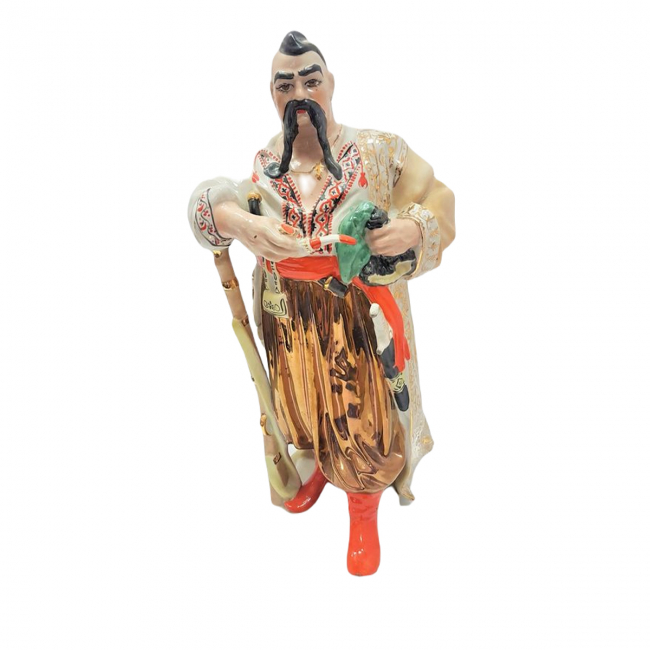
Taras Bulba
Country: Ukraine Manufactory: Polonsky ZHK Date of establishment: 1970s Sculptor: K. Kuznetsov Size (cm): 47

Bandurist
Country: Ukraine Manufactory: Korosten Date of establishment: 1960s Sculptor: Tregubova V. M. Size (cm): 39
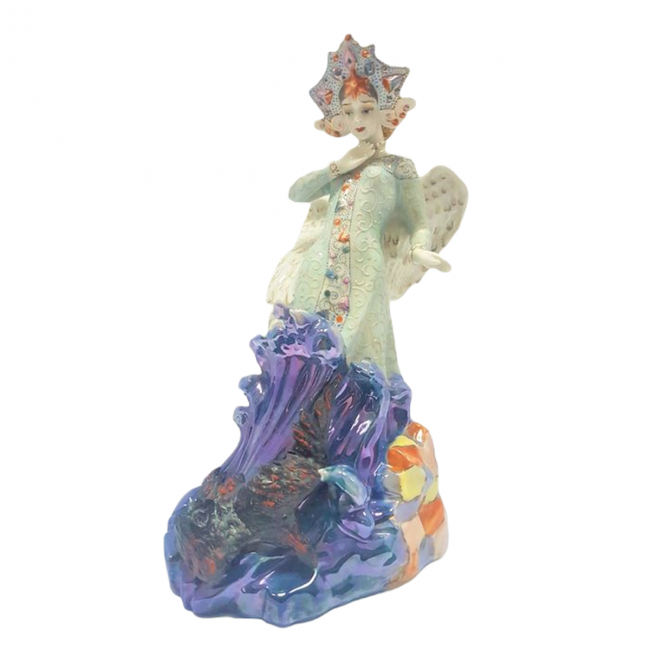
Swan Princess with kite
Country: Ukraine Manufactory: Kyiv ECAZ Date of establishment: 1956 Sculptor: O. L. Zhnikrup Size (cm): 29.5
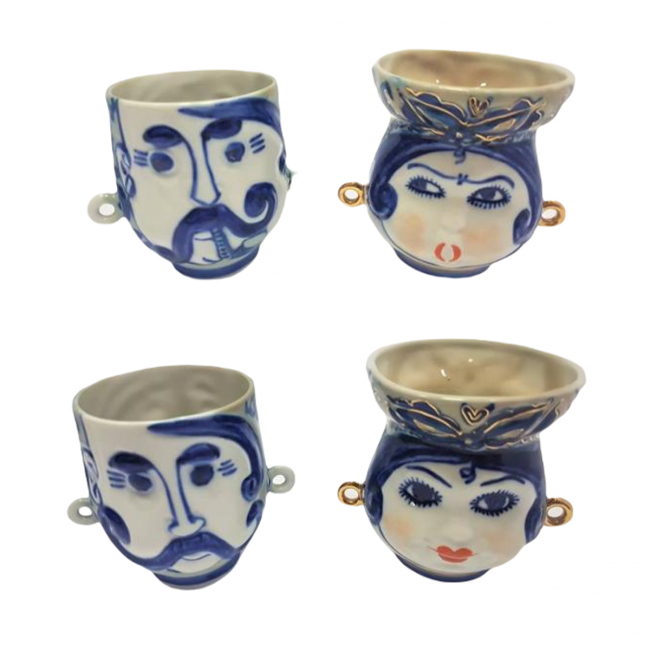
Cups
Country: Ukraine Manufactory: Korosten Porcelain Factory Date of establishment: 1962 Height (cm): 10
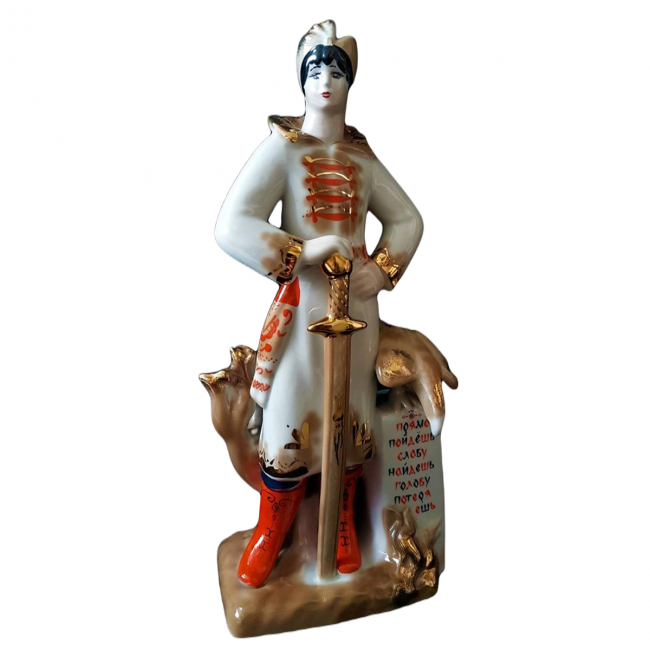
Ivan Tsarevich at the road
Country: Ukraine Manufactory: Polonsky ZHK Date of establishment: 1960s Size (cm): 32*14
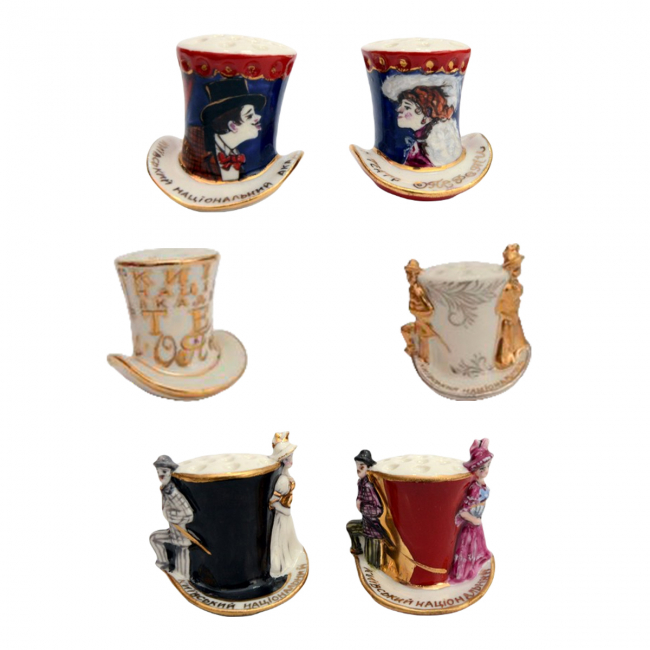
Thimbls
Country: Ukraine Date of establishment: 2018 Sculptor: Sergey Voronov Size (cm): 3.5x4
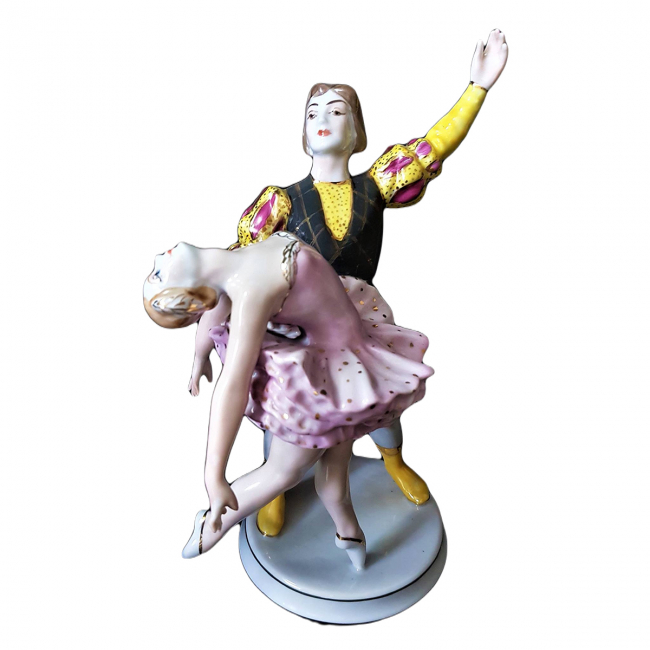
Adagio
Country: Ukraine Manufactory: Kyiv ECCZ Date of establishment: 1970s Sculptor: Shcherbina V. I. Artist: Zhnikrup O. L. Size (cm): 27*16
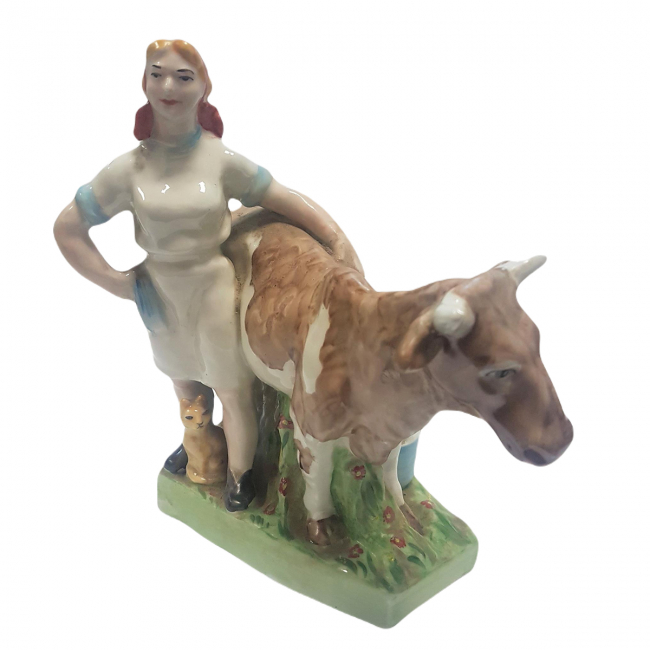
Milkmaid
Country: Ukraine Manufactory: Baranovka Date of establishment: 1980s Sculptor: Vasily Prisyazhnyuk Size (cm): 28*25
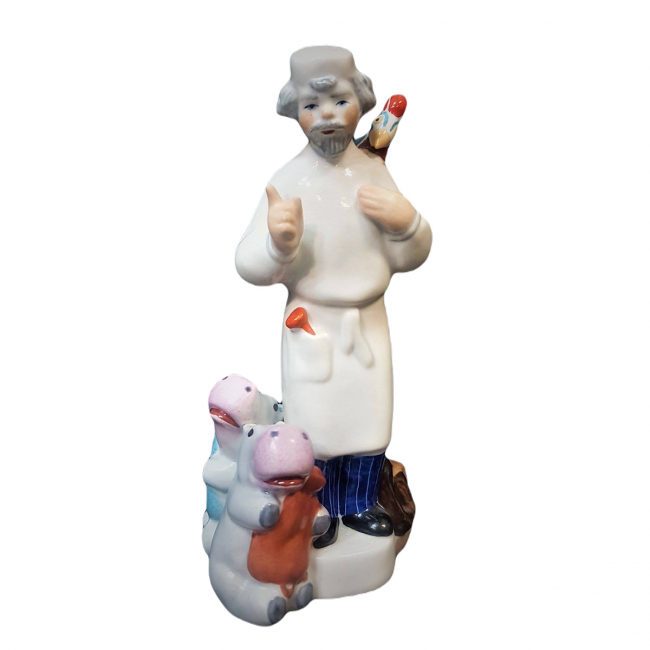
Dr. Aibolit
Country: Ukraine Manufactory: Kyiv ECCZ Date of establishment: 1980s Sculptor: Shcherbina V.I. Height (cm): 19
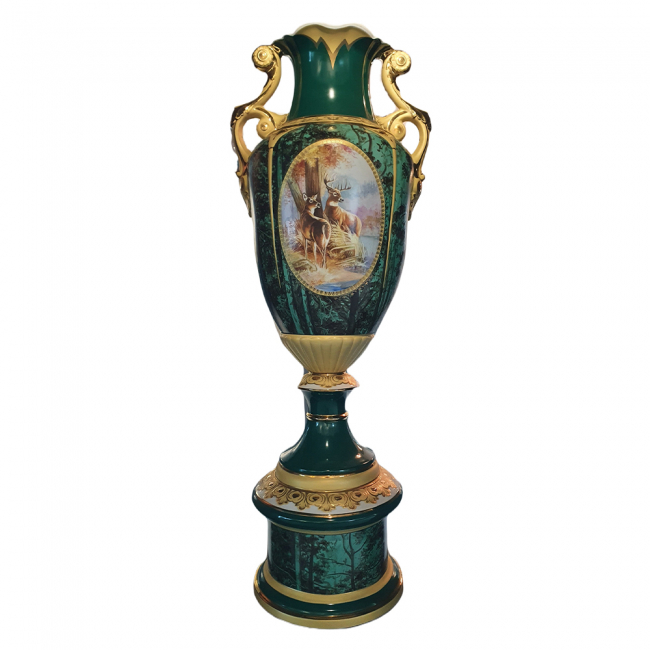
Vase
Country: Ukraine Manufactory: Korosten Date of establishment: 1970s Height (cm): 110
The history of Ukrainian porcelain began in Volhynia at the end of the 18th century. The first porcelain manufactory in Ukraine was founded in 1784 in the possession of the Polish prince Józef Klemens Czartoryski on the outskirts of the Koretsky castle. Deposits of kaolin clay were discovered, which were highly appreciated by experts from Saxony. With the support of his relative, the Polish king Stanislaw August, Czartoryski laid the foundation for a manufactory equipped according to the European model. The brothers Francois and Michel Meser, who studied the business in France, were directly involved in the production of porcelain. They are considered the founders of the Ukrainian industry of thin-walled ceramics. They were able to adapt local clays and develop a unique recipe for raw materials. Those products were distinguished by strength, transparency and whiteness.
The products of the Koretsky manufactory were in no way inferior to Saxon porcelain and, according to contemporaries, even surpassed the Viennese. The company earned a good income. In 1793, it employed about a thousand workers and produced up to 20,000 dishes per month. On January 1, 1797, a fire completely destroyed the enterprise. The factory was rebuilt in 1801, and in 1804, a ceramist from the Sevres porcelain manufactory, Charles Mero, became its director, who raised production to a high level. However, after the death of Czartoryski in 1810, the factory began to decline, and in 1832 it was finally closed.
The Gorodnitsa Porcelain Factory was founded in 1799 as a result of the expansion of the porcelain manufactory of Prince Józef Czartoryski in Korca. The construction of the new enterprise was carried out for four years. The first production took place only in April 1807. After the death of Prince Czartoryski, the plant passed to his son-in-law Henryk Lubomirski, and in 1850 to his son later. During the period of ownership by the Lubomirskys, the products of the factory were of high quality and were equal to the products of the best world manufactories. This tradition was preserved despite the frequent change of ownership.
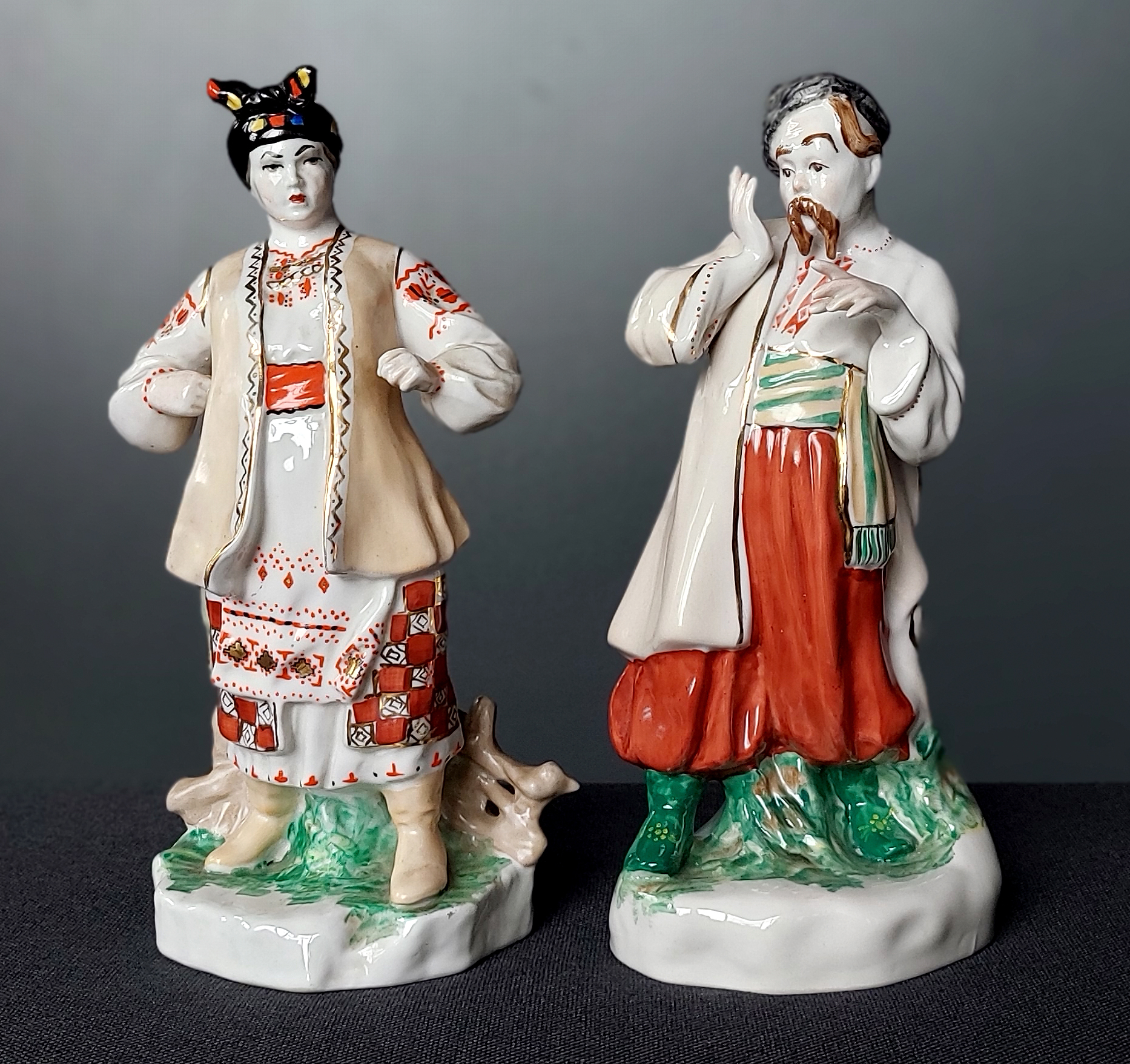
After the revolutionary events, the plant was closed and resumed its activities in 1923 under the USSR. At that time, it mainly produced sculptures, as well as services. Since the late 1940s, artists Z. Mosiychuk, A. Kryzhanovsky and T. Kryzhanovskaya worked at the enterprise, who developed new models of genre sculpture. After graduating from the Odessa Art College, the artist Vladislav Shcherbina worked at the factory for some time. The plant was one of the leading enterprises in the porcelain industry of the USSR; it began to produce porcelain with national specifics: "Karas" and "Odarka" ("Hands in the hips"), the sculpture "Taras Bulba" and others.
One of the brothers Meser Michel in 1802 became the founder of porcelain production in Baranovka. After the fire at the Koretsky manufactory, he did not want to participate in the restoration work. Michel moved to nearby Baranovka, where he built his own factory. The company developed rapidly. Meser kept the style chosen in Korets. In 1825, ceremonial vases of Baranovsky production were presented to Alexander I, after which the manufactory received the privileges to use the state emblem in marking.
After the death of Meser, the leadership of a prosperous manufactory passed to his sons and nephews. The assortment has expanded significantly, porcelain has acquired its own unique style. The painting was made in bright colors, with a predominance of shades of yellow, red and blue. After 1845, the Baranovskaya manufactory was leased, the quality of products gradually deteriorated. The number of workers also decreased, which led to the general decline of the enterprise.

In 1895, the plant was acquired by the influential Sevastopol merchant of Greek origin Nikolai Gripari, who made a lot of efforts to bring porcelain production in Baranovka to a new, higher level. Gripari was supported by his sons, their investments made it possible to significantly expand and modernize the factory. An important step was the replacement of wood stoves with more advanced gas and other advanced technical innovations. Gripari sent his son Peter for an internship in Limoges, at the same time inviting the French model master Philippon and the painter Batio to Baranovka. Porcelain of this period was distinguished by subtlety, transparency and delicate painting. Products were also supplied to members of the imperial family, which testified to the prestige of Baranovsky porcelain – the best of what was then in Ukraine.
In the early 1950s, the plant, restored after the war, began to produce small plastics. Most of the models were designed by artists Valentina Pokosovskaya and Vladislav Shcherbina.
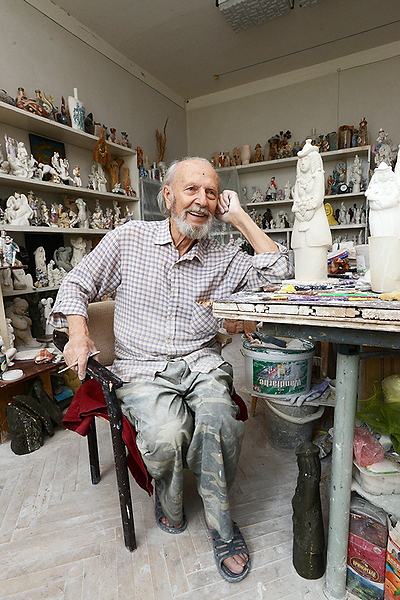
Vladislav Ivanovich Shcherbina is one of the most famous porcelain sculptors in Ukraine. He owns many innovative solutions, which later became classics. In particular, he was the first among Ukrainian sculptors to start working in bisque, and he was also the first to apply salt coloring, which gave gentle tonal transitions. Shcherbina covered all genres of small plastic arts – from animalistics to everyday scenes, however, his works with national color were more popular than others. Having moved to Kyiv and received the position of chief artist of the Kyiv Porcelain Factory, Shcherbina continued to cooperate with Baranovka.
One of the most famous Ukrainian porcelain manufacturers for a long time was the Korosten factory, founded in 1909. Its hallmark, the characteristic letter "K" or the full name in the early versions, served as a symbol of impeccable quality. The heyday of production came in the 1950s. In addition to household utensils, artistic ceramics expanded into decorative vases, candelabra, small plastics, moldings and details for fireplaces. The expansion of the assortment became possible after the arrival of three outstanding artists at once – Vera Yatsevich, as well as the spouses Valentina and Nikolai Tregubov. By their efforts, by 1960 the plant acquired its "face", making products with a pronounced national flavor. Every year there was an update of the forms and design of products. By the 1990s, the Korostensky plant exported more than 70 percent of its products to the CIS countries, the Baltic States, Germany, Israel and the USA.

Another well-known enterprise for the manufacture of porcelain in Ukraine was the Kyiv Experimental Ceramics and Art Factory (1924-2006). The initial specialization of the enterprise was the manufacture of paints and decals for the entire porcelain industry in Ukraine. The plant was primarily unique since in the middle of the 20th century the use of Petrykivka painting on porcelain was widely introduced here for the first time. Well-known craftswomen from Petrikovka worked at the enterprise, as well as other equally famous porcelain artists and sculptors: Oksana Zhnikrup, Vladislav Shcherbina, Olga Rapay-Markish, Anna Kaluga, Alexander Sorokin and many others. It was the only enterprise with a well-established mass production of porcelain, decorated with paintings by masters from the main school of Petrikovskaya painting.
There were also other equally well-known enterprises for the manufacture of porcelain: the Dovbysh porcelain factory, famous for its cobalt sets; the Polonsky factory, Druzhkovsky, Sumy and others.