
Germany
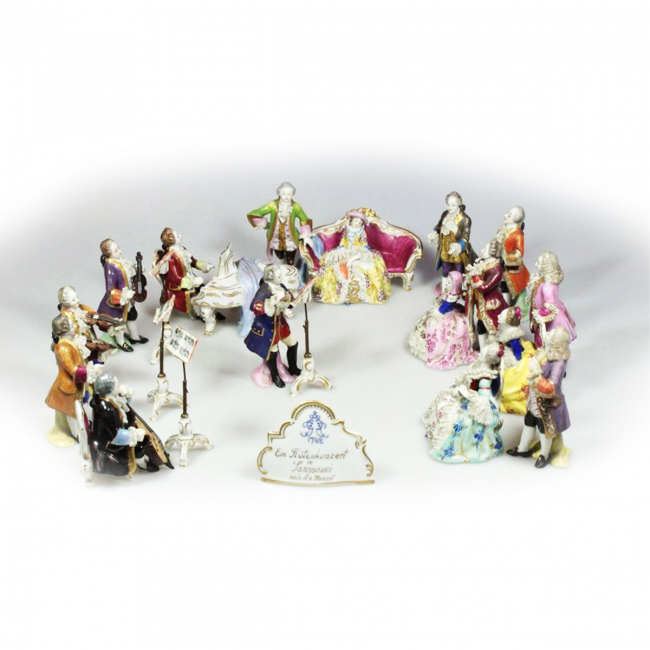
Flute Concerto in Sanssouci (14 figurines)
Country: Germany (Thuringia) Manufactory: Volkstedt Date of establishment: second quarter of the twentieth century Size (cm): 8,5
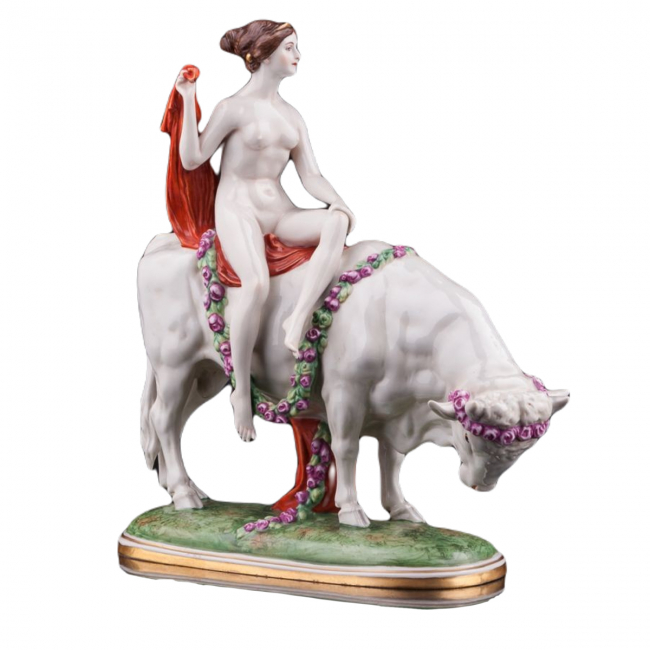
The kidnapping of Europe
Country: Germany Manufactory: Scheibe-Alsbach Date of establishment: mid-twentieth century Size (cm): 27*26
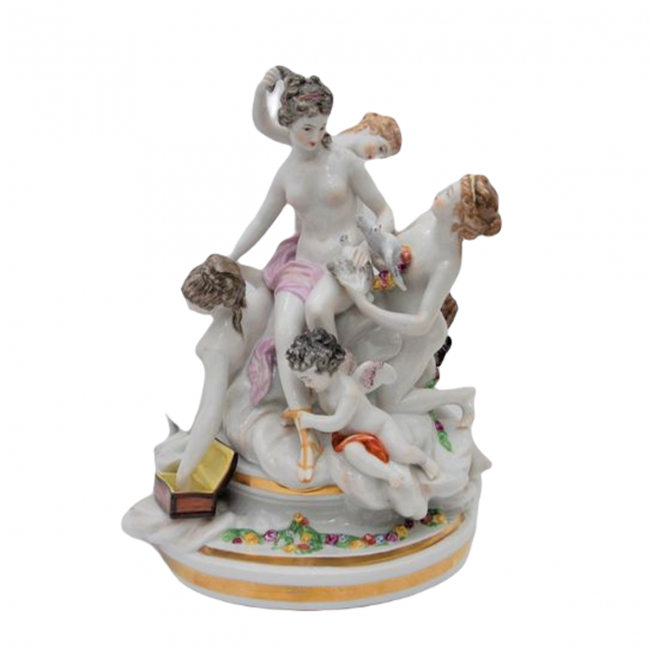
Toilet of Venus
Country: Germany Manufactory: Nymphenburg (copy of Sevres) Date of establishment: the beginning of the twentieth century Size (cm): 28*22
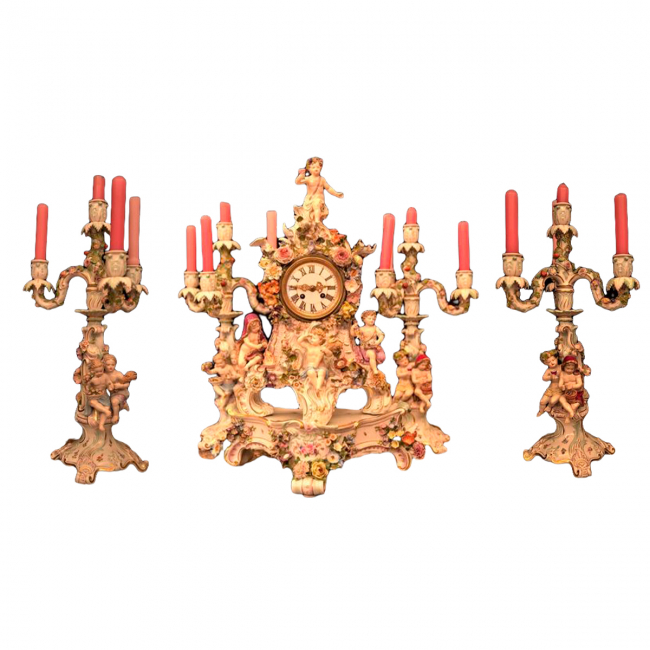
Candlesticks "Seasons"
Country: Germany Manufactory: Meissen Date of establishment: XVIII century Size (cm): 48*18
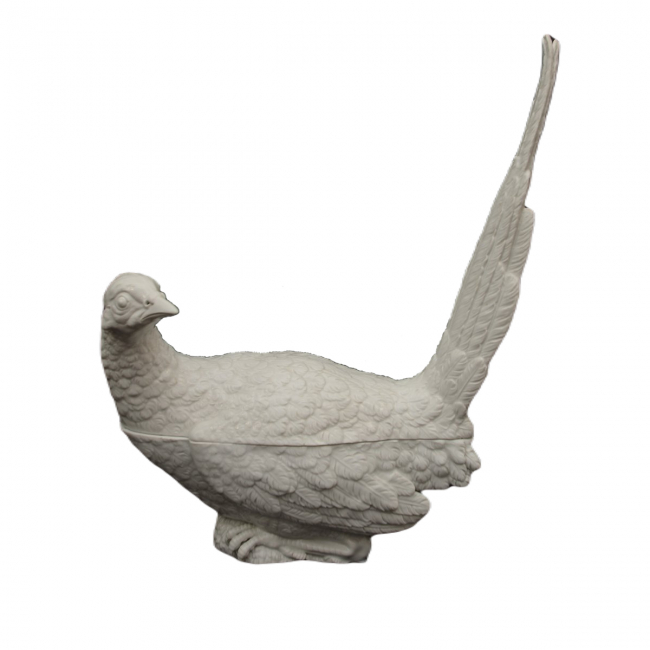
Pheasant
Country: Germany Manufactory: Meissen Date of establishment: end of the 19th century Size (cm): 46*32
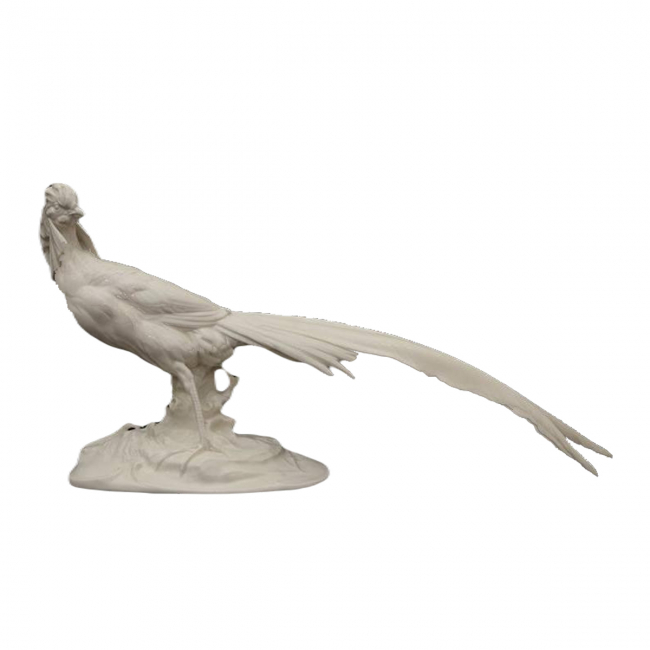
Game
Country: Germany Manufactory: Hutschenreuther Date of establishment: 1950s Size (cm): 32*64
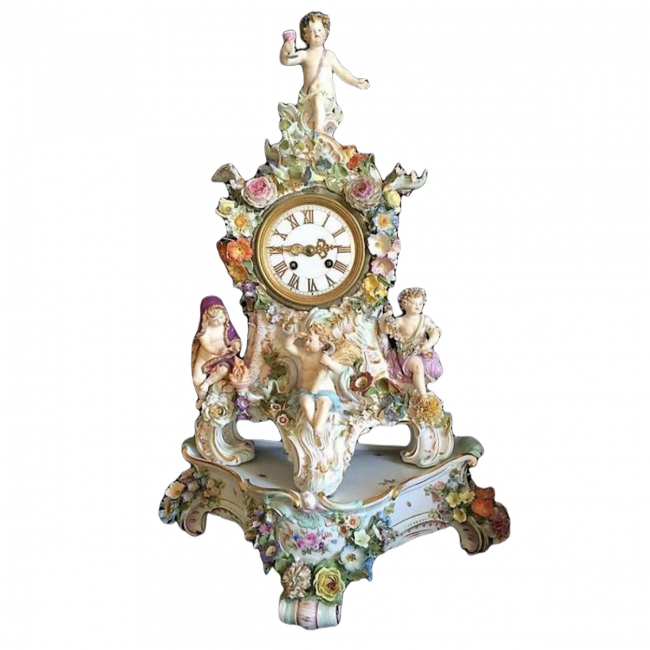
Mantel clock (from the Seasons set)
Country: Germany Manufactory: Meissen Date of establishment: 18th century Size (cm): 60*40
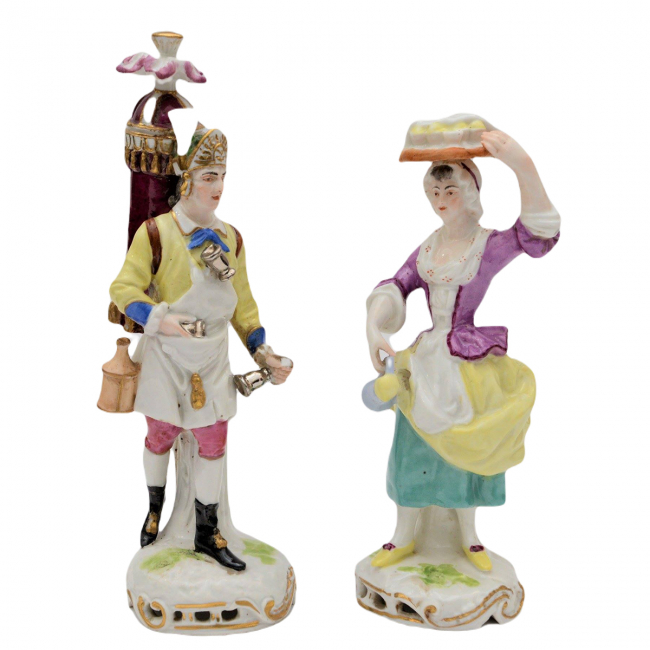
Street traders
Country: Germany Manufactory: Meissen Date of establishment: late 19th century Height (cm): 19
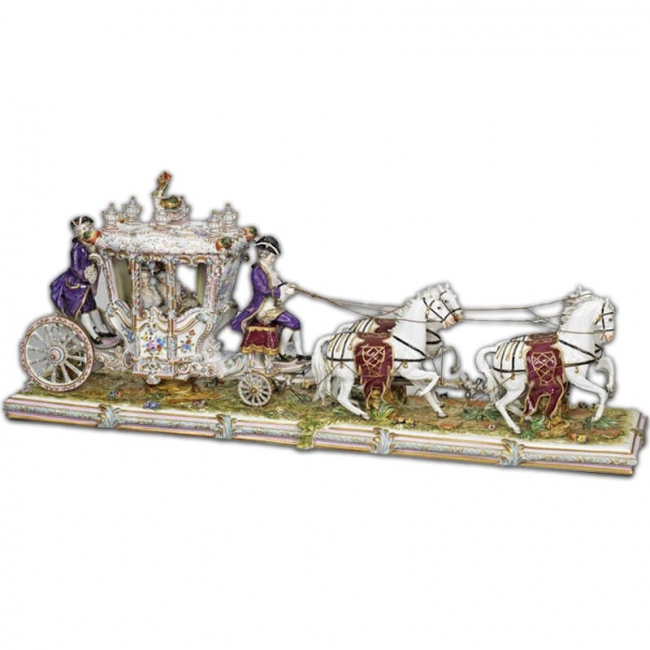
Carriage
Country: Germany Manufacture: Volkstedt Date of establishment: 1930s Size (cm): 42*106
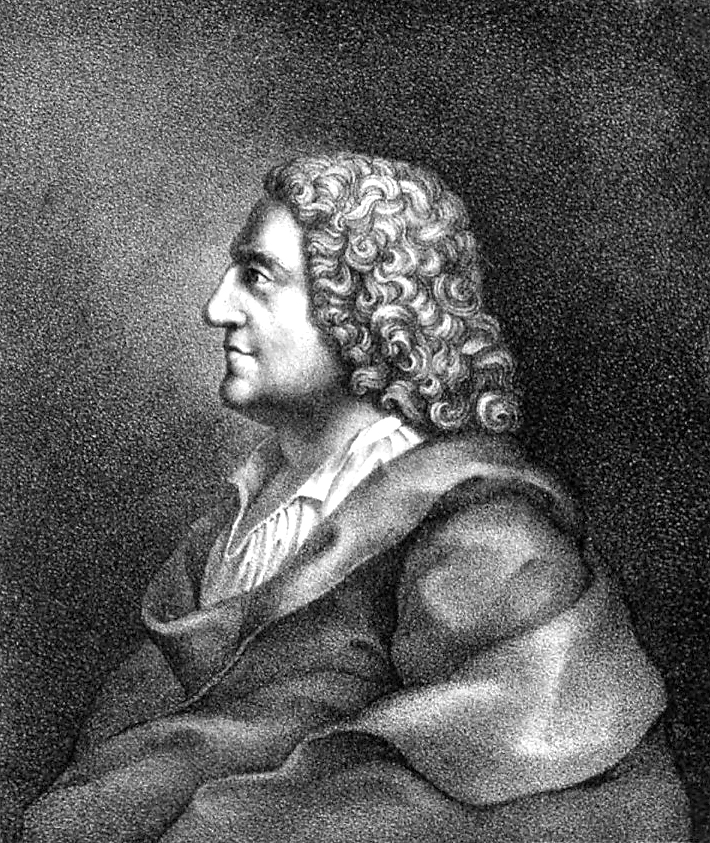
Johann Friedrich Böttger
Ever since porcelain wares from China first made their way to Europe, the secret to producing this "white gold" has been a coveted target for many, including Western monarchs. The royal courts were obsessed with the idea of porcelain, the representatives of the European royal nobility were eager to possess this treasure. Many attempts to make porcelain mass were in vain. Experimenters received a material more like glass than porcelain.
The very first porcelain manufactory in Europe was the Meissen factory, and the history of the creation of European porcelain is quite adventurous.
At the beginning of the 18th century, an alchemist named Johann Friedrich Böttger announced that he could create gold from simple metals. The Elector of Saxony August the Strong, in search of money (especially during the period of intensified rivalry for the Polish crown), tried to get gold with the help of numerous alchemists and adventurers. Böttger successfully demonstrated the transmutation of mercury into gold in the presence of the elector and was awarded the title of baron, while receiving the order to multiply what was done. Living a wild life, the alchemist cared little about fulfilling the order, and in 1701, by order of the elector, he was taken into custody. Forced work began on the production of gold, which was inconclusive. In 1704, Böttger was transferred to another fortress, where he found himself under the supervision of the commandant, Count Ehrenfried Walther von Tschirnhaus, who experimented with glass, trying to create porcelain at the same time. Böttger was assigned to help the scientist.
Already in 1705, they managed to obtain red (jasper) porcelain – an opaque, hard, non-porous ceramic that rings when tapped and can withstand high temperatures. Red clay with a high content of iron oxides was used for this type of porcelain. After firing and special polishing, red porcelain products became similar to dishes carved from a precious stone, decorated with convex patterns (later this porcelain became known as "Böttger porcelain"). The success allowed August the Strong to increase funding, and in December 1707 a special laboratory was equipped in Dresden, where experiments with various clays were continued with the support of scientists from the Mining Academy in Freiberg.
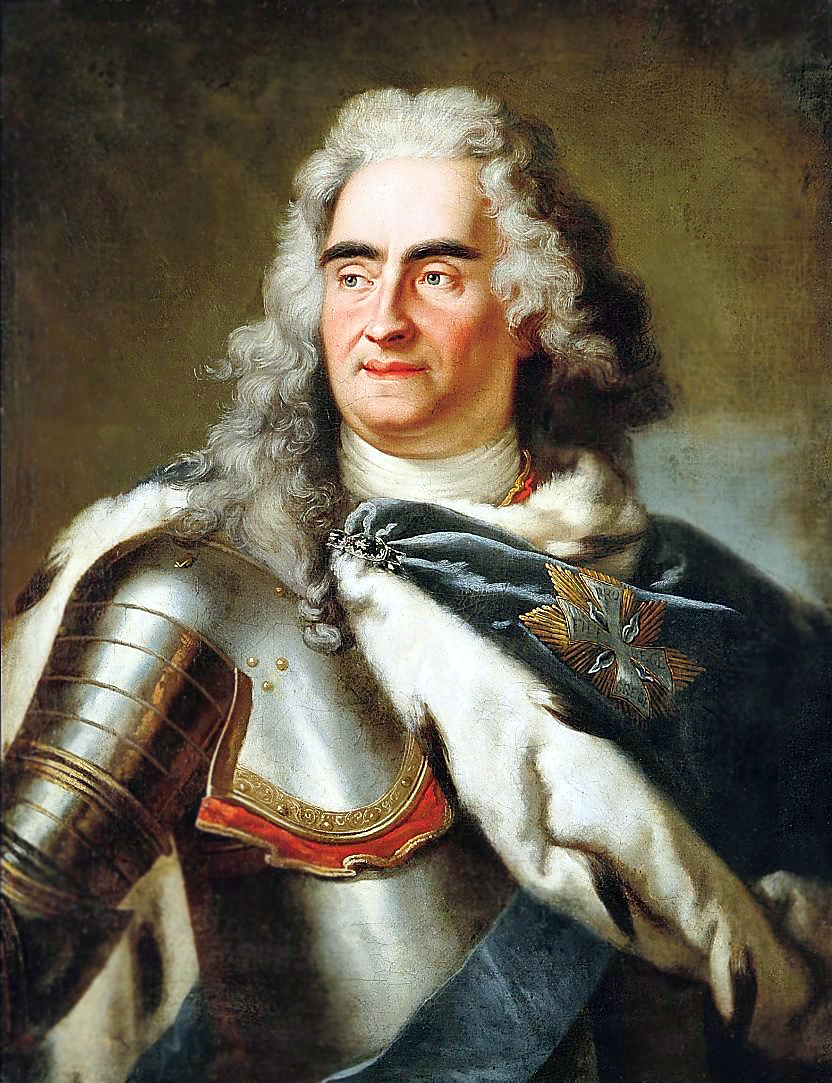
August the Strong
On January 15, 1708, one of the most prized secrets of the era was revealed. As a result of the experiments, three most important minerals for the production of porcelain were identified: kaolin, feldspar and alabaster, used as a flux. The optimal composition of the initial mixtures and firing conditions were also established. European hard porcelain became a completely new ceramic material and surpassed Chinese soft varieties in quality. But in October of the same year, work on the production of porcelain was stopped due to the death of Chirnhaus from dysentery. However, already in March 1709, Böttger notifies the elector that he can produce "excellent white porcelain with the most exquisite glaze", and declares himself as the only inventor of the technology and the bearer of the secret (he managed to improve the previously obtained porcelain formula).
In January 1710, the first European manufactory of hard porcelain was founded in the empty Meissen castle of Albrechtsburg, which began work on June 6 of the same year. Augustus handed over the leadership of the porcelain manufactory to Böttger and appointed a generous salary, but he did not give him freedom until April 1714. Until his death (in 1719) Böttger was kept under surveillance to protect the secret of the production of Meissen porcelain, which was carefully guarded. Even the workers of the manufactory did not know in detail the entire process of making "white gold", but only that part for which they were responsible. Thus, Meissen managed to keep a monopoly on the manufacture of hard porcelain in Europe for a long time.
In 1713, the manufactory produced the first porcelain items. When porcelain was just beginning to be produced, its quality was far from perfect, but soon it became truly high-quality and luxurious. The first success was achieved in the field of gilding objects. The patterns were applied already on the fired objects before being subjected to a second firing at a lower temperature.
With the arrival of the German painter, technologist and porcelain artist Johann Gregor Herold to the factory in 1723, bright polychrome paintings began to be used in Meissen. Since that time, the picturesque period of Saxon porcelain began. Herold managed to make a wide palette of colors from metal oxides: red, purple, yellow, green, brown, blue. The paints did not fade, but under a layer of transparent glaze they shone like enamels. The decoration was dominated by painting.
Johann Gottlieb Kirchner (1727-1737) was the first to start creating small plastic arts in Meissen. His small images of baroque saints were especially popular.
With the appointment of Johann Joachim Kaendler as chief fashion designer in 1733, painting was replaced by the sculptural period. Kaendler was one of Meissen's most celebrated miniature sculptors. He headed the manufactory for 42 years. In the 1740s, Candler was developing a genre of small figurines made of porcelain, brightly painted and covered with a brilliant glaze. Such products are called fine porcelain plastics. Kendler is the main creator of this type of decorative art.
In 1756, during the Seven Years' War, Prussian troops occupied Meissen. King Frederick II the Great took many Saxon masters with him to Prussia, thanks to whom he opened the Royal Porcelain Manufactory in Berlin. Throughout its history, the Royal Porcelain Manufactory has produced many pieces and figurines of various shapes and styles. After the fall of the monarchy in 1918, the enterprise became the State Porcelain Manufactory, retaining the brand name with a scepter. The manufactory is still active.
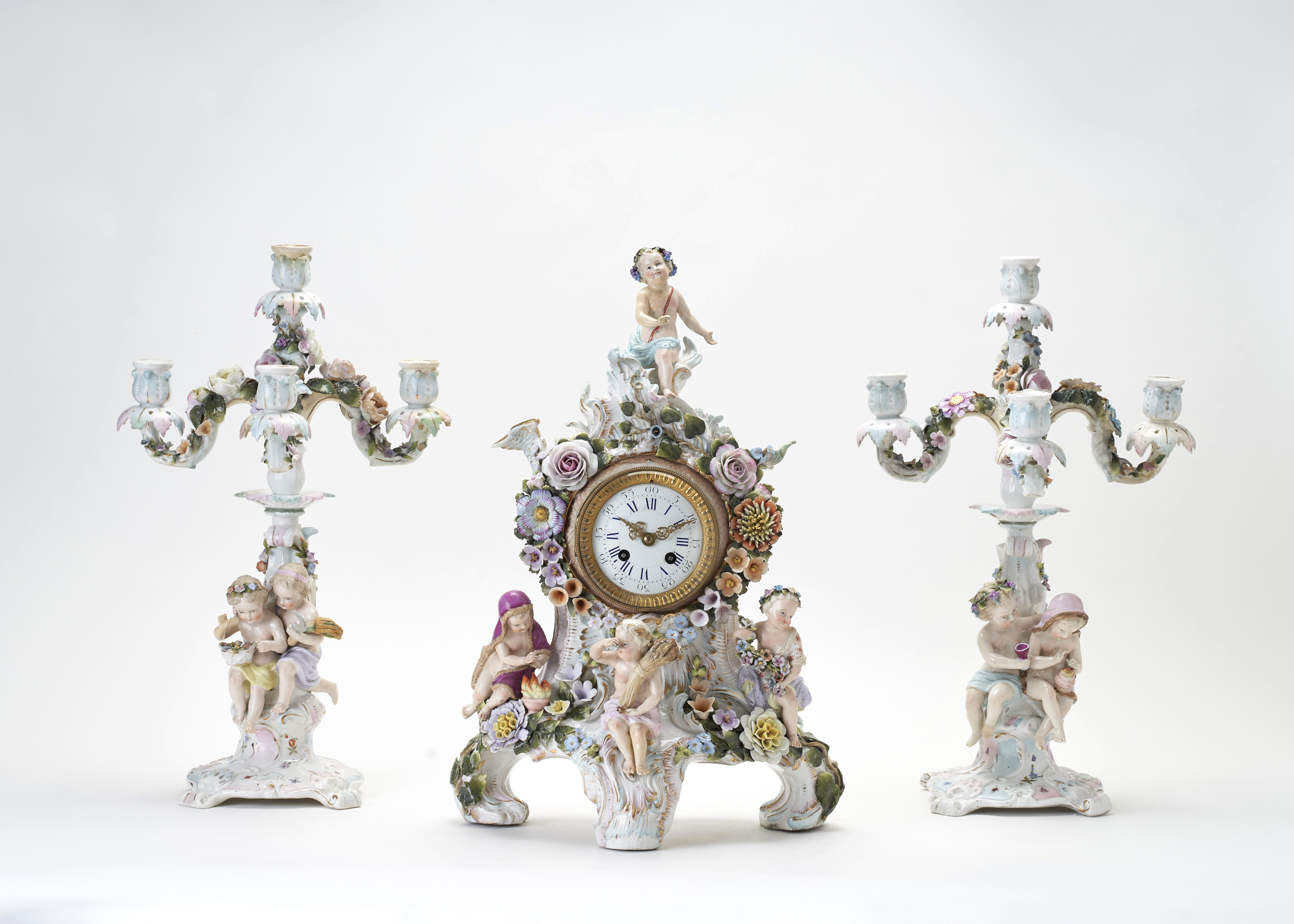
In the 19th century, Meissen's fashion designers redesigned many of their famous works of the previous century and launched their updated series into production. Particularly popular were the Rococo figurines, called "Dresden Porcelain". They were gallant gentlemen and playful ladies having fun in the bosom of nature.
Meissen porcelain does not lose its value for collectors today. The heritage of the renowned manufactory is preserved by its craftsmen, who are able to produce many types of porcelain products that are in no way inferior to the originals of past centuries. Like 300 years ago, all Meissen porcelain is handcrafted. Porcelain paints are prepared according to recipes dating back hundreds of years. According to official information, about 10 thousand shades of colors are used to create Meissen porcelain. Recipes of paints are kept in the strictest
confidence.
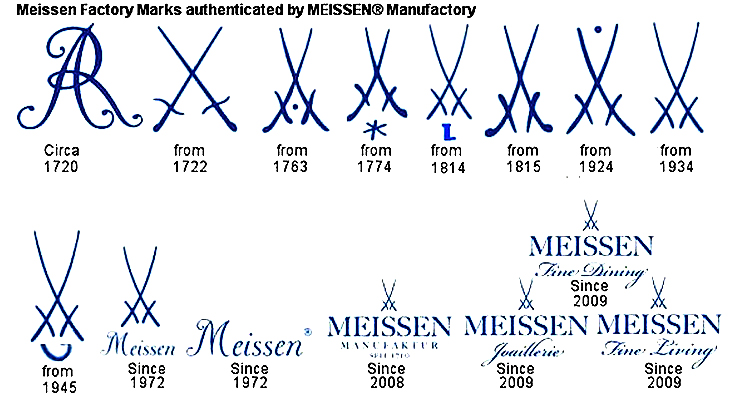
In order to identify the original products of Meissen, a special marking was developed, which was first applied in blue paint to the surface of the product, and later was "hidden" in the glaze. Early hallmarks such as the king's monogram "AR", "R.P.M." (Royal Porcelain Manufactory), M.P.F. (Meissen Porcelain Factory), R.P.F. (Royal Porcelain Factory) were eventually replaced by the image of crossed swords in the form in which they can be found on the coat of arms of the Electorate of Saxony. This type of hallmark has been in use since 1720 until today.