
China
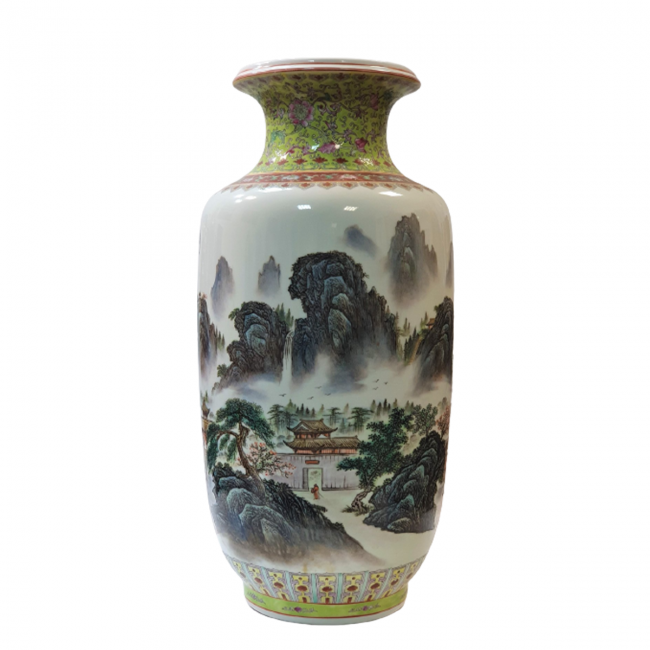
The Vase
Country: China Date of establishment: 1950s Height (сm): 58
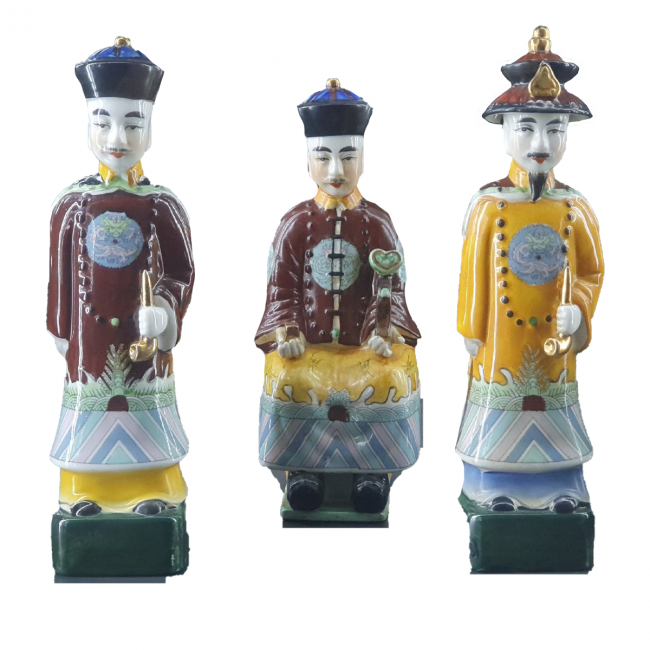
Teachers
Country: China Date of establishment: late nineteenth century Size (cm): 29*10 and 27*12
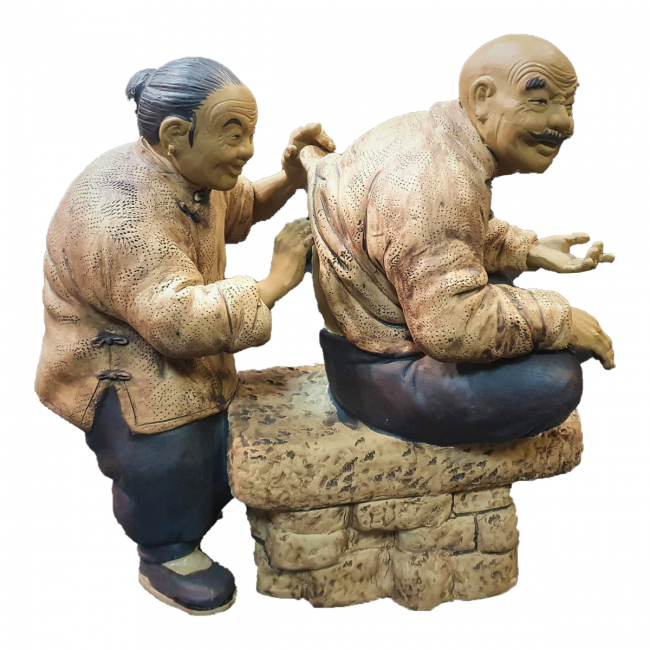
Chinese Healer
Country: China Manufactory: Imperial Factory Date of establishment: 1950s Size (cm): 28*30
The history of the emergence of porcelain originates from ancient times. Since porcelain is a type of pottery, it is impossible to trace its origins outside of clay production in general. The use of kaolin in ceramics and the invention of porcelain mass belong entirely to the Chinese. Found in Xianzhen Cave in Jiangxi Province (southeast China), the fragments of ceramics were made, according to scientists, about 20 thousand years ago and are considered the oldest examples of pottery production in the world. It is noteworthy that this discovery was made near the city of Jingdezhen, which is still called the porcelain capital of China. This area was rich in kaolin of special quality, with plasticity, sintering strength and rare whiteness. There were about 3,000 kilns here. About a million people worked on the thinnest cups, plates and vases, which only emperors, members of the imperial family and close persons had the right to use. Jingdezhen was a closed protected city. However, they closed it only at night. This was due to the desire to keep the porcelain recipe secret. After the evening, only the elite who knew the password could enter the city.
The first clay products were quite primitive - unevenly molded, poorly processed and without decoration. The appearance of pottery changed significantly during the Middle and Late Neolithic (5000-1500 BC). Chinese masters have learned how to make tall and capacious vessels for storing rice, pots for cooking on fire. With the development of agriculture and the transition to a sedentary lifestyle, more of such dishes were required.
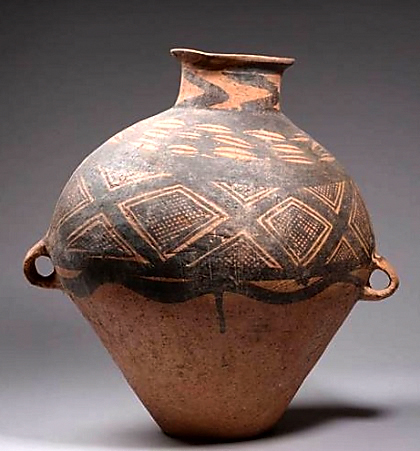
At first, the layering technique was used - long strips of clay were laid in a circle on top of each other, and then the gaps between them were smeared. Around the fourth millennium BC, the potter's wheel appeared, which made it possible to make symmetrical thin-walled vessels of various shapes. Glazes based on metal oxides, which appeared in the second millennium BC, not only gave the dishes a beautiful shine, but also significantly reduced the water permeability of the shard. The Chinese potters of that time paid the main attention to kilns. Their strength, absence of deformations and cracks depended on how uniform and high the temperature inside the chamber with pottery was.
By the middle of the Zhou Dynasty (V-VI century BC), it was possible to achieve a higher firing temperature, and consequently an increase in the density of pottery. The first glazed ceramic vessels also date from this period.
The so-called proto-porcelain (in the manufacture of which kaolin was first used) appeared in China during the Han Dynasty (206 BC-220 AD). According to historians, Chinese potters were able to get as close as possible to modern thin-walled ceramics in the first quarter of the 1st century AD. The center of production was the Zhejiang province in eastern China. Proto-porcelain was mainly used for ritual and funerary vessels.
During the era of the Three Kingdoms (220-280 AD) and during the period of the Six Dynasties (220-589 AD), significant improvements and innovations in the field of ceramics were made.
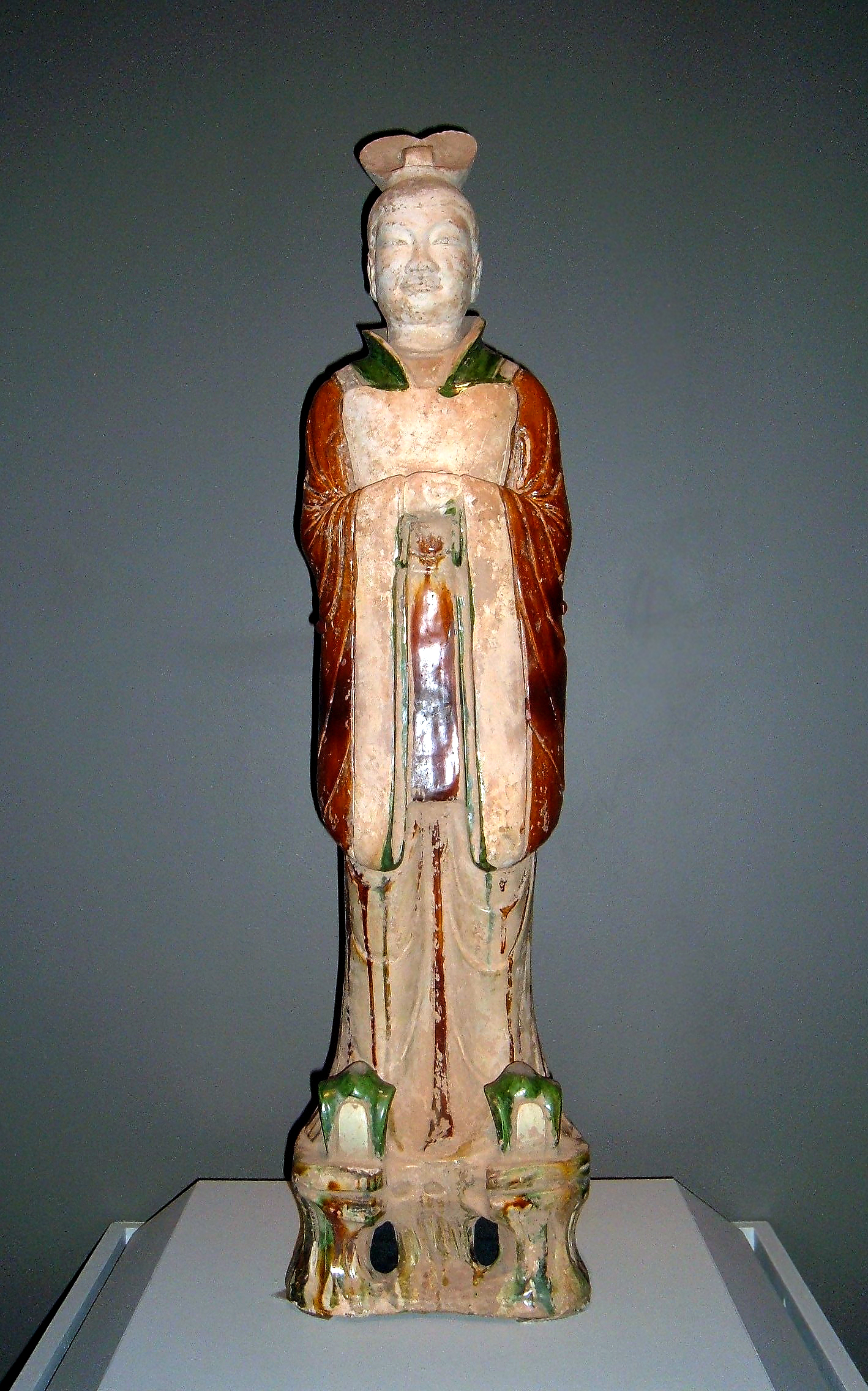
During the reign of the Tang Dynasty (618-906 AD), many arts and crafts flourished, including pottery. At the same time, both types of ceramics are produced: low- and high-temperature ceramics with a wide range of characteristics of the sintered shard. Polychrome glazes and a rich variety of forms appear: vases, vessels with lids, dishes, jugs, bowls, jars for cosmetics. These products were often decorated with ornamental patterns. A special group of ceramics of this era are figures (court ladies, dancers, horses, etc.), designed to accompany the dead in their afterlife. The most famous at that time was the Xingzhou workshop, which supplied porcelain for the imperial court. The forms of her products were distinguished by grace and variety. Decoration with glazes of three colors was popular: ocher, emerald or dark green and cream. In the southern province of Hunan, underglaze painting began to be used based on patterns borrowed from the Persians. In parallel with this, in the northern provinces of Henan and Hebei, they began to make dishes of complex "flower" shape, covered with snow-white and translucent glaze.
The period of the Song Dynasty (from 960 to 1279) is considered the "finest hour" of Chinese porcelain. Thanks to the construction of long tunnel kilns, called Dragon kilns (their shape resembled a dragon sprawled on a slope), a large volume of products was fired at a time with a minimum percentage of rejects. The ovens were located along the hill, using the height difference between the lower and upper parts to create a natural draft. The "Five Great Kilns" were created, around which porcelain production was concentrated. Dishes and vases were decorated with flat carvings with floral ornaments, to which a translucent glaze of a unique jade hue gave additional volume.
This is how the famous porcelain appeared, which was called "celadon" in Europe. In ceramic production, celadon is a special type of “restorative fire” glaze. Celadon was a product of redox reactions during firing in a kiln. As in most glazes, cracks (glaze defects) could form in it, however, this did not spoil the quality, but rather decorated the product. One example of such ceramics is Zhu Yao porcelain. Zhu Yao ware was produced exclusively for the imperial court and only entered the mass market if some of its items were rejected. The production of Zhu Yao stopped shortly before the areas, where the Five Great Furnaces were located, were captured by opponents of the Song Dynasty around 1120.
The reign of the Mongolian Yuan Dynasty (1271-1368) was marked by several significant events in the history of porcelain. The main center of production was the southern province of Jiangxi, or rather the district of Jingdezhen and the adjacent territories, rich in kaolin clays. Much attention began to be paid to underglaze painting, both colored in the Arabic style and black and white. The first samples of blue-and-white porcelain with cobalt patterns appeared, which is still considered the best that Chinese ceramists have created. Production has acquired an industrial scale.
Functional oval-shaped kilns appeared – “Danxing”, many of which have survived in Jingdezhen to this day. They began to make products from hard porcelain (with a predominance of kaolin in the composition), obtained by firing at a temperature of 1400-1460 degrees.
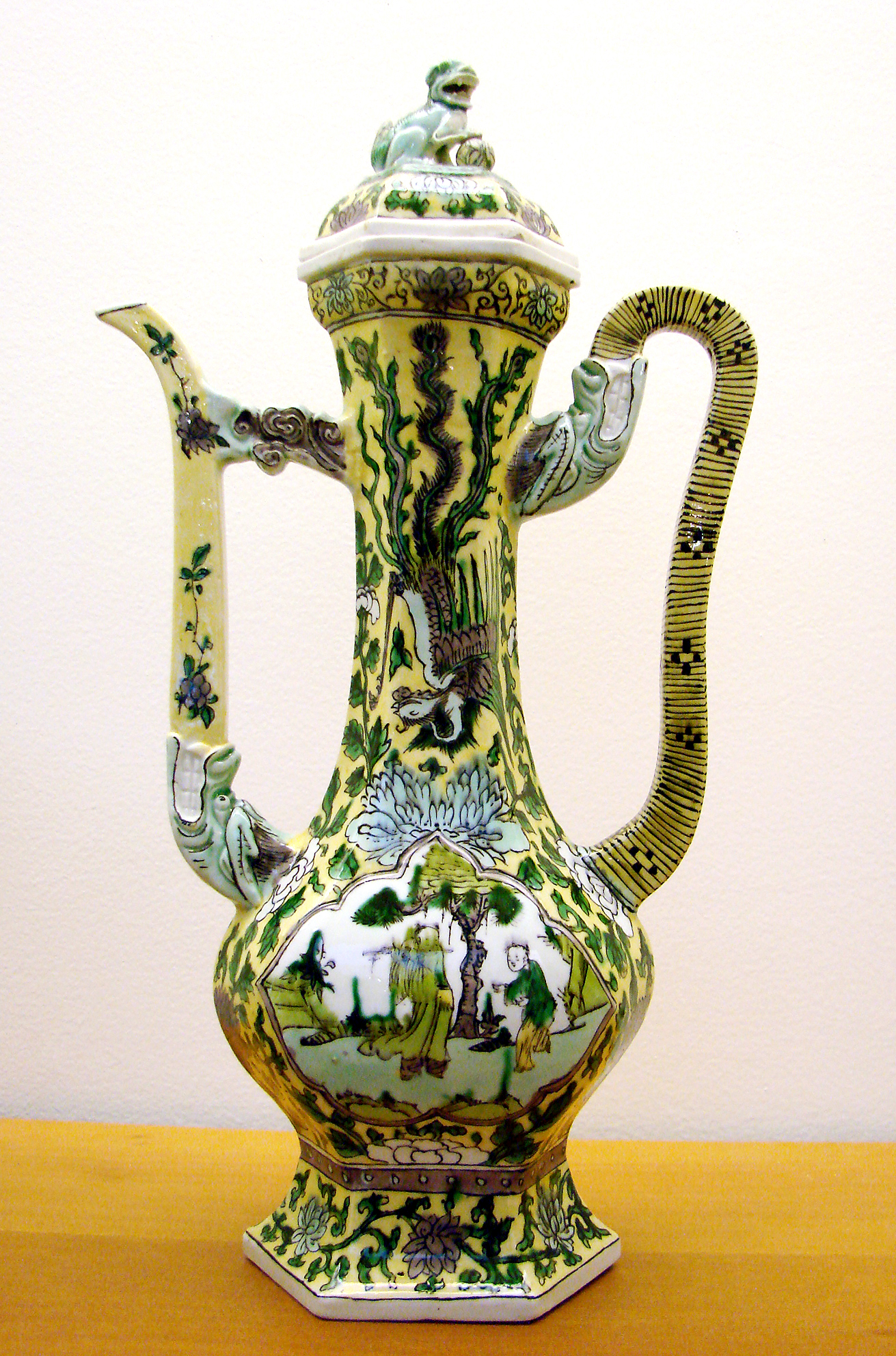
In the XIV-XVII centuries, during the reign of the Ming Dynasty (1368-1644), porcelain production in China reached its peak. It was at this time that Europe became closely acquainted with overseas "white gold" and began to actively seek the secrets of its production. And in China itself, the search for innovative decorative solutions continued. This led to the improvement of the technique of cobalt painting and the appearance of overglaze polychrome enamel drawings.
Under the Wanli Emperor (1572-1620), production volumes were increased to meet not only the needs of the population within the country, but also to conquer a new European market. An innovative composition of raw materials appears, with the inclusion of porcelain stone – a rock that acts as a flux and gives products amazing subtlety, transparency and whiteness. The component also ensured that the shard was sintered at lower temperatures, which was very important for huge kilns. They could not heat the ceramics located at the periphery to the required 1350 °C, but with the use of porcelain stone, the problem lost its sharpness.
After the overthrow of the Ming Dynasty in 1644, the production of porcelain in China practically ceased, as the kilns for its firing were destroyed during the clashes. At the direction of Emperor Kangxi (1654–1722) of the Manchu Qing Dynasty (1644-1912), these kilns were restored and porcelain production was resumed. The former porcelain monopolists had to create products that corresponded to the tastes of the European aristocracy. New dishes were painted with overglaze enamels and with a European palette of shades: mint, pink, pale green. In general, the Qing Dynasty did not bring any radical changes to the development of the porcelain industry, and it is generally accepted that the artistic value of most of the surviving items is incomparable with the previous Ming period.