
England
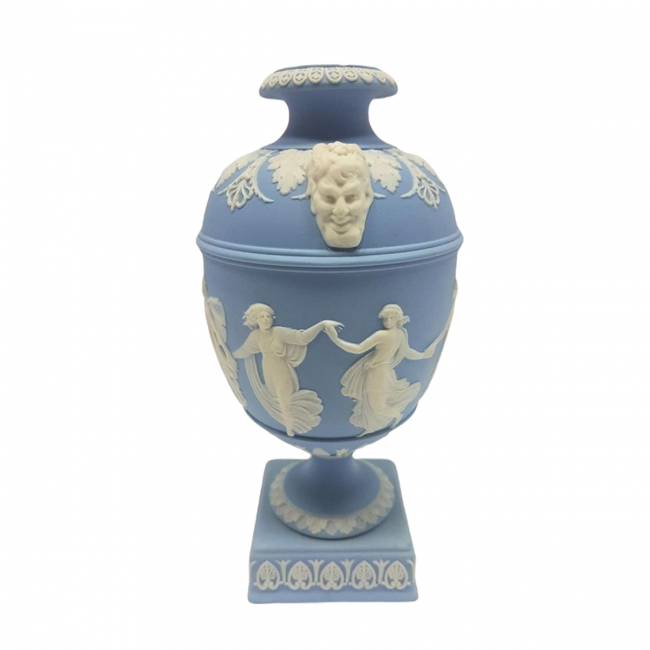
Vase
Country: England Manufactory: Wedgwood Date of establishment: 1960s Size (cm): 17,5
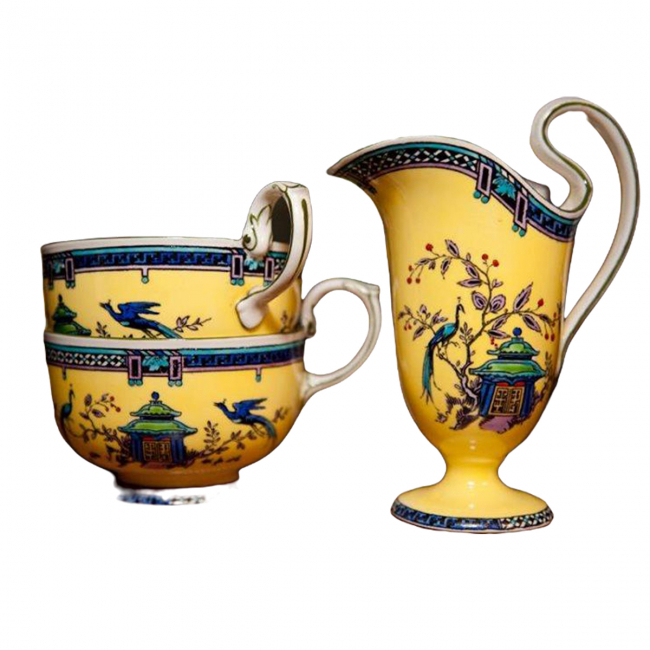
Service
Country: England Manufactory: Wedgwood Date of establishment: early 20th century
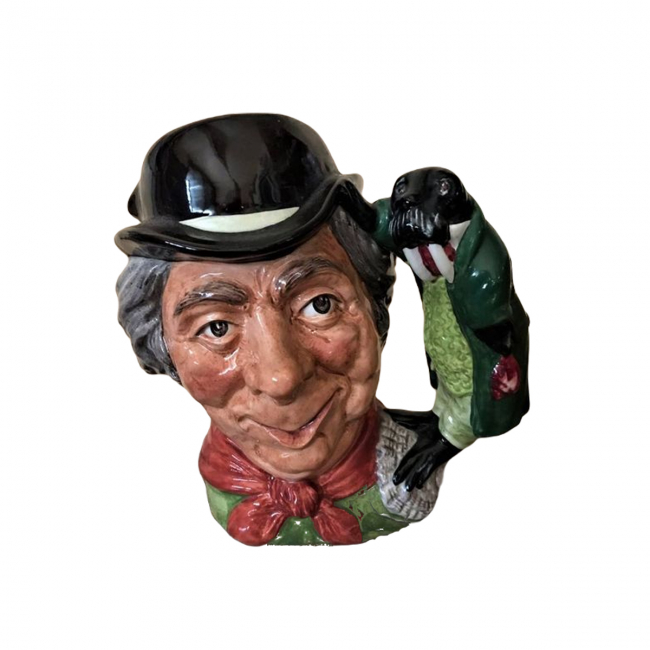
Mug "Sea wolf"
Country: England Manufactory: Royal Doulton Date of establishment: 1960s Size (cm): 21*18
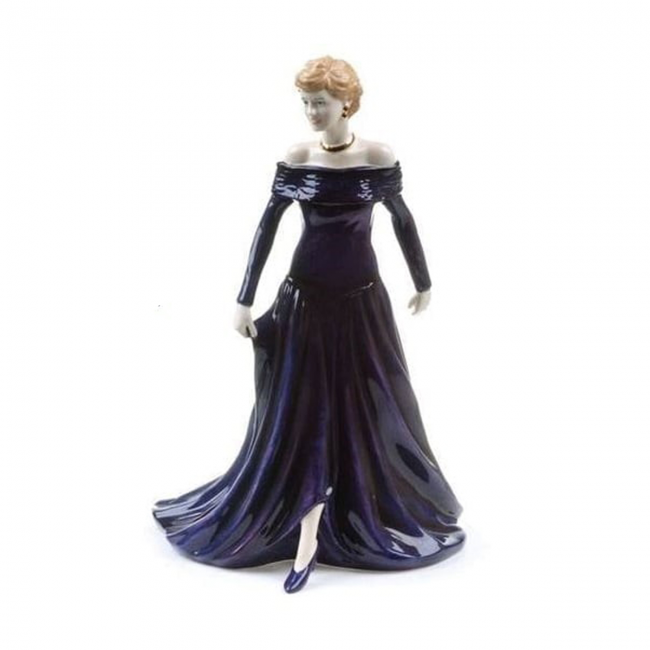
Diana, Princess of Wales
Country: England Manufactory: Royal Doulton Date of establishment: 2007 Sculptor: T. Potts Height (cm): 20
In England, porcelain manufacturing technology was developed quite late compared to other European countries. Until the end of the 18th century, faience production flourished here, concentrated in three main centers: London, Bristol and Liverpool. The main techniques of painting and glazing were returned to the storage of the Dutch masters. Fired clay products were covered with white tin glaze and painted with cobalt, the very reason why they slightly looked like Chinese porcelain. At the assembly of the Royal Society of London in 1742, the chemist Thomas Briand demonstrated the experimental softness of frit china (so-called paste). His recipe was supposedly borrowed from a French manufactory in Saint-Cloud. In the following 15 years, several enterprises were opened that worked using a similar recipe.
In 1748, an artist from a porcelain manufactory in East London called "the Bow", Thomas Fry, tried to add burnt bones of domestic animals to the porcelain mass. He noticed that the new component improved the quality of finished products, but could not find the optimal proportions of raw materials. Fry's experiments were continued in the early 1790s by Staffordshire ceramist Josiah Spoud, owner of the Spode family business in Stoke-on-Trent. He added kaolin to the porcelain mass and slightly simplified the process of making bone ash. The services of the Spode manufactory were distinguished by their subtlety and amazing transparency, while they were superior in strength to their Chinese counterparts. From 1815, all the major factories in England switched to bone china. Until the 20th century, this was the only country where it was produced.
The so-called soap china, which was based not on bone ash, but on soapstone, also turned out to be innovative.
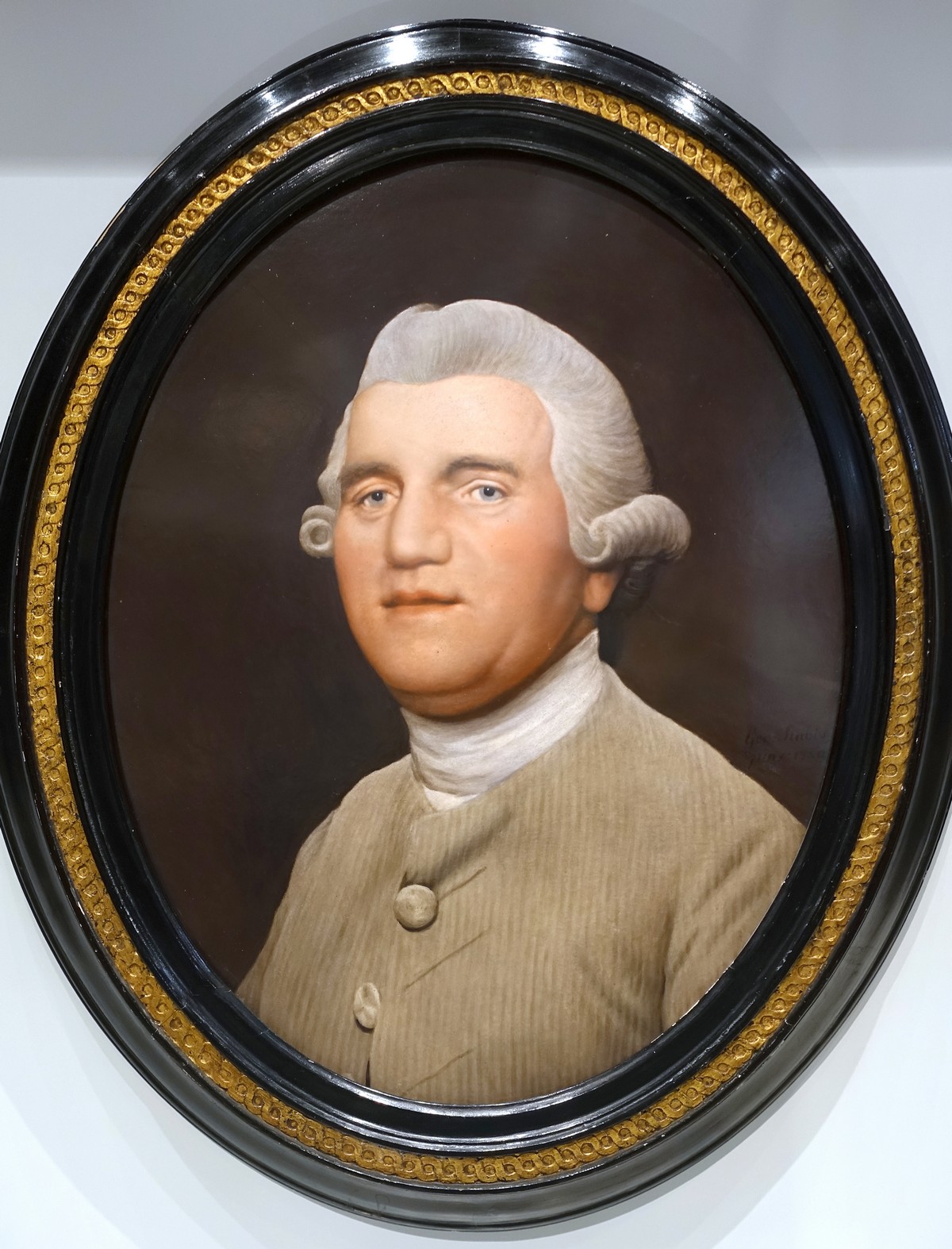
Josiah Wedgwood
The history of the subsequent emergence of porcelain in England was widely spread with the name of the potter Josiah Wedgwood, the famous English master ceramist, entrepreneur and technologist. He was not an artist, but his name symbolizes the original neoclassical style in the history of English arts and crafts. Wedgwood collaborated with the artist John Flaxman and with his matchmaker, the naturalist Erasmus Darwin (Wedgwood's daughter Susanna, the mother of Charles Darwin).
Josiah Wedgwood was born in 1730. All descendants and members of his family were ceramists, so the boy's career was a foregone conclusion from birth. As a child, Josiah survived smallpox, lost his leg, and could not find work at the potter's wheel. From the age of 9, as an apprentice with his older brother, who inherited the workshop after the death of his father, he painstakingly comprehended the basics of the family business.
In 1754, Josiah started to work with Thomas Wheeldon, one of the best ceramists in England at that time. The result of the creative tandem was the invention of "green glaze", which was used in the production of unusually shaped dishes. In 1762, Wedgwood met Thomas Bentley, a connoisseur of antiquity, a prominent figure, and the founder of a public library in Liverpool. He conquered Wedgwood with his vast territories in the field of not only classical art, but also the production of porcelain. Friendship grew into business cooperation, and in 1769 "Wedgwood & Bentley" was established.
Another achievement of Wedgwood was the development of a formula for the so-called "creamy" faience, which became a worthy competitor to porcelain. Moreover, it won the sympathy of Queen Charlotte (wife of King George III). In 1765, she was presented with a breakfast service that delighted her. Since then, faience has become known as Queen's Ware, and Wedgwood has received the right to be called the queen's supplier. Josiah's workshop became famous not only throughout the country, but throughout the world. The volume of orders was so large that the production capacity of the old manufactory was not enough. In 1769, the decision was made to move the factory to Staffordshire. This is exactly how the Etruria manufactory was born. The name is associated with the general fascination of ancient finds during the excavations of Herculaneum and Pompeii.
In collaboration with Thomas Bentley, Josiah Wedgwood managed to create an unusually hard faience mass with the addition of feldspar and quartz and fired at a temperature of 1200-1280 degrees. The mass was similar in composition to porcelain. Products from such a mass are as strong as iron; they can be cut, polished, engraved. The mass was produced in seven colors: white, black, blue, grey-green, dark green, pink and yellow. Wedgwood called it "jasper". A deep black mass was obtained by adding manganese. Wedgwood called such mass the "Etruscan land".
In 1773, the term "black basalt (Egyptian) mass" appeared. The first six black pottery vases were inscribed in Latin: Artes Etruriae Renascuntur ("The arts of Etruria revived"). From the same year, the Etruria manufactory began to produce "wax biscuit" – a matte mass of a yellowish hue, from which the finest reliefs were made, reminiscent of antique cameos, and from two-tone (white on a blue background) – the most famous relief products "à la cameo" (under the cameos).
After the death of Thomas Bentley in 1780, the products of the manufactory were branded with one name: "Wedgwood".
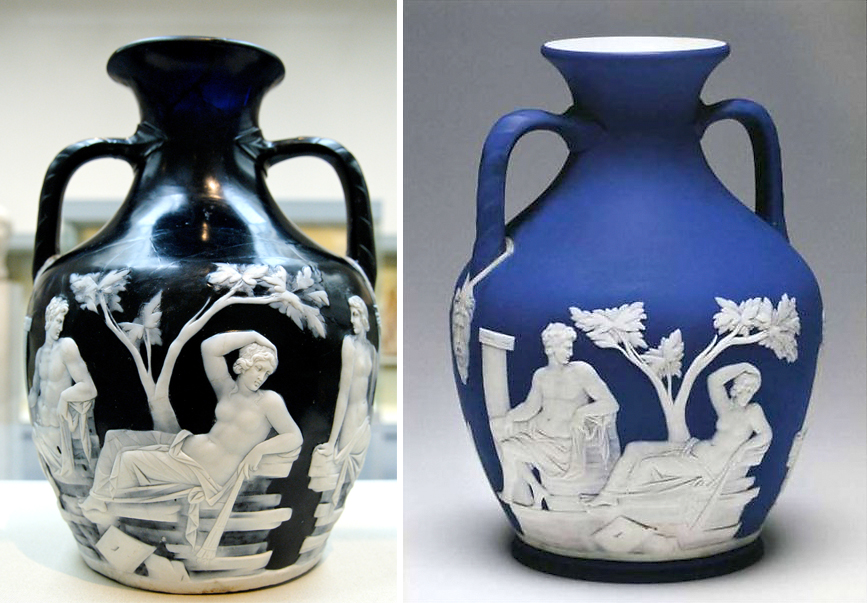
Portland vase (1st century AD) (left) and replica by Josiah Wedgwood (right)
Wedgwood considered the pinnacle of its art to be the repetition in two-layer colored faience of the famous antique Portland colored glass vase (1st century AD). In 1790, after four years of hard work to improve the technology for the production of "jasper mass", Wedgwood created a replica of a masterpiece of ancient Roman glassmaking, commissioned by Queen Charlotte, who could not acquire the original, which at that time belonged to the Duchess of Portland. The new vase was even better than the original. More elegant, sculptural, high-quality, it became a kind of peak point in Josiah's artistic career. After this success, Wedgwood made 24 more copies, thus beginning the concept of circulation. The Portland vase later became the symbol of the Wedgwood brand. Its image could be found as an element of the company's logo, as well as on the brand of products.
After the death of Josiah Wedgwood in 1795, his son and nephew took over the manufactory. The Wedgwood Company (full name "Josiah Wedgwood and Sons" was managed by his descendants until 1968. In May 1906, the Wedgwood Museum was opened at the old Wedgwood ware factory in Staffordshire (now in the city of Stoke-on-Trent).
Another famous English porcelain company, Royal Doulton, dates back to 1815. It was then that John Dalton decided to invest all his savings (about 100 pounds) in one small English pottery workshop. Real success came only 25 years later, when John Dalton's son Henry became the head of an already fairly large production. He was the first in the world to establish a plant for the production of ceramic downpipes and pipelines. In 1877, Henry Dalton acquired a large stake in a pottery factory in Staffordshire, where the production of bone china began in 1884. The outstanding success of the Doulton brand attracted the attention of the royal family. In 1901, the company received a royal patent from King Edward VII and the right to be called "Royal Doulton, supplier of the court of His Majesty." And the British lion, known since then as the classic trademark of Royal Doulton, was added to its emblem.
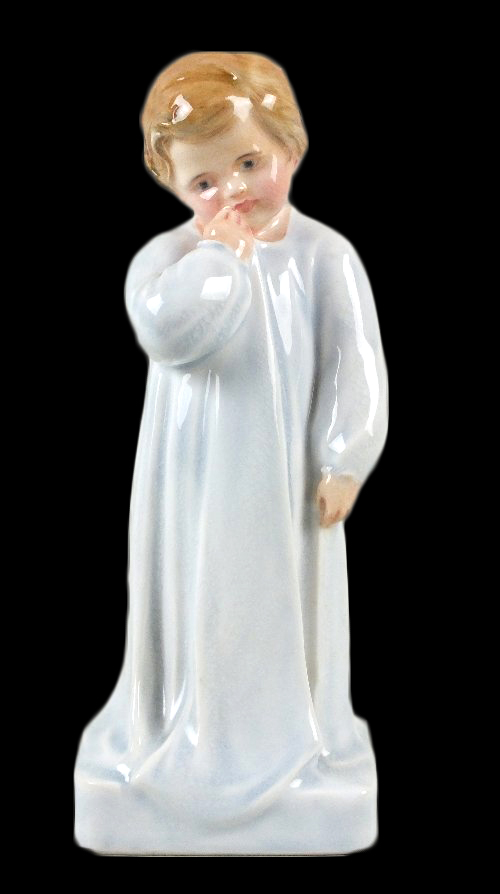
In 1913, Royal Doulton began to create exclusive porcelain figurines. In the same period, Queen Mary visited the manufactory, who really liked the figurine of a little boy in a nightgown. The figurine was originally called Bedtime ("Sleep Time"), but the Queen named it Darling ("Beloved"), it became the very first collectible figurine. The figures released by Royal Doulton proved to be so popular that in 1980 the International Royal Doulton Collectors Club was formed.
The process of creating a porcelain figurine began with the development of an artistic concept. After the artist has made a sketch, the modeler makes a mold from a molding clay. The model consists of several parts, complex models are assembled from more than 30 parts. Molds for parts are porous on the inside, they absorb moisture and ensure an even distribution of clay. After drying, parts of the figures are removed from the molds and connected. The seams are carefully cleaned and washed. The next step is the first firing. Interestingly, due to the evaporation of moisture, the figure noticeably decreases in size. Porcelain takes on hardness and final shape. The figurine is dipped into the glaze, then fired a second time. Painted, fired again and covered with glaze. Several stages of painting, alternating with short firings, are necessary to give Royal Doulton's characteristic mother-of-pearl shades of color. Only artists with at least ten years of experience in the manufactory were allowed to paint the faces of the figurines.
Many talented designers and artists have worked with Royal Doulton, including the outstanding Arthur Leslie Harradine. Thanks to him, such series as street vendors, a children's series, characters of literary works, bold ladies of the art deco period and, of course, pretty young ladies with a coquettish protruding toe of a shoe from under a puffy dress were born. Harradine knew how to convey mood and movement in porcelain, which is clearly demonstrated by beauties in dresses fluttering in the wind. A series of such porcelain young ladies is presented in the 3rd hall of our museum.