
Japan
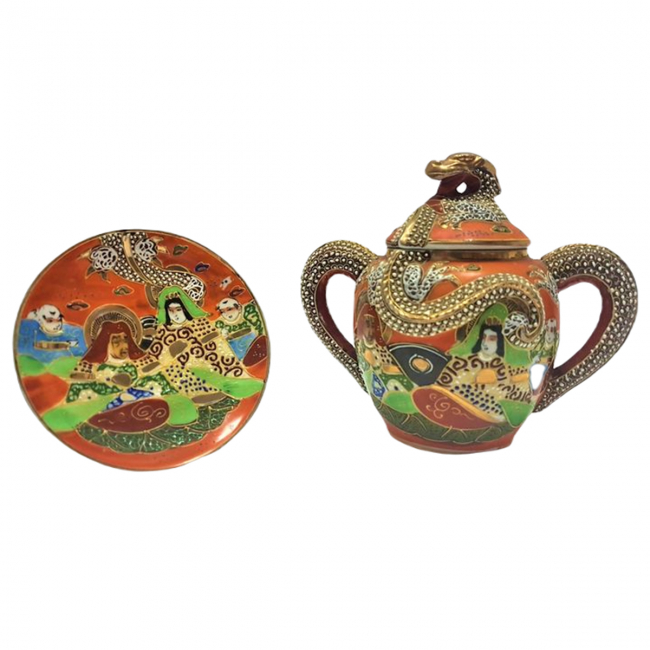
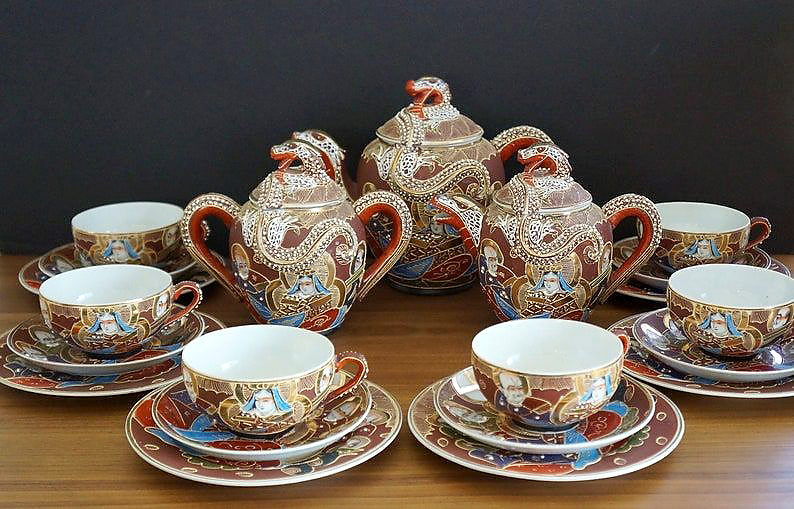
Saucer and sugar bowl
Country: Japan Manufactory: Dragon China Date of establishment: first half of the 20th century Size (cm): 13*15
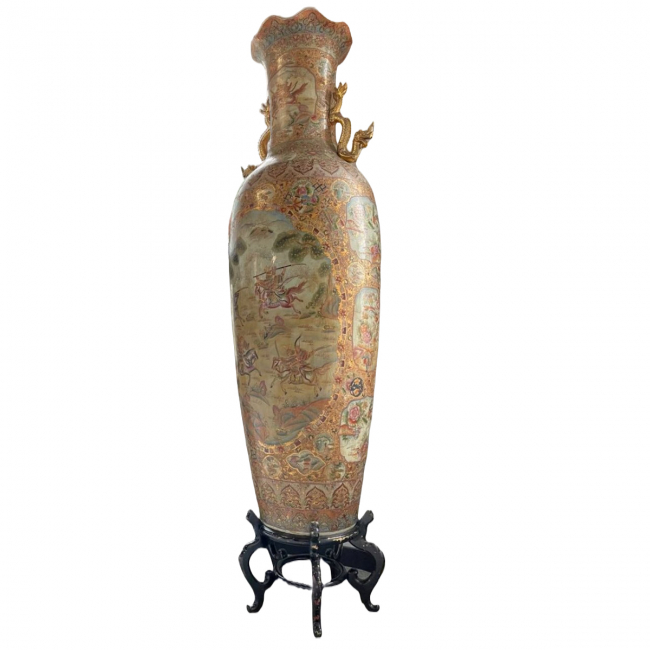
Imperial vase
Country: Japan Date of establishment: XVIII century Height (cm): 180
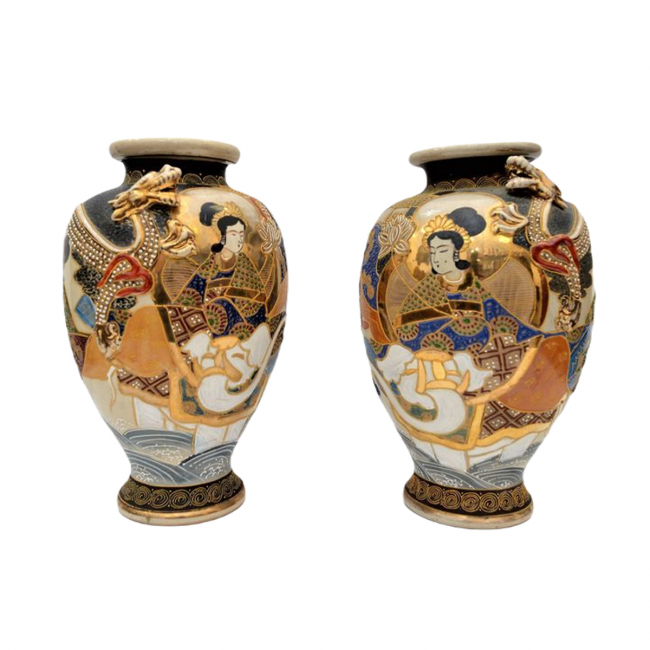
Vases
Country: Japan Manufactory: Satsuma Date of establishment: the beginning of the twentieth century Size (cm): 28х19
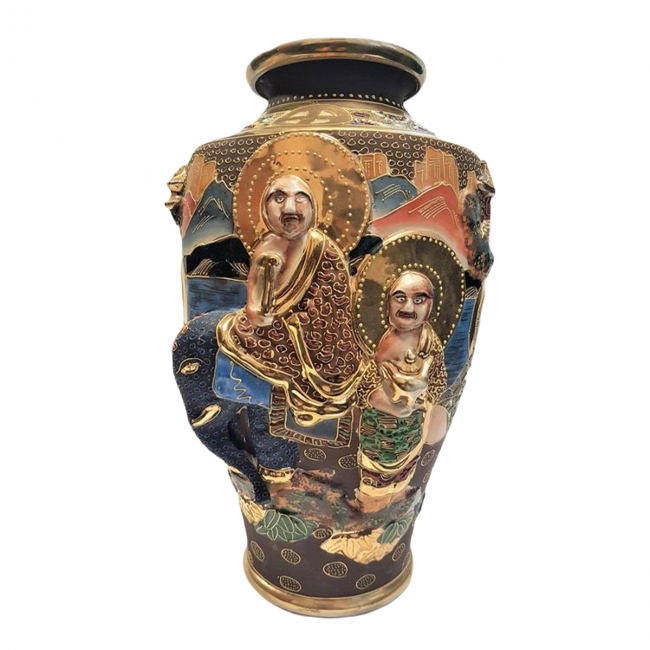
Elephant riding
Country: Japan Manufactory: Satsuma Date of establishment: first quarter of the 20th century Size (cm): 32*18
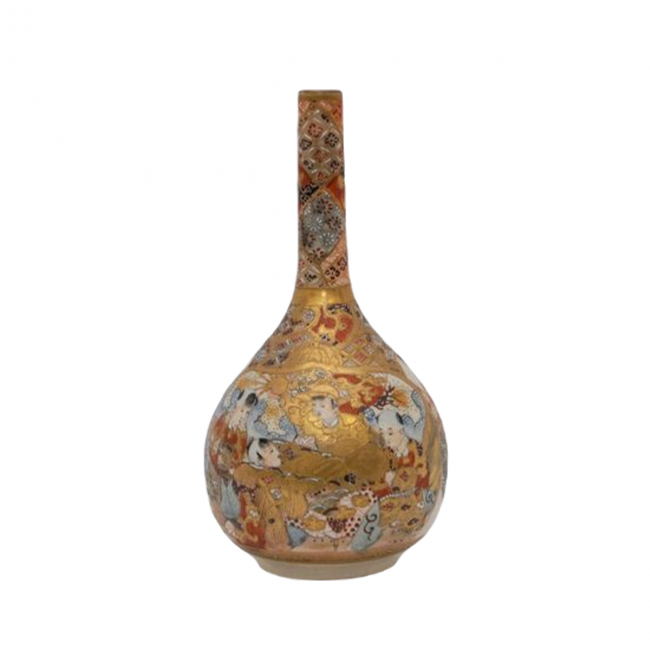
Vase
Country: Japan Manufactory: Satsuma Date of establishment: XVIII century Height (cm): 19
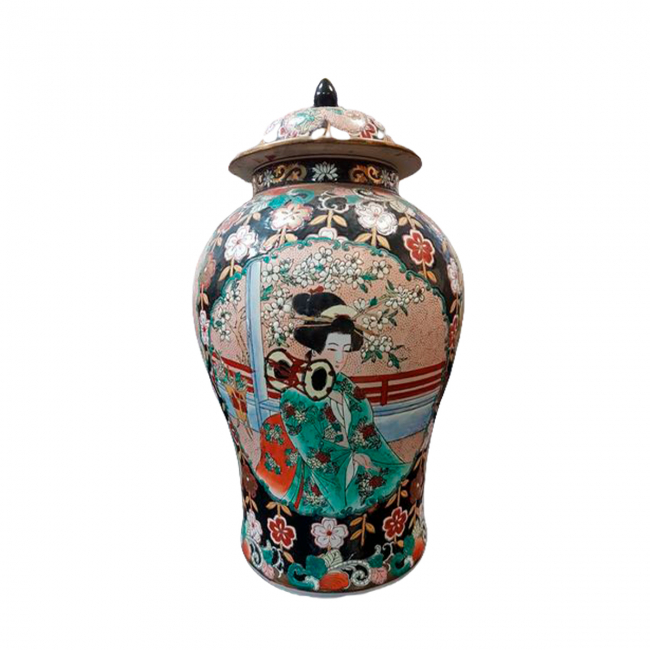
Vase
Country: Japan Manufactory: Satsuma Year of establishment: end of the 19th century Size (cm): 48*28
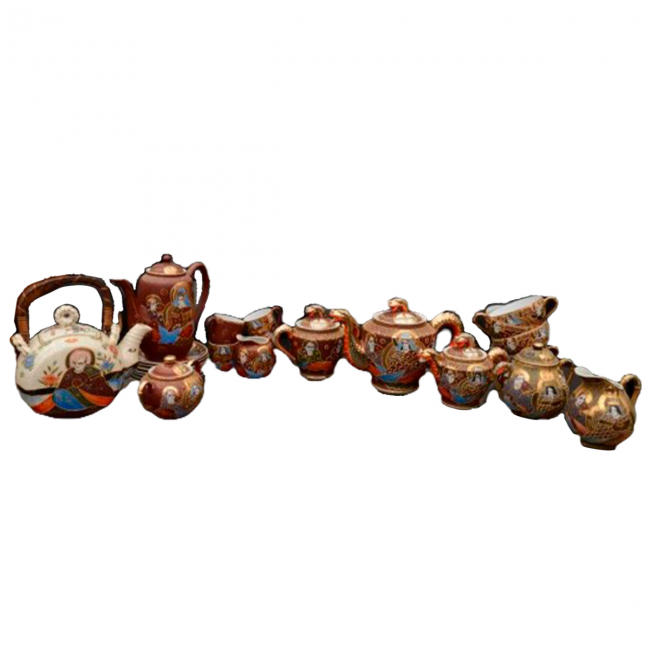
Tea and coffee services
Country: Japan Manufactory: Satsuma Date of establishment: the end of the 19th - the beginning of the 20th century
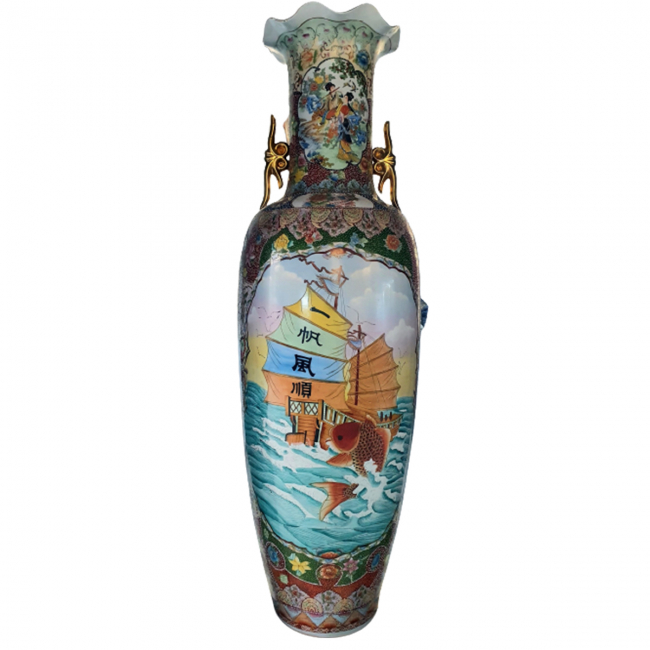
The Vase
Country: Japan Date of establishment: Early twentieth century Height (cm): 160
Porcelain production in Japan began much later than in neighboring China or Korea, in the 17th century. Refined Japanese porcelain owes its appearance to Korean potters who were captured during the military raids of 1592--1598. It is believed that it was the enslaved craftsmen who introduced their conquerors to the art of creating thin-walled ceramics. They also discovered deposits of kaolin and porcelain stone in the Arita region on the island of Kyushu, and also laid down the first tunnel kilns – noborigame, which make it possible to ensure uniform heating of products and a temperature of about 1400 ° C inside the chambers. These structures were located along the slope of the mountain, creating forced pressure due to the height difference. The famous "dragon furnaces" of China worked in a similar way.
The Arita region is considered the birthplace of Japanese porcelain. It gave its name to a whole trend of thin-walled ceramics, which is very popular among collectors. Later, production was opened in the cities of Satsuma, Hagi, Karatsu, Takatori and Agano. The first porcelain products copied Korean and Chinese samples with underglaze cobalt painting. At the same time, the craftsmen were influenced by the local traditional Oribe and Shino pottery developed for the tea ceremony.
For the first 50 years, the Japanese porcelain industry worked mainly for the domestic market, but then the situation changed. The middle of the 17th century turned out to be an unfavorable period for Chinese porcelain. In the 1640s, wars decimated porcelain production, and two decades later the new Chinese government banned all maritime exports, creating a shortage of thin-walled pottery in the European market. All this had a beneficial effect on Arita's porcelain production. Refugees from the Celestial Empire, among whom there were many masters of pottery, introduced their own recipes for raw materials as well as painting techniques with pigments and enamels in Japan.
Beginning in 1658, the Arita region began to be actively controlled by the Dutch East India Company, which was looking for a place to live for the blue and white Chinese dishes that Europeans loved so much. During this period, two types of porcelain products were produced: "Arita" (wares with subsequent cobalt monochrome use, absorption by transparent lead glaze) and "Imari" (ware, planned first with cobalt, and, after intermediate firing, with colored overglaze enamels). These names were introduced by Europeans after the names of the ports from which Japanese ceramics were exported; of particular interest is the “kinrande imari” (brocade pattern) with a slightly convex phenomenon that completely covers the surface of the products (by the way, it was often copied by the manufactories of England, individual copies can also be found in the Meissen collection).
Soon the production of "Kakiemon" porcelain began, which was handled by the Sakaida family. The founder of the constitution was Sakaida Kakiemon. The second important porcelain education center in the neighboring Arita region of Hizen Province. Here they produced dishes and decor items with overglaze painting with colored enamels: coral, blue, pale green, yellow. The technology was also retained by Chinese masters. Hizen's porcelain products are the results of the main competition of Arite, causing delight among consumers in Europe. The characteristic features of the Kakiemon style are a large unpainted space covered with milky white glaze and decoration with an asymmetrically located elegant place. A rim was often found on the table and small relief ledges were made. Later, the term "kakiemon" came to encompass all thin-walled pottery of a similar style, regardless of where it was produced.
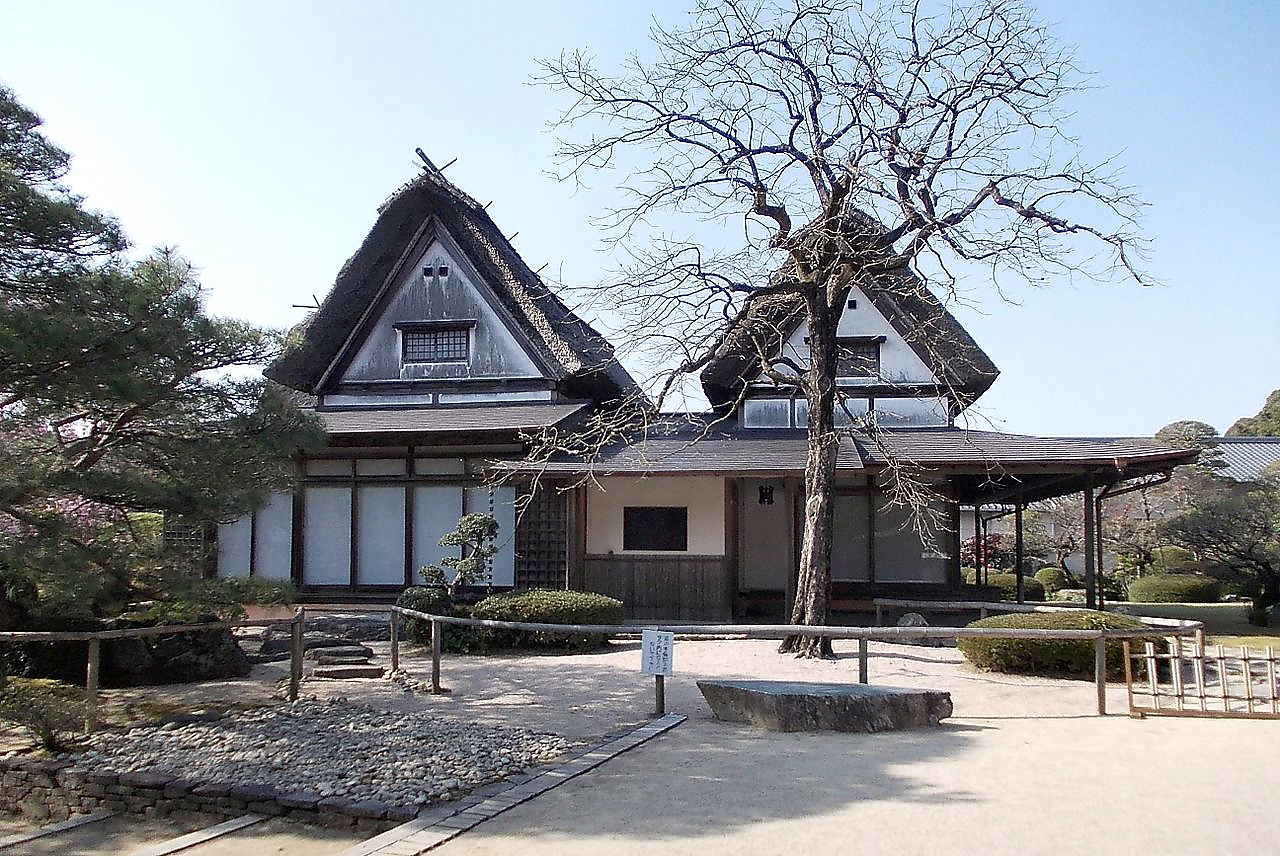
Kakiemon kiln in Arita
After China restored porcelain exports to the West at the end of the 18th century, interest in Japanese products was easily tolerated. Pottery workshops of the Celestial Empire, trying to get ahead of the participants themselves, began to make dishes in the style of "Imari" and "Kakiemon". They did it very successfully. The only legendary pottery of Hizen in the middle of the 20th century was revived due to the exceptionally high frequency of heirs of founding bones. In 1971, Kakiemon porcelain was declared an Intangible Cultural Property of Japan.

At the beginning of the 19th century, the third most popular and large-scale production of Japanese porcelain stylistic direction, Satsuma, was formed. This name comes from the historical province in the south of Kyushu, where traditional ceramics for tea ceremonies were produced until the 16th century. With the appearance of captive Korean potters in the region and the discovery of china clay deposits near the village of Seigawa, the first samples of exquisite thin-walled dishes began to appear here, mainly oriented to the European export market. The innovation was actively resisted by tea manufacturers who had developed their craft for centuries, who were accustomed to extol the aesthetics of simple everyday things and shunned any luxury. But despite the opposition of adherents of traditional ceramics, in three workshops – Kagoshima, Naesirogawa and Tateno began to make magnificent thin-walled products of the Satsuma style. Porcelain "Satsuma" was focused on the Western consumer more than other varieties. In the middle of the 19th century, new production facilities were opened, including in the city of Kyoto. Porcelain "Satsuma" has become the pride of Japan and its "face" in the international market of elite ceramics.
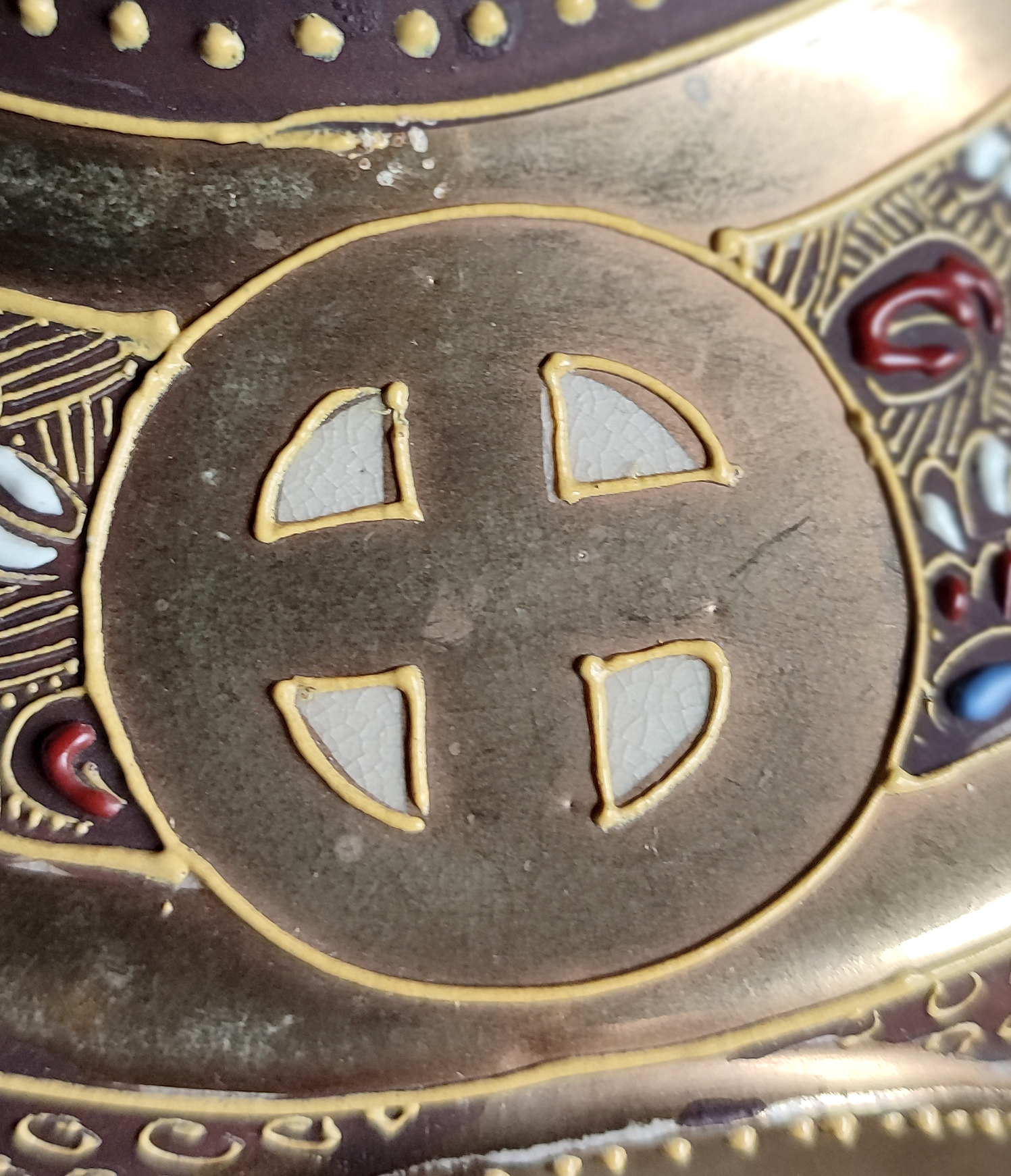
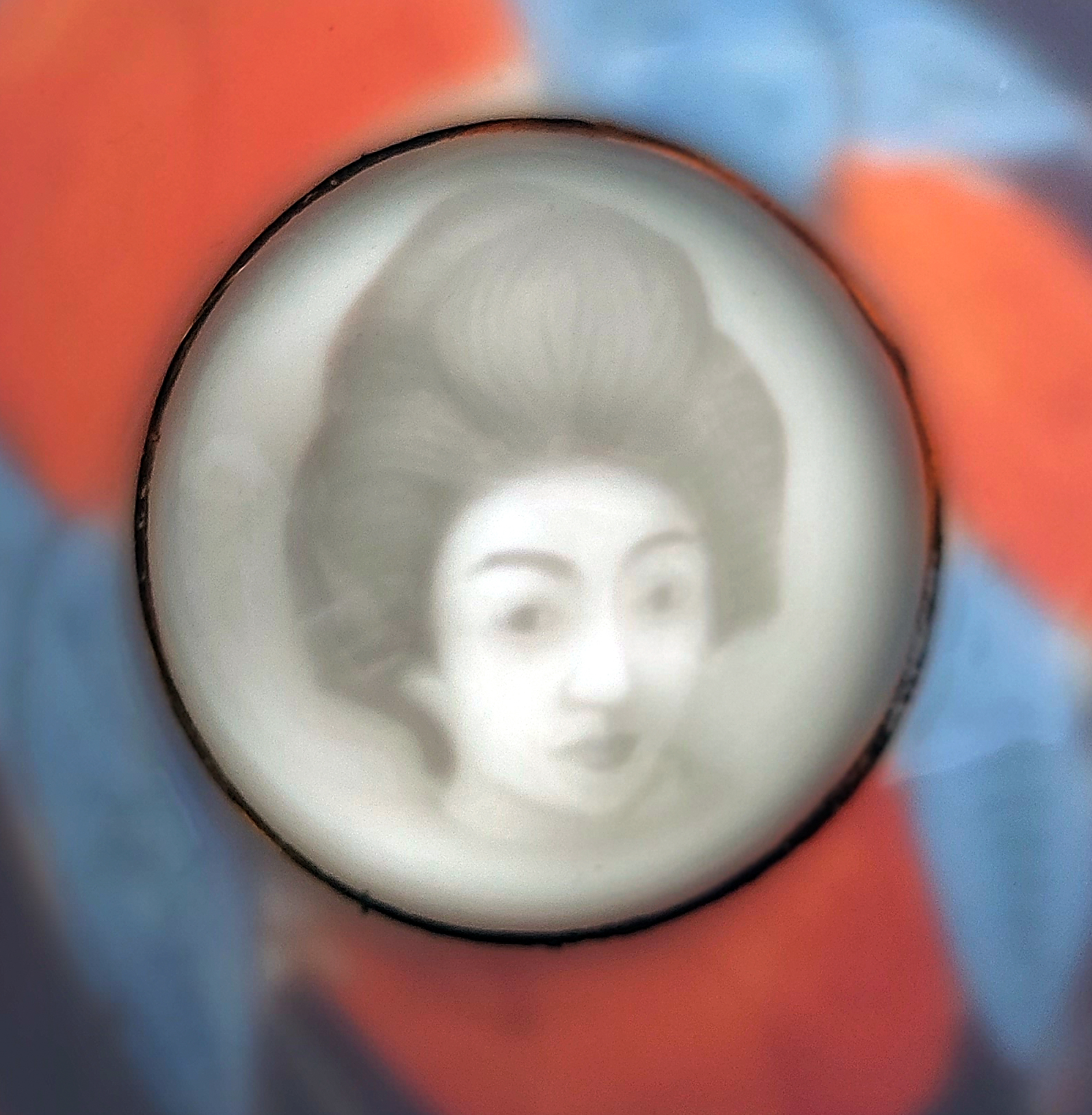
Satsuma products are made exclusively from the highest quality raw materials. The noble material stood out with a delicate cream color, while small cracks were clearly visible on the surface; crackle was used as a glaze. The surface was treated with a thick enamel layer, after which gilding was applied. The peculiarity of this style is dishes with "brocade" painting, reminiscent of richly embroidered fabric. Very complex, multi-colored and multi-figured images, which covered not only the outer, but also the inner part of the products. Among the main subjects of the painting are scenes from the life of the Japanese aristocracy, military battles, architectural and natural landscapes, illustrations for literary works, flowers, geishas and animals. The most successful works are complemented by hallmarks and signatures of the masters.
Satsuma items produced before the 1950s are highly valued by collectors.