
Austria
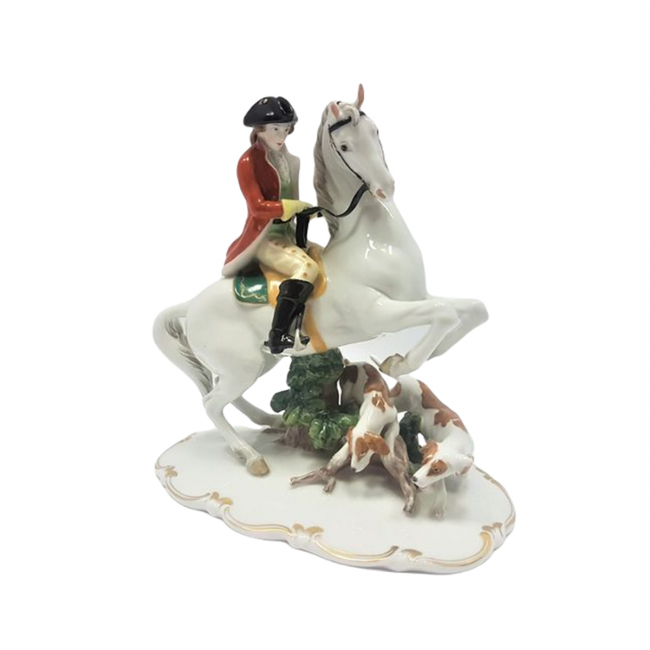
Before the hunt
Country: Austria Manufactory: Augarten Date of establishment: 1930s Size (cm): 18*19
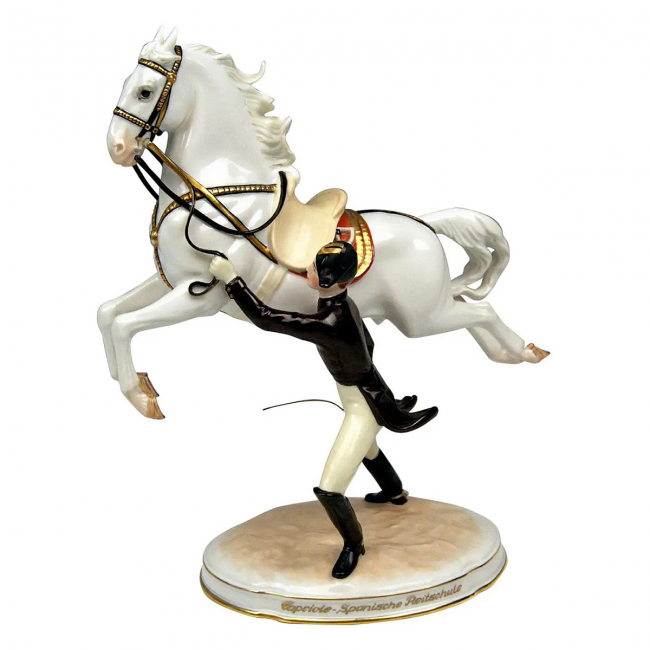
Capriole
Country: Austria Manufactory: Augarten Date of establishment: 1950s Size (cm): 30*27
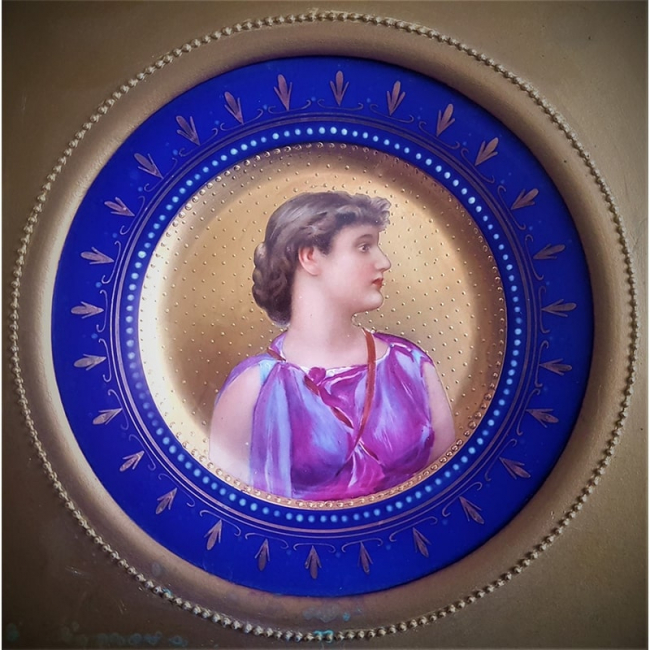
Lisette
Country: Austria Manufacture: Royal Vienna Date of establishment: 1825 Diameter (cm): 18
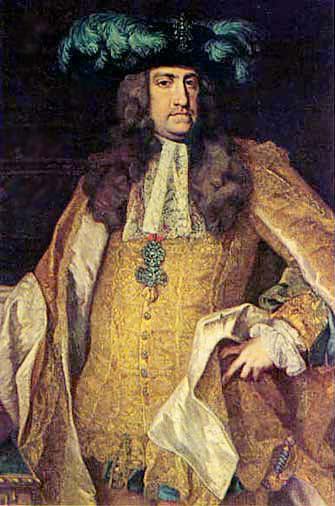
Charles VI
One of the most famous Austrian porcelain manufacturers is the Augarten porcelain manufactory, located in Vienna. The tradition of porcelain making in Austria has a long history. Porcelain production began here at the end of the 17th – beginning of the 18th centuries, almost immediately after the Europeans discovered the secret of making porcelain products. Many interesting stories are associated with the name of the Vienna Porcelain Manufactory. There is probably no other company in Europe with such an eventful history. Here are espionage passions, betrayals, bankruptcy, and ups...
Like many porcelain manufactories in Europe, Vienna was also under the patronage of the imperial house and was created at its expense. In order to reveal the secret of the porcelain recipe, it was not chemical technologists who worked on this task, but... imperial spies who "stole" the porcelain recipe from the Meissen manufactory. The production technology of Meissen porcelain was completely classified. Porcelain in Europe in those years was more expensive than gold, it was called "precious white gold". Few knew the secrets of porcelain production, such specialists were called arcanists – from the Latin word arcanum (mystery). They were chemical technologists, and practically all of them worked in Meissen.
Nevertheless, Claudius Innocentius du Paquier managed to find out the recipe for the composition of Meissen porcelain and the technology for its production. Du Paquier arrived in Vienna in the 1700s and initially worked as a military adviser to the imperial court. He was able, through his diplomatic channels, with the help of the imperial ambassador and secret agent Baron Damian Hugo von Wiermont, to lure artisans from Meissen to Vienna and use them to create the second porcelain factory in Europe. In 1718, the Austrian emperor Charles VI, by a special decree, granted du Paquier privileges for the right to monopoly production of porcelain for 25 years.
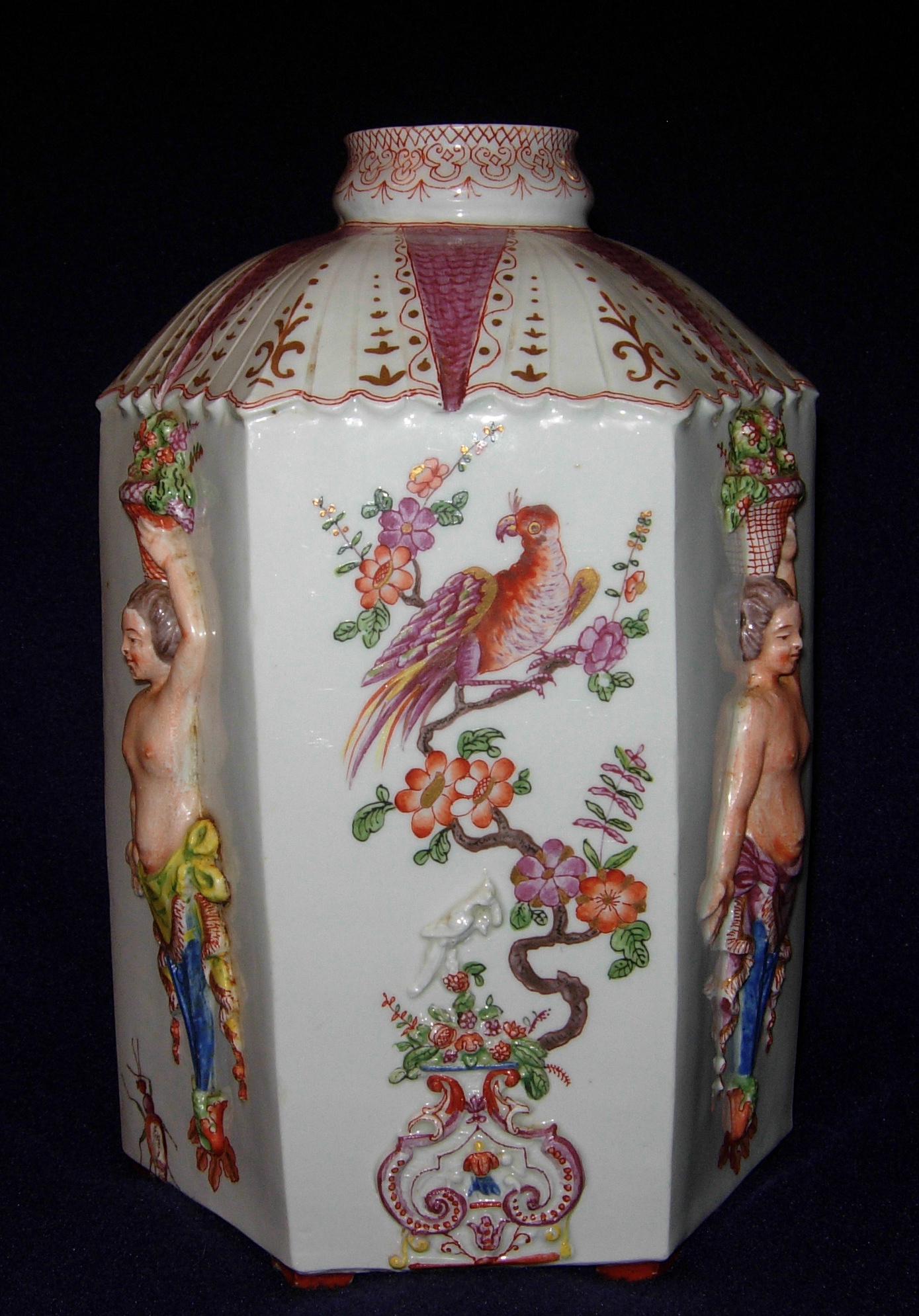
"Vase du Paquier". Vienna. 1725
Initially, the plant was located outside the city to keep everything a secret. The imperial court in Vienna had a particular interest in creating a porcelain manufactory, because they wanted to compete with Chinese porcelain, which was in great demand in Europe, and get a powerful influx of money into their treasury.
Viennese porcelain of the period du Paquier (1718-1744), although made from the same raw materials as Meissen, differed from it in a yellowish-gray tint. Tableware, vases, candlesticks, decorative inserts for furniture and interiors were produced. The decor at first was influenced by oriental, especially Japanese, designs made in the Imari style. However, after 1730, the "leaves and ribbons" ornament characteristic of the Viennese Baroque began to prevail. From the mid-thirties of the 18th century, the decor was diversified with landscapes, mythological, hunting and military scenes, images of "German flowers". The color scheme was based on blue underglaze painting, which successfully combined red ("Viennese purple-red"), green, yellow and black. By the end of the period, two-handled cups, teapots and coffee pots with spouts emerging from mascarons, as well as bowls, plates, soup bowls, dishes became typical products.
After twenty-five years of successful production, du Paquier's company found itself in debt and had to be sold. In 1744, during the reign of Empress Maria Theresa, the manufactory was nationalized, becoming the Imperial Porcelain Manufactory of Vienna. Since then, the coat of arms of the ruling Babenberg dynasty has become the hallmark of the manufactory's products: a shield with three horizontal stripes. Among porcelain collectors, the stamp was jokingly called "wood stamp" (resembling a stack of firewood). During this period, mainly rocaille and trellis-painted utensils, porcelain figurines on mythological themes, typical of the "Maria Theresa style" or Viennese rococo, were produced. Manufactory gradually fell into decay.
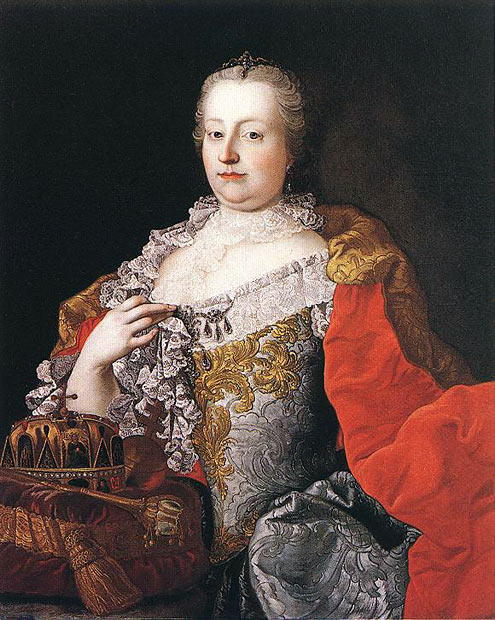
Maria Theresa
The new emperor Joseph II was not interested in porcelain, and in 1784 the manufactory was again put up for sale at auction, but there were no buyers. Then it was decided to lease the enterprise to Konrad von Sorgenthal, a businessman from Nuremberg. Sorgenthal attracted experienced artists, graduates of the Vienna Academy of Arts, to work, and soon Viennese products again began to successfully compete with the products of Meissen and Sevres. Konrad von Sorgenthal directed his main efforts to decorating products, having managed to attract artists (and at the same time technologists) Joseph Laitner and Georg Perl, as well as the sculptor Antonio Grassi to these works. The Viennese manufactory was one of the first to turn to classicism, using Greek and Roman vessels, wall paintings discovered during the excavations of Pompeii and Herculaneum, and Vatican frescoes by Raphael as examples. The main theme of the painting is mythological scenes, interpreted in a sentimental and theatrical manner.
Lightner succeeded in expanding the palette of colored enamels, as well as developing a range of iridescent enamels, which were complemented by various shades of bronze-purple chandelier. Pearl created the technique of relief gilding and engraving on gold. As for the sculptural works of Grassi, at first they were covered with colorless glaze, and then became biscuit (at the same time, ceremonial dishes began to be made from biscuit). A number of sculptural compositions by Grassi brought European fame to the factory. Viennese sculpture is characterized by exceptional attention to style and detail. So, the dress, if it was modern, always followed the fashion in cut and even in the pattern of the fabric, small details and decorations were made with great care.
In the 1790s, the influence of Oriental porcelain began to show itself again: lacquered red and black backgrounds with relief gilding are often found. The production of cheap dishes with a simple blue border also belongs to the same years. 1805-1828 is the last period of the competitive existence of the Viennese manufactory. Characteristic for the products of that time are the abundant decoration with matt gilding in combination with gilded relief ornaments, as well as the widespread use of still lifes with flowers in the decor. By the 20s of the 19th century, the production of cups and goblets with Hungarian symbols and the appearance of urban landscapes and views of fortresses in the painting began.
Most of the products were made in the widespread Biedermeier style, which was popular at the time. However, the decline of the Vienna factory was approaching. Neither the introduction of the lithophany technique (highlighting relief patterns created on porcelain, glass, plastic or other translucent material using a light source) nor the transition in 1827 to a cheaper mass based on kaolin from Branditz did not save it. The difficult political situation did not allow the state to invest the necessary funds in production, and the influx of talented artists decreased. In 1863, the parliament decided to liquidate unprofitable production, in 1866 Emperor Franz Joseph I approved this decision and the famous Viennese manufactory ceased to exist. However, after the fall of the Danubian Monarchy and the stabilization of the post-war economy, the manufactory was reopened in 1923 in the Augarten Palace under the new name "Vienna Augarten Porcelain Manufactory". During this period, the Art Deco style was popular in Western Europe. Some of the artists who collaborated with the manufactory created examples in this style. Others followed the tried and tested patterns of previous eras. Porcelain from the old Viennese manufactory is often referred to as "Old Vienna '' porcelain, distinguishing it from the products of the new Augarten manufactory.

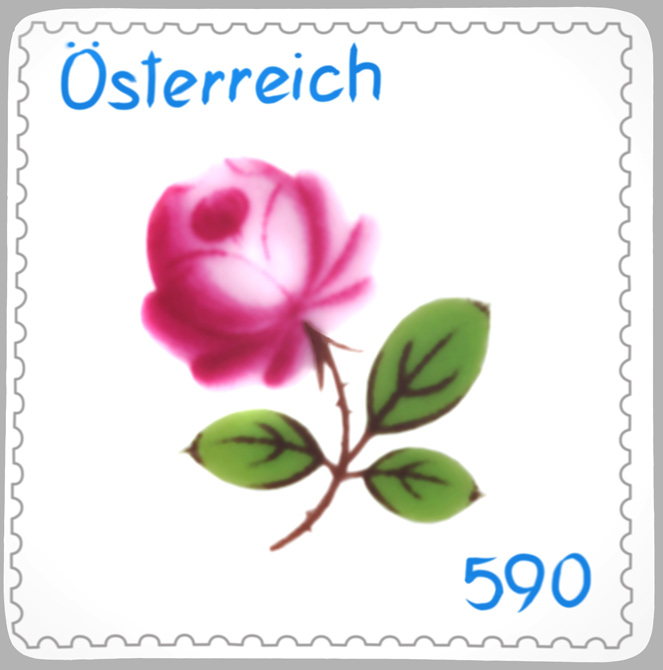
In 2003, after the manufactory closed due to bankruptcy and the dismissal of a significant part of the staff, Value Management Services GmbH (VMS) bought out the production and founded its own company called the New Augarten Porcelain Manufactory. In 2014, the manufactory, in cooperation with the Austrian Post, issued the world's first porcelain stamp.
Austrian porcelain is still made by hand. Porcelain is made from three key ingredients: white kaolin, feldspar and quartz. The liquid porcelain mass from which porcelain items are made is called slip. The method of its subsequent processing depends on the production of which porcelain objects the mass is intended for.

To create hollow porcelain objects, slip is poured into special molds. After that, dry gypsum absorbs water, creating a solid layer and forming the desired porcelain mass. Then, an analysis of the specific gravity of the porcelain mass is carried out, as a result of which the excess slurry is poured out. The form is opened and porcelain is carefully removed from it.
No less time-consuming is the technology for manufacturing porcelain mass for flat objects. To produce an elegant porcelain saucer, the slip is aged for several months, and this is made in order for the porcelain mass to mature to the correct consistency necessary for casting fine tableware.
However, the painstaking work of the Austrian masters of porcelain art does not end there. After all, even such seemingly simple porcelain items as coffee cups need to be almost "jewelry" assembled, since the handles for porcelain cups are created separately from them. So, different parts of porcelain cast or processed on a circle are connected by liquid porcelain slip. After that, whole porcelain compositions are painted and decorated.

The final stage is the firing of porcelain compositions. To begin with, porcelain is subjected to scrap firing, during which at a temperature of 930 ° C it acquires some hardness. But its surface remains damp and porous. This firing method is also called biscuit firing, since the obtained absorbent porcelain surface is a necessary condition for its subsequent glazing and firing a second time. This time at a higher temperature – 1380 °C. After that, porcelain acquires a smooth mirror surface and extraordinary hardness.