
The Netherlands
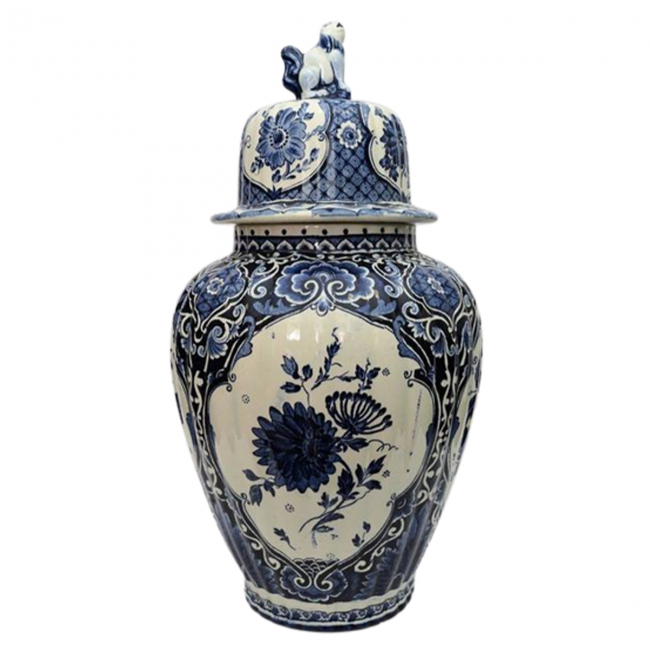
The Vase
Country: Holland (Netherlands) Date of establishment: first third of the twentieth century Height (см): 46
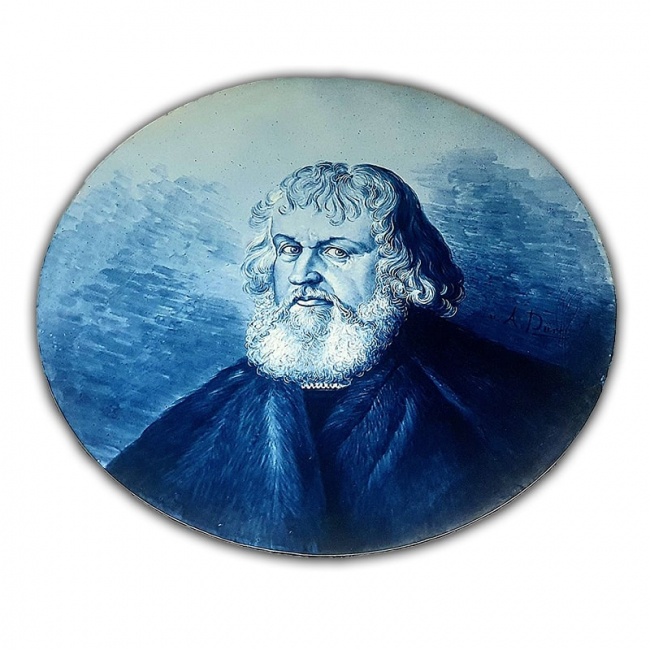
Portrait of Hieronymus Holtschuer by Albrecht Dürer
Country: Netherlands Manufacture: Delfts Date of establishment: first half of the twentieth century Diameter (cm): 55

The well-known Dutch porcelain with cobalt painting was the first sign in the Europeans' attempt to copy Chinese samples. It served as an inspiration for masters from other countries. Today blue porcelain from Delft is a national treasure of the Netherlands and one of the most attractive souvenirs for tourists, despite the fact that the cost of original dishes is very high.
The origins of the unique Delft porcelain can be found in the majolica of the 15th-16th centuries, which was produced in northern Italy. Tiles and dishes made of colored clay were covered with tin glaze to make them white, and then painted with metal oxides: iron, copper, cobalt, manganese, antimony before firing. Thus, white pottery with a polychrome pattern was obtained, regardless of what types of clay were used for it. In 1500, the Italian potter Guido da Savino settled in Antwerp, which at that time belonged to the Netherlands. He introduced local masters to the basics of majolica production. After the Antwerp massacre by the Spanish troops in 1576, some of the Flemings migrated to the north of the Netherlands, taking the secrets of painted Italian ceramics with them. Pottery workshops producing majolica coated with tin glazes appeared in Haarlem, Amsterdam, Rotterdam and Dordrecht. But Delft became the largest center of production, where, in addition to simple tableware, highly artistic decorative items were produced. At the beginning of the 17th century, the Dutch East India Company, among other goods from eastern countries, brought home Chinese porcelain with exquisite cobalt painting. Few could afford such a luxury as imported Chinese porcelain, which cost a fortune. Moreover, the delivery of oriental goods was fraught with great difficulties. The Dutch began to look for ways to produce their own ceramics with similar properties.
Delft was one of the six cities where the representative office of the East India trading giant was located. It is not surprising that Chinese porcelain was supplied here in large quantities and caused a desire to create an alternative that was more affordable and mass-produced. By that time, the Delft potters had switched to clay with the addition of marl, a rock with a high calcium content. This made it possible to produce thinner and stronger products. Exact copies of porcelain from China were obtained, which were very successful.
The development of maritime trade in the early 17th century made Delft one of the most prosperous cities in the Netherlands. Ceramic production here also turned out to be on the rise. Especially after the deterioration in the quality of drinking water led to the massive closure of breweries that brought the main income to the city treasury. If earlier only 10 pottery workshops operated in Delft, then by 1640, 33 enterprises were already recorded in the Guild of St. Luke, which included all representatives of artistic crafts.
With the death of Emperor Wan-Li in 1620, China plunged into internecine wars and the supply of porcelain to the west ceased. Delft craftsmen took advantage of the situation to increase production volumes and conquer not only the domestic, but also the European market. The first porcelain items brought by the East India Company date back to the Ming era. Subsequently, until the end of the 18th century, the Dutch copied the characteristic blue painting on a white background, although in China itself the next dynasty, the Qing, had already come to rule and the decor of thin-walled ceramics had changed.
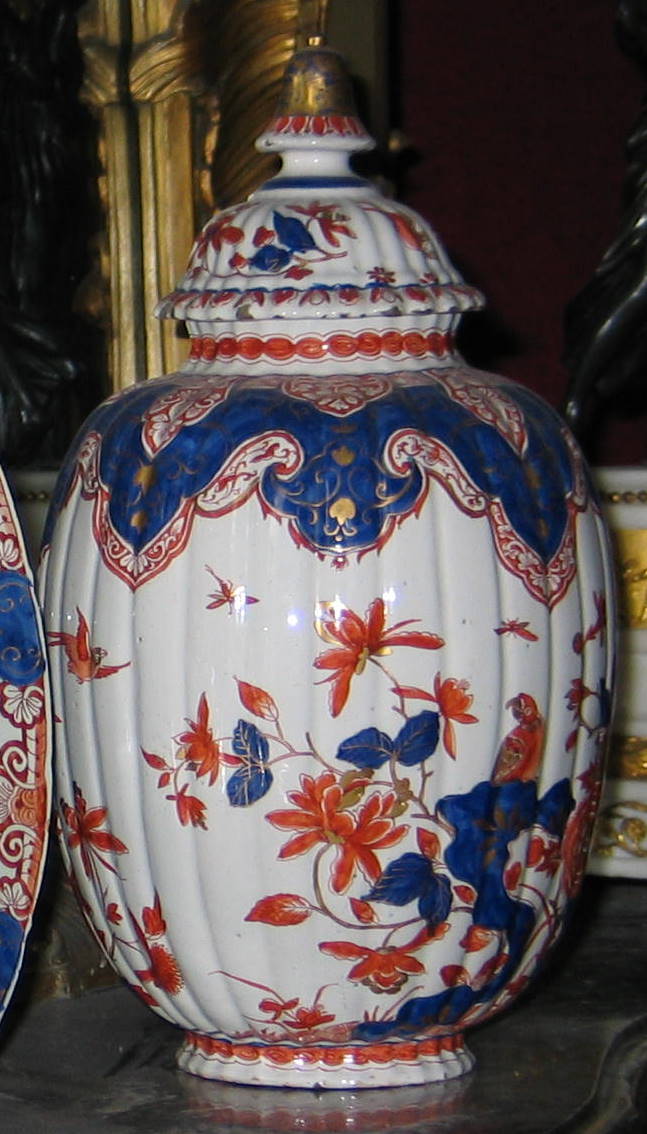
In the early 1700s, Japanese Imari ware was brought to the Netherlands as an alternative to Chinese products. It was also painted with cobalt on a white background, and additionally decorated with colored enamels and gold. The Delft potters copied one of the Imari motifs, for which they had to change the decoration methods. To fix enamel and gilding on tin glaze, additional low-temperature firing began to be used.
At the beginning of the 18th century, China not only resumed exports to Europe, but also reduced the price of porcelain products. The Delft workshops, in order to avoid competition, abandoned the imitation of oriental motifs and switched to depicting genre or biblical scenes, as well as easily recognizable Dutch landscapes with windmills and fishing boats. The murals in the new style were so flawless that they gained unprecedented popularity. Delft tableware with a "national flavor" was exported to China and Japan, where it, in turn, was copied for delivery to European countries.
The Golden Age lasted from 1650 to 1750. Then stagnation began in the Delft pottery industry. The European porcelain market was rapidly developing, while the Dutch masters could not offer anything new to the increasingly sophisticated consumer. The elite segment was occupied by the products of Meissen and Sevres, and the budget segment was captured by the British with their inexpensive and very high-quality dishes of a pleasant cream shade. By 1794, only 10 manufactories remained in the city. Until now, one of them has survived – the Royal Delft plant, which still produces products using traditional old technologies.
In 1653, the Delft businessman David Anthony van der Piet, in the wake of the "golden age" of pottery, opened a "blue" pottery factory in his own house but the family business has never had any success. Not finding support from his son, Pete soon sold the factory to third parties and for some time it flourished. By 1840, despite the stagnation in the ceramic industry, der Piet's former production, known as De Koninklijke Porceleyne Fles, continued to operate. It steadfastly withstood competition from Wedgwood and other European manufactories, as well as lower prices for original Chinese porcelain. In order to somehow survive, De Koninklijke Porceleyne Fles switched to making cheap tableware. The famous cobalt-painted items known as Delft Blue seemed to be a thing of the past forever.

But in 1876, the factory was acquired by the painter and ceramist Joost Toft, who wanted to revive the traditions of Delft pottery. The new owner replaced the outdated equipment and switched to a higher quality white raw material, which made it possible to abandon the expensive tin glaze. In addition, he completely updated the range. In 1916, several workshops located in different parts of Delft were assembled under the roof of one building, where the factory is located today.
The measures taken by Toft to preserve the unique Delft Blue fishery were highly appreciated by the Dutch government. In 1919, the factory changed its name to "Royal Delft" – a sign of special distinction and privileges. Even now, members of the Dutch royal family are still constant buyers of "cobalt" products. The factory, for its part, celebrates every important event in the life of crowned persons with a special series of porcelain. Each item from Royal Delft is hand-signed in overglaze blue, either on the bottom or on the back. The stamp is a round flask for pharmacists, under which there is a monogram with the initials of Joost Toft and the signature Delft.

In addition, the number of the decorative item, the name of the artist and the date of manufacture are indicated in coded form. Masters get the right to put a brand mark on their products only after 10 years of training. All products undergo the strictest control and even if there is a defect imperceptible to the eye, they will not receive the world-famous "quality mark".