
Italy
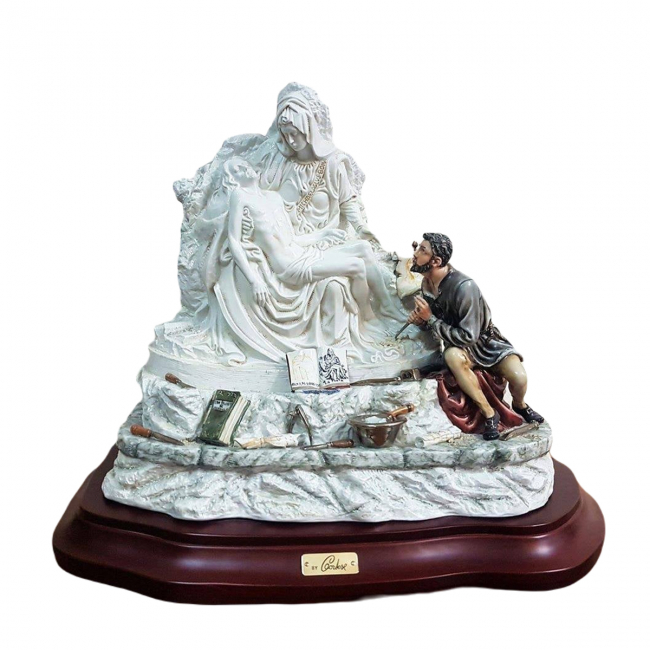
Pieta
Country: Italy Manufactory: Capodimonte Date of establishment: 1992 Size (cm): 34*40 Limited Series
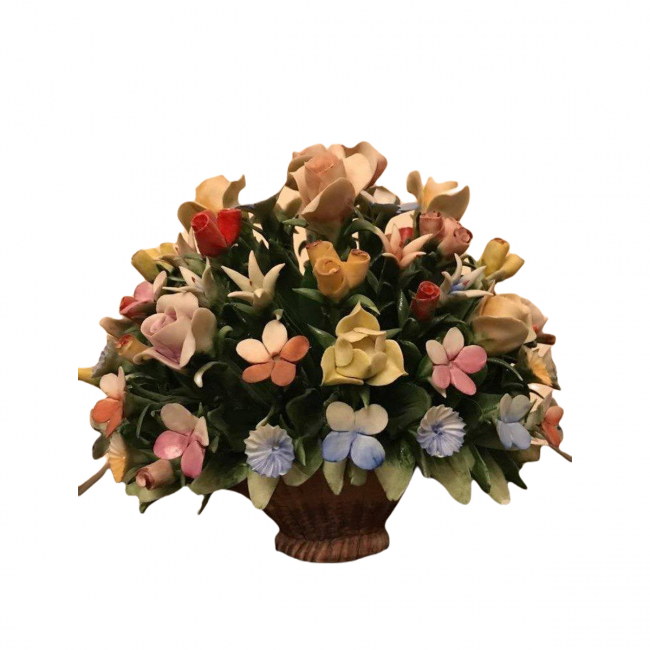
Autumn bouquet
Country: Italy Manufactory: Capodimonte Date of establishment: 1960s Size (cm): 32*44
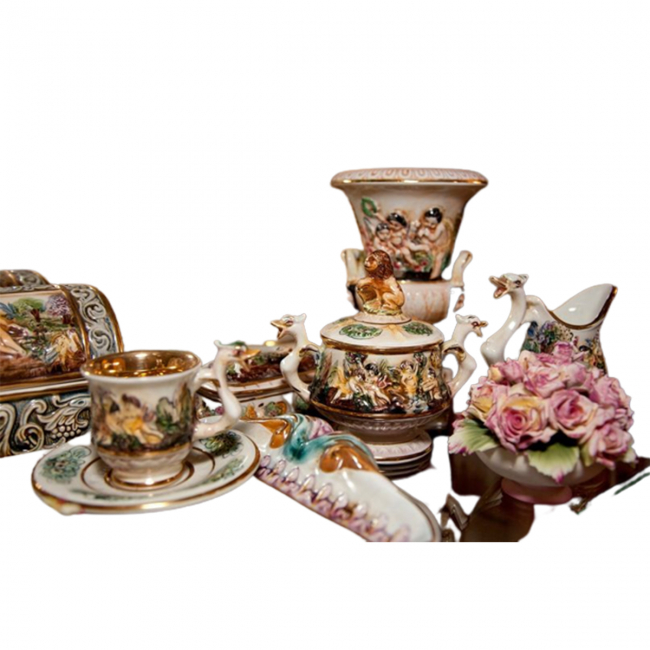
Collection Set
Country: Italy Manufactory: Capodimonte Date of establishment: 1980s

Birth of A Masterpiece
Country: Italy Manufactory: Capodimonte Date of establishment: 1992 Size (cm): 46*32 Limited Series
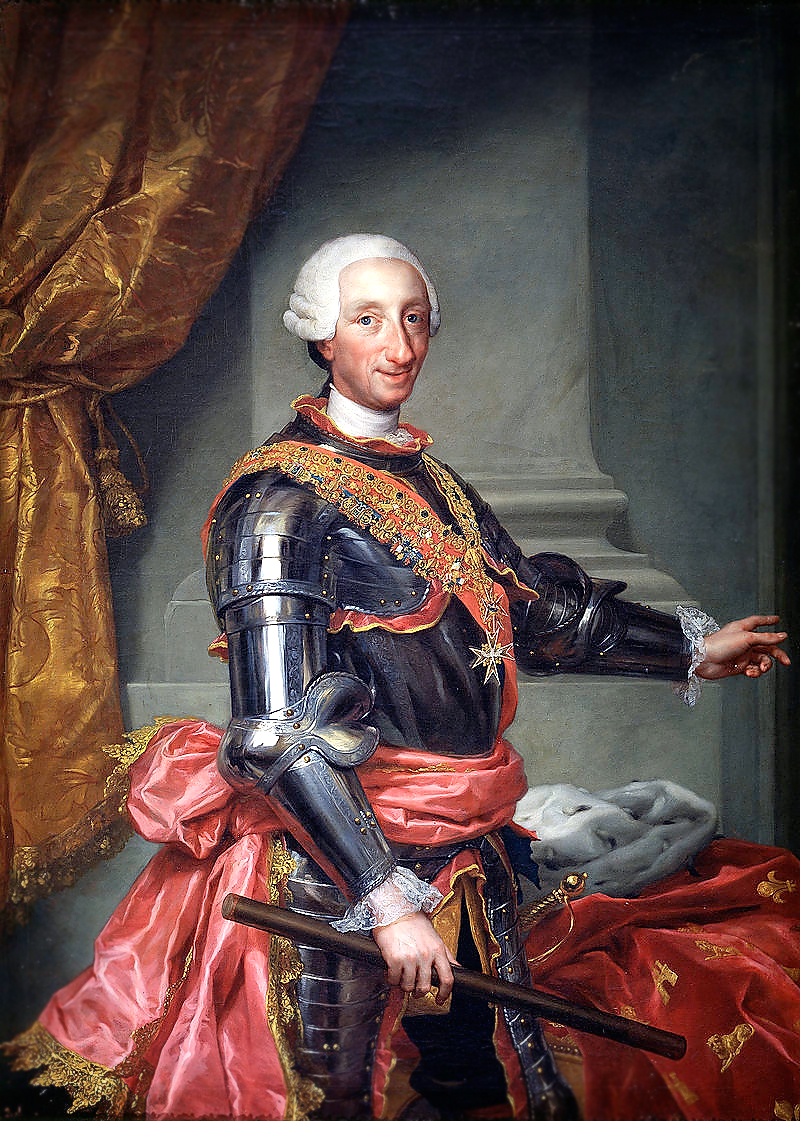
King Charles III of Bourbon
The legendary Venetian merchant Marco Polo opened the eyes of Europeans to the existence of porcelain when he returned from his long trip to China. At first, local ceramists did not know how to achieve the same quality of porcelain. Good results were achieved only many decades later, in the Florentine alchemical laboratories of Francesco I Medici.
The first Italian porcelain factory was the Venetian Vezzi, which produced mainly tea utensils: cups, saucers, teapots, and also plates. The factory was founded in 1720. Vezzi made porcelain from hard paste. Craftsmen from the Meissen and Viennese manufactories worked in the production. Vezzi did not enjoy state support, which was unique for those times. Vezzi's production operated exclusively on a commercial basis and lasted about 7 years.
The factory of Geminiano Cozzi was the latest (1764-1812), but the most successful of the porcelain brands produced in Venice in the 18th century. Initially, Cozzi made porcelain from soft paste. By the 1770s, he had mastered hard-paste porcelain with kaolin, which was mined in the vicinity of Vicenza and produced a fine, hard gray paste with a lustrous wet surface. Such porcelain is often classified as "hard-paste hybrid porcelain". Although it contains kaolin, it requires lower firing temperatures than classic hard pastes.
In 1743, the Capodimonte factory was founded by King Charles III of Bourbon and his wife Maria Amalia of Saxony. Porcelain Capodimonte got its name from the palace complex on one of the Neapolitan hills. Throughout the Kingdom of Naples and neighboring states, the search began for sand and clay suitable for the production of high-quality porcelain. Kaolin was never found, so they decided to make porcelain from other suitable clays from southern deposits, mixed with feldspar. The result is a completely new material – softer in production, but hard and transparent after double firing.
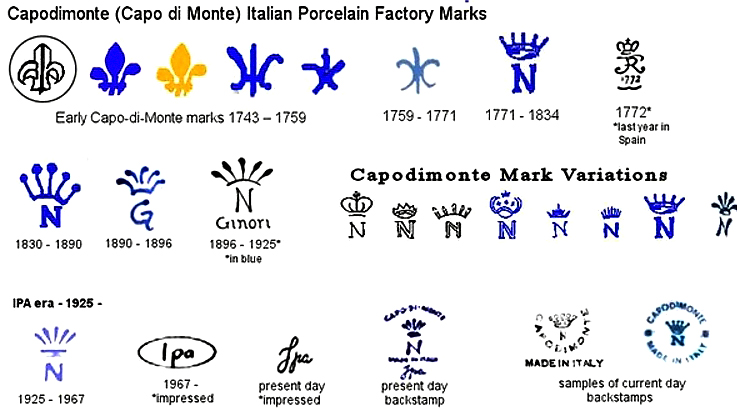
The first masters were Schepers father and son, Giovanni Caselli, who prepared the porcelain mass, the sculptor Giuseppe Grixi, the painter Giuseppe Della Torre and the carver Ambrogio Di Giorgio. Initially, the masters were inspired by Saxon porcelain, but soon the resulting effects and the quality of porcelain required a more elegant and refined form, more refined pictorial accents. Masters began to take Chinese and Japanese porcelain as a model. Gradually, artists began to create their own projects, embodying new ideas, experience and talent. Creative searches gave excellent results, which quickly made the factory famous throughout Europe. This is how elegant snuff boxes, vases, jugs, coffee pots, figurines, dinner sets, decorative plates, mantel clocks were born. The trademark was the Lily of Bourbon.
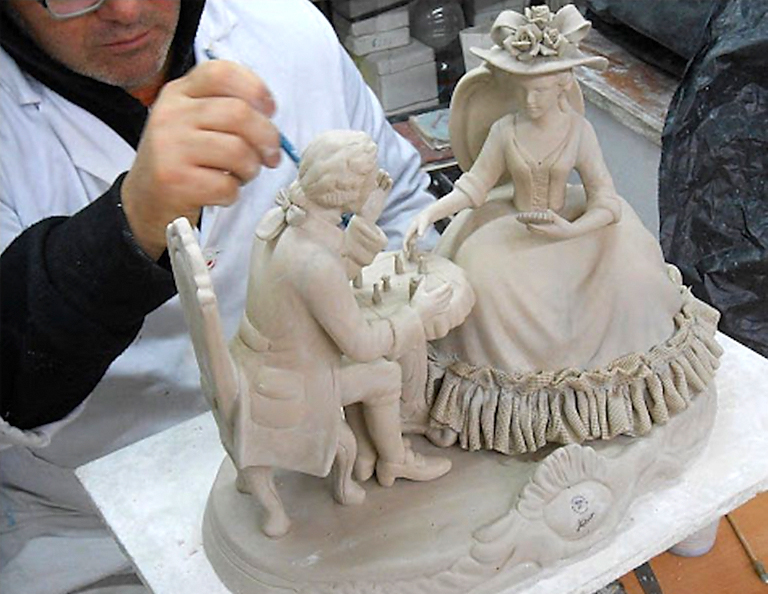
In 1759, the factory was closed by order of King Charles, who left for Spain to succeed his brother, and took with him all the materials and furnaces for making porcelain, as well as all the craftsmen. The throne of Naples passed to his son Ferdinand, who decided to resume the production of porcelain. But the factory did not open until 1773, it was called the Royal Factory of Fernandea, its trademark was the blue letter "N" under the crown.
Thus, three periods of development of the production of porcelain products in Capodimonte were determined:
1773-1780 – under the artistic direction of the sculptor Francesco Celebrano;
1780-1800 – 20-year heyday (under the artistic direction of Domenico Venuti, who founded the Art School at the factory);
1806-1815 – a period of decline (with the advent of French rule in Naples, the city was ruled by Giuseppe Bonaparte and Gioacchino Murat. The porcelain factory was sold to private individuals).
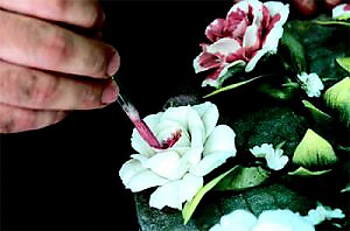
In 1821, the manufactory was finally closed.
After the unification of Italy in Naples, private porcelain factories were opened one after another: Maiello, Mollica, Cacchapuoti, Visconti. They diligently and carefully copied samples of the royal manufactory, so soon Capodimonte became a household name, referring not to a single production, but to a unique style and technology. Neapolitan masters managed to preserve and develop traditions, inventing new methods and techniques. So Capodimonte porcelain entered the list of the main crafts of the Apennine Peninsula. Now there are more than 100 craft workshops where whole families work.
To ensure that the production of Capodimonte porcelain was no longer subject to interruptions and stops, and to encourage research and innovation in this area, the State Institute "Giovanni Caselli" was founded in 1961, headquartered in the same building that once housed the first royal factory.