
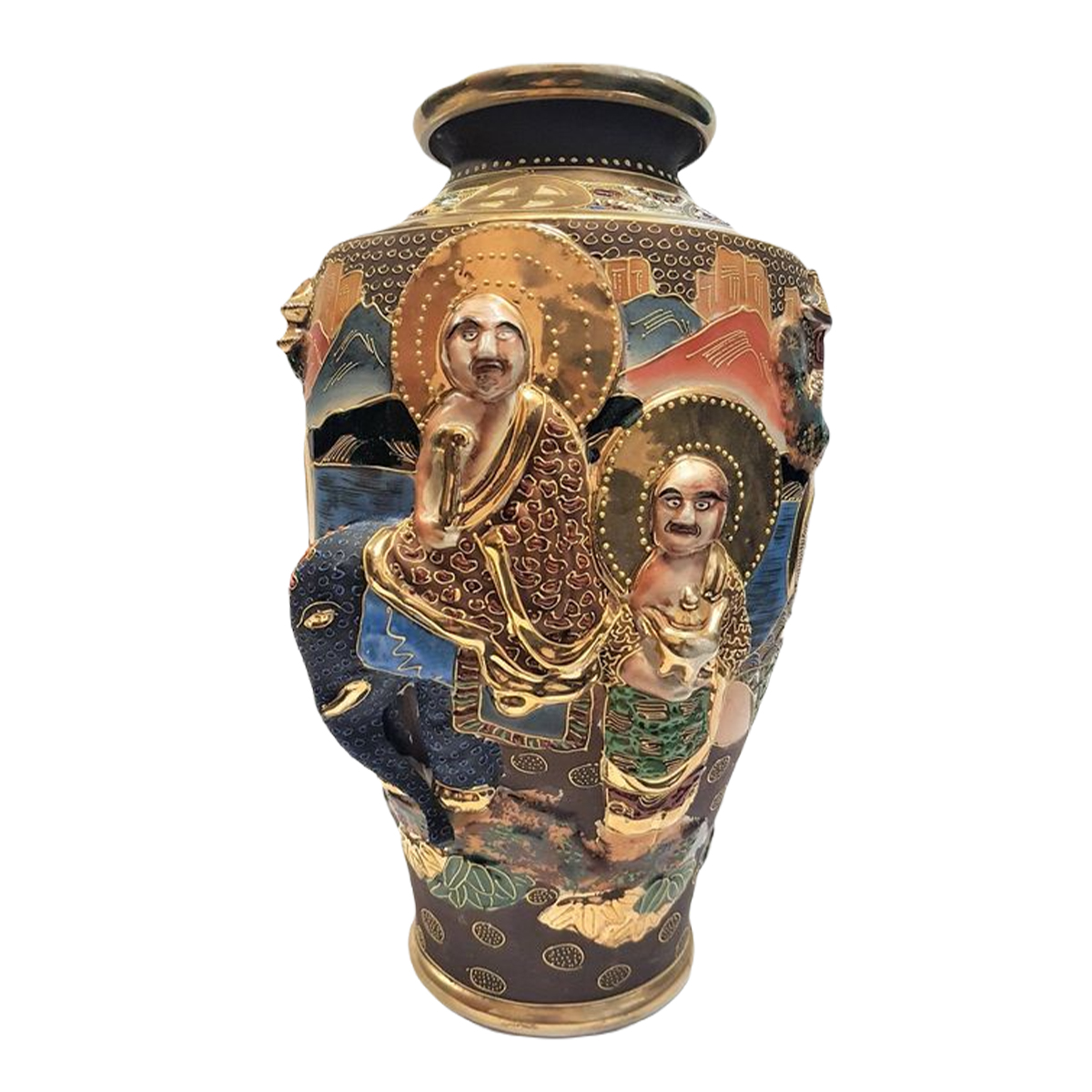
Country: Japan
Manufactory: Satsuma
Date of establishment: first quarter of the 20th century
Size (cm): 32*18
Porcelain Story
These bright objects of Japanese everyday life began to catch my eye for a long time. Large relief vases depicting scenes from imperial life or finely traced mountain landscapes, decorated with many convex details and gilded elements of the heroes’ clothes, as well as tea cups, various plates and sugar bowls, from which it was simply impossible to take your eyes off, occasionally met on flea shops of markets in Austria, Spain, Italy and England. They were recognizable from afar. They could not be confused with any other porcelain. Convex images of people and animals, a black background richly decorated with gilding, a rare technique for writing out details - all this made the work of the famous Japanese manufactory, as they say, different from others.
Over time, our collection began to be replenished with Satsuma porcelain so often that it could well become an independent part of a future exhibition. Unfortunately, when I had a chance to visit Tokyo and Kyoto in the early 1990s, I did not yet know that it was in Kyoto (by the way, the sister city of Kyiv) that the porcelain painting technique invented by the masters of the Satsuma province really flourished. It was in Kyoto, the ancient capital of Japan, that the Satsuma style reached its perfection thanks to the unique dynasty of masters Kinkozan Sobei. And the works presented at the World Exhibition in Vienna in 1873 caused a real sensation.
Particularly attracted the attention of European experts were works decorated with genre scenes of Japanese holidays, performed in the style of "nishikide" ("brocade pattern" or "golden brocade"). The interweaving of European and Japanese styles, characteristic of the time when the Kyoto masters began to use the “suikin” (“liquid gold”) technique, borrowed from the artists of the Meissen Porcelain Manufactory in Germany, was also surprising.
I will not bore you with the details of the use of various unique techniques in the Satsuma style that make these products unique. Let me just say that in recent years I have been able to acquire several amazingly beautiful works in ... Kyiv! They are brought from Belgium and the Netherlands by a collector who lives there and buys these items from immigrant builders. When dismantling old houses, they often find various gizmos and, fearing to be deceived, do not carry them to buyers in the salons, but turn to familiar emigrants from other countries.
"True, over the years, Satsuma porcelain products are getting less and less," my new acquaintance complained last time. Presenting this beautiful vase to your attention, I cannot help but note how finely the highlighted fragments of a large elephant and a Japanese nobleman sitting on it are written on it, how richly the details of the clothes of other heroes of the historical scene are covered with gold brocade. By the way, I would like to mention one miracle that is typical for the masters of the Satsuma style. Along with this vase, I purchased a set of thin-walled bone china cups from the same manufactory. So, if you look at the bottom of such a cup, bringing it to the lamp, on an absolutely white background, a portrait of a beautiful geisha, invisible without bright light (baked somewhere inside fine porcelain), is suddenly clearly visible! .. This is simply incredible.
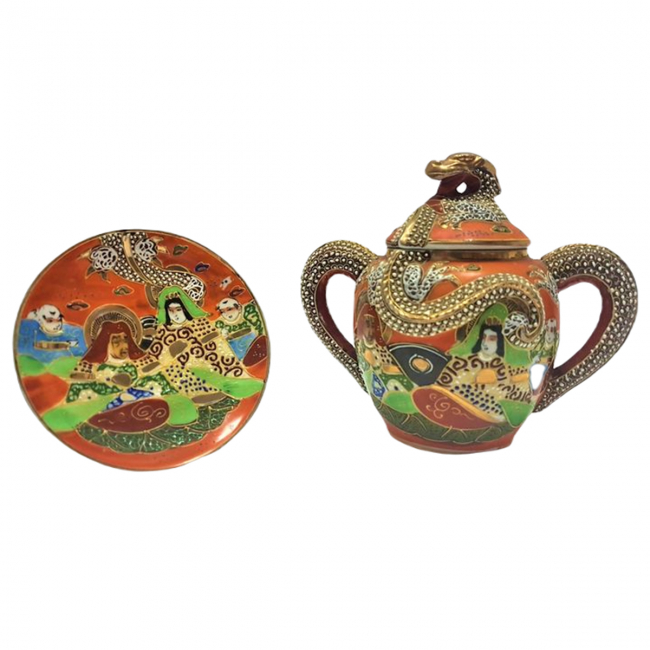
Saucer and sugar bowl
Country: Japan Manufactory: Dragon China Date of establishment: first half of the 20th century Size (cm): 13*15
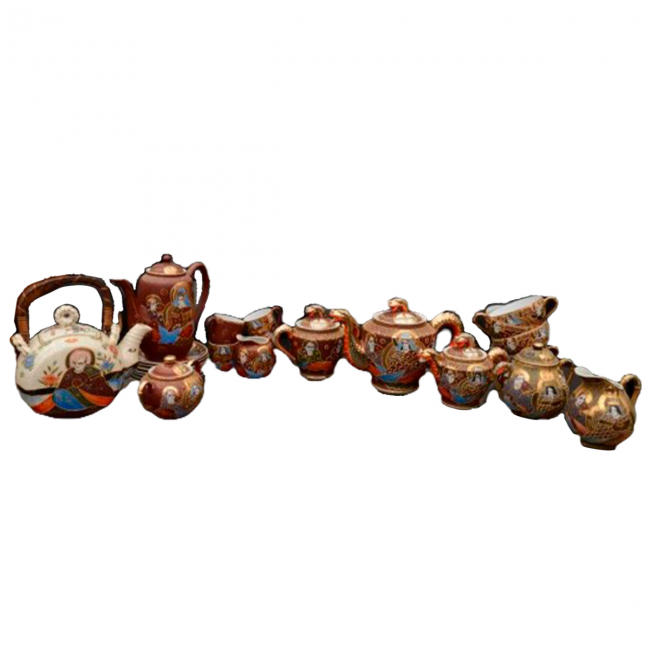
Tea and coffee services
Country: Japan Manufactory: Satsuma Date of establishment: the end of the 19th - the beginning of the 20th century
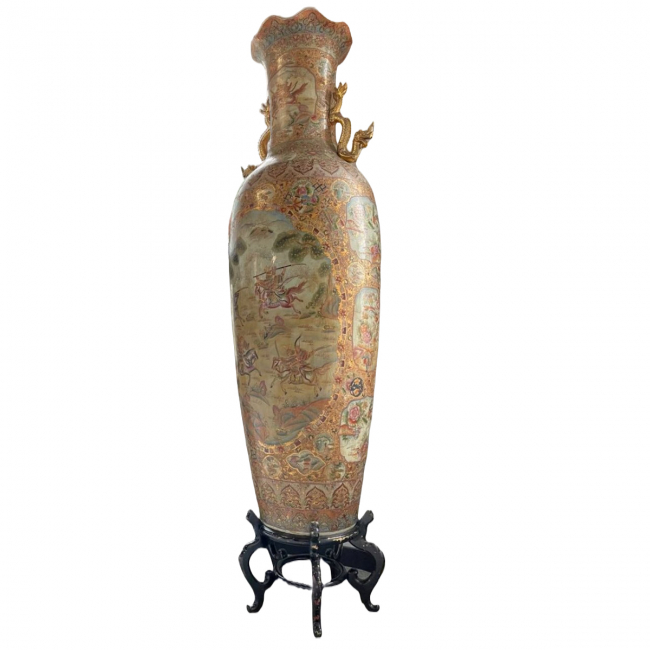
Imperial vase
Country: Japan Date of establishment: XVIII century Height (cm): 180
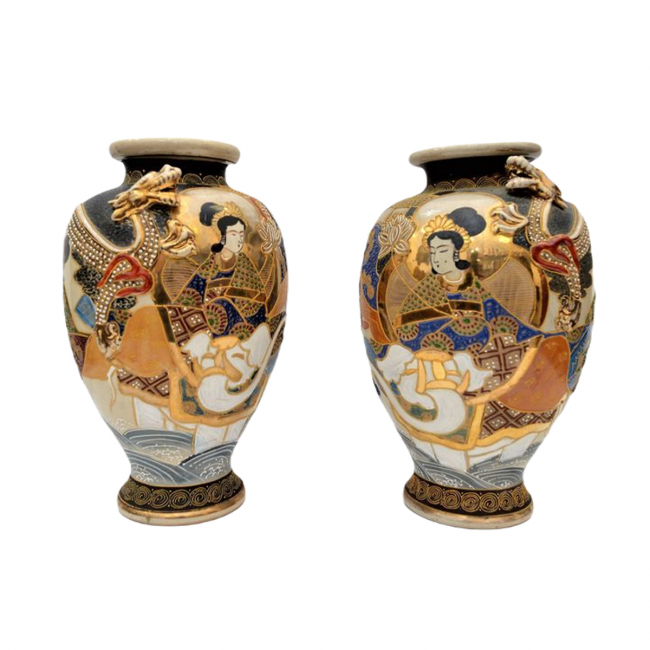
Vases
Country: Japan Manufactory: Satsuma Date of establishment: the beginning of the twentieth century Size (cm): 28х19