
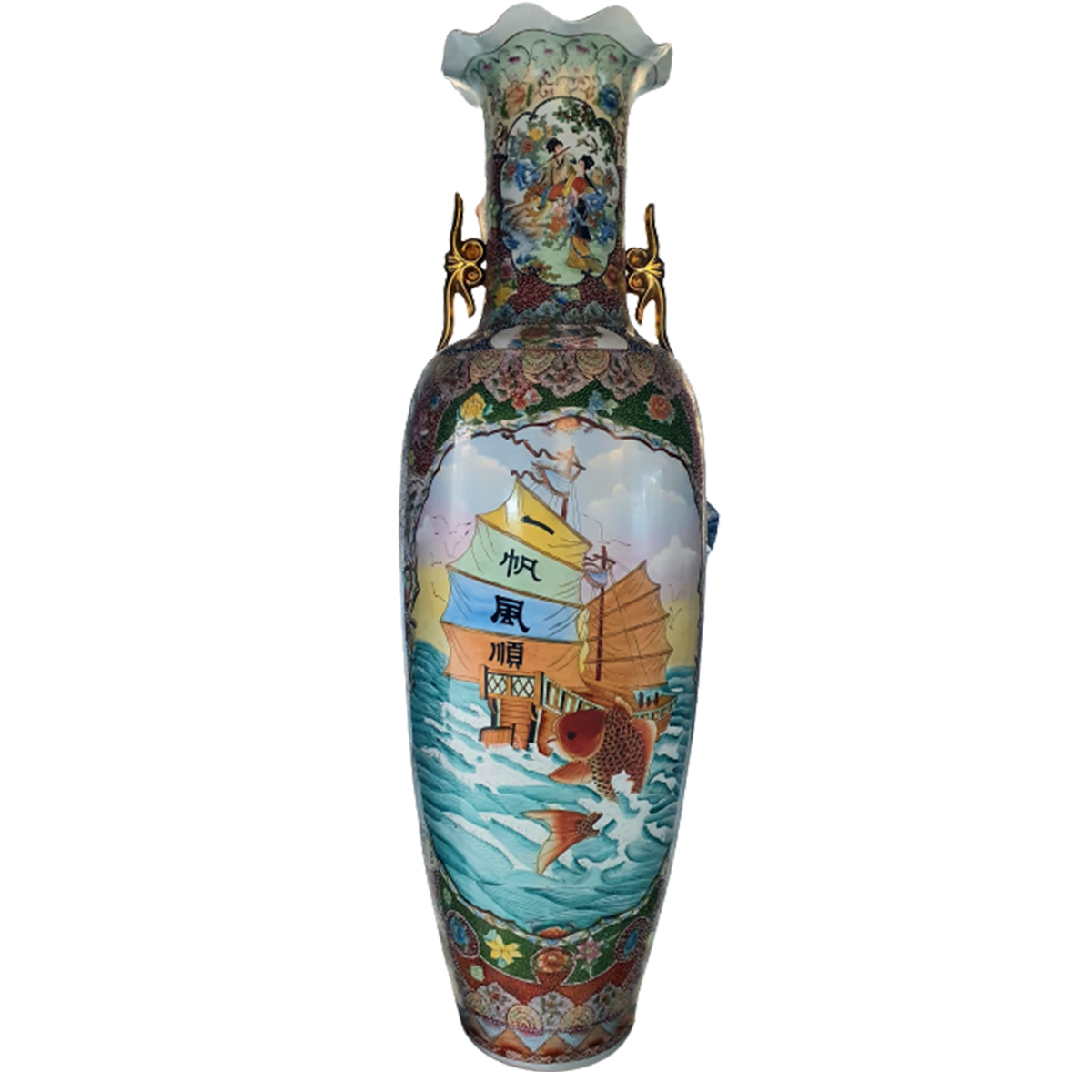
Country: Japan
Date of establishment: Early twentieth century
Height (cm): 160
Porcelain Story
When I traveled to China, I heard more than once about this legendary woman. She is considered by many to be quite unique. You can easily see why. Madame Jing, or Zheng Shi, goes down in history as China's most famous female ocean robber and one of the most successful female pirates in the entire world. She is also one of the fortunate few pirate captains who manage to retire at an advanced age.
Born in Guangzhou in 1775, Zheng Yi Xiao worked in a brothel before becoming a pirate. In 1801, the would-be sea brigand married one of the most famous pirates of her time, Zheng Yi, whose pirate lineage goes back to the middle of the 17th century. Drawing on her husband's support and reputation, Madame Jing, as she has since been known, succeeded in uniting the previously rival pirate fleets of the Cantonese, creating a powerful new coalition. By 1804 her fleet had become one of the most powerful in China, known as the Red Flag Fleet.
Following the unexpected death of her husband, the already famous China-wide maritime brigand began to be known as Zheng Shi, which literally translates as 'Zheng's widow'. She gained the full support of influential members of Zheng Yi's family, greatly increasing her influence within the pirate community. Her brilliant oratory skills and keen intellect have allowed her to defeat rivals without resorting to arms. She soon commanded the fleet of 400 ships she inherited from her husband.
Knowing that she would need a loyal assistant to manage such a large fleet, Zheng Shi decided to marry her stepson, named Zhang Baozai. One version is that this boy was adopted by Zheng Yi before he met Zheng Yi Xiao. According to another version, pirates kidnapped 15-year-old Zhang from fishermen for Madame Jing, as she had no children of her own. In the beginning, Zhang became the lover of Madame Jing's notoriously bisexual husband, and after his death, she married him and gained a trusted partner in her pirate enterprise, time tells.
Zheng Shi established a code of conduct as commander of a vast fleet that reportedly ruled by an estimated 20,000 to 80,000 pirates, which she said everyone must abide by. Here are just a few of these rules: anyone who disputed orders from Zheng Shi was beheaded on the spot; no one was allowed to steal from the common treasury and plunder coastal villages that provided provisions to the pirates; all goods "taken" by pirates as trophies were recorded by a special treasury commission and were distributed among the captains by it; the one who got the spoils received 20%, the rest went to the general treasury; female hostages considered beautiful could be taken as wives or concubines, but a pirate had no right to cheat on an official wife; the rape of a captive was punishable by death.
This and many other rules of Zheng Shi's pirate code helped her build a surprisingly disciplined fleet of 2,000 ships, which she willingly allied to many villages in exchange for protection and supplies for the pirates. Madam Jing unceremoniously dispatched her opponents, plundering merchant ships off the coast of China and coastal settlements deep in the estuaries of rivers. The emperor repeatedly dispatched the state fleet to fight Zheng Shi's pirates, but was unable to undermine the strength of her coalition.
True, at one point, one of the pirate captains rebelled against Madam Zheng. Sensing a weakening of her influence over the fleet, she called a truce with the Emperor, defecting to the authorities in 1810. Her husband took a job as an official in the Chinese government, and she herself became the owner of a brothel. Zheng Shi died at the age of 69, thus becoming one of the few pirate captains to have safely "retired"...
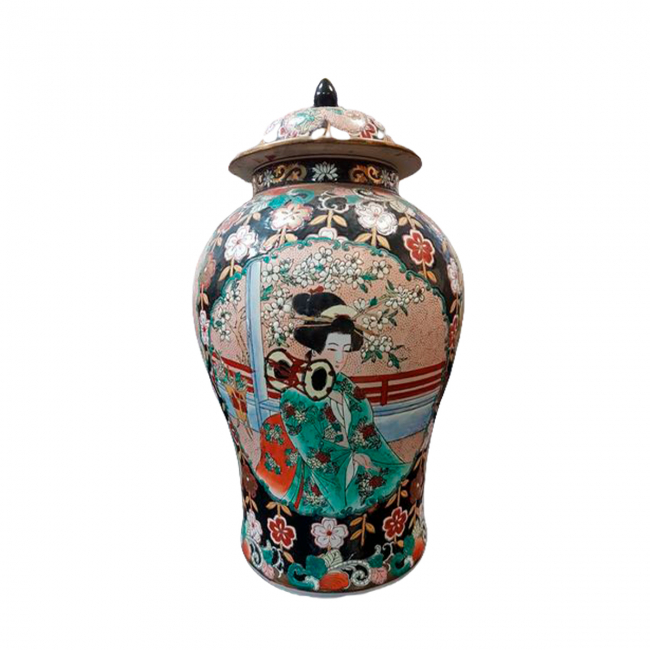
Vase
Country: Japan Manufactory: Satsuma Year of establishment: end of the 19th century Size (cm): 48*28
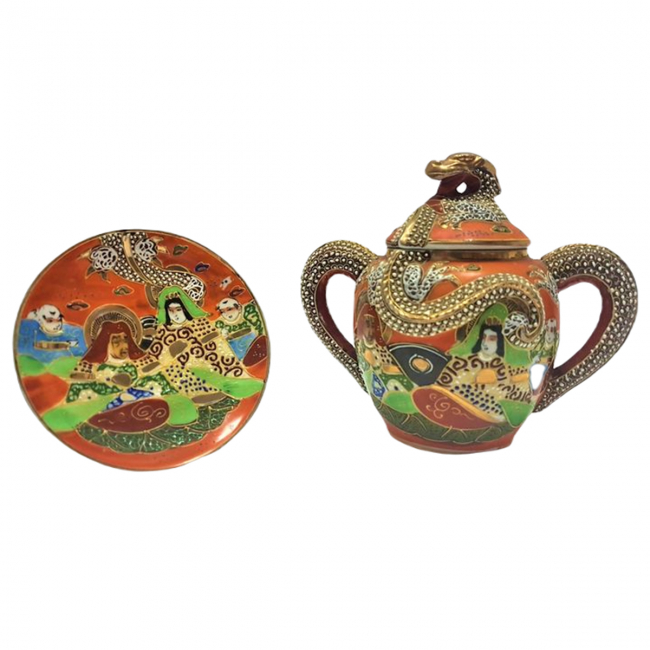
Saucer and sugar bowl
Country: Japan Manufactory: Dragon China Date of establishment: first half of the 20th century Size (cm): 13*15
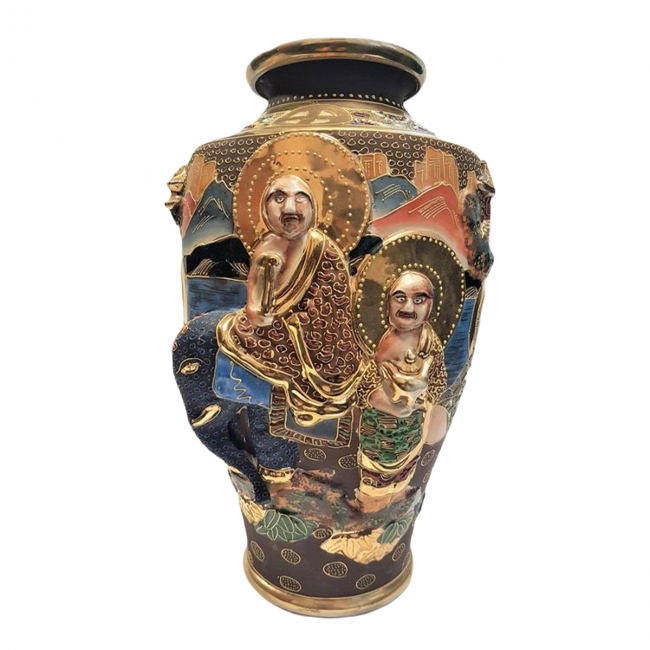
Elephant riding
Country: Japan Manufactory: Satsuma Date of establishment: first quarter of the 20th century Size (cm): 32*18
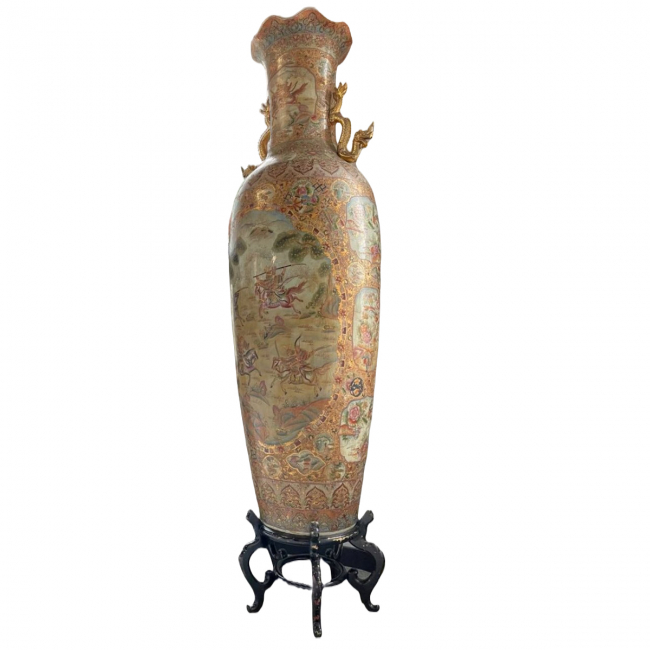
Imperial vase
Country: Japan Date of establishment: XVIII century Height (cm): 180