
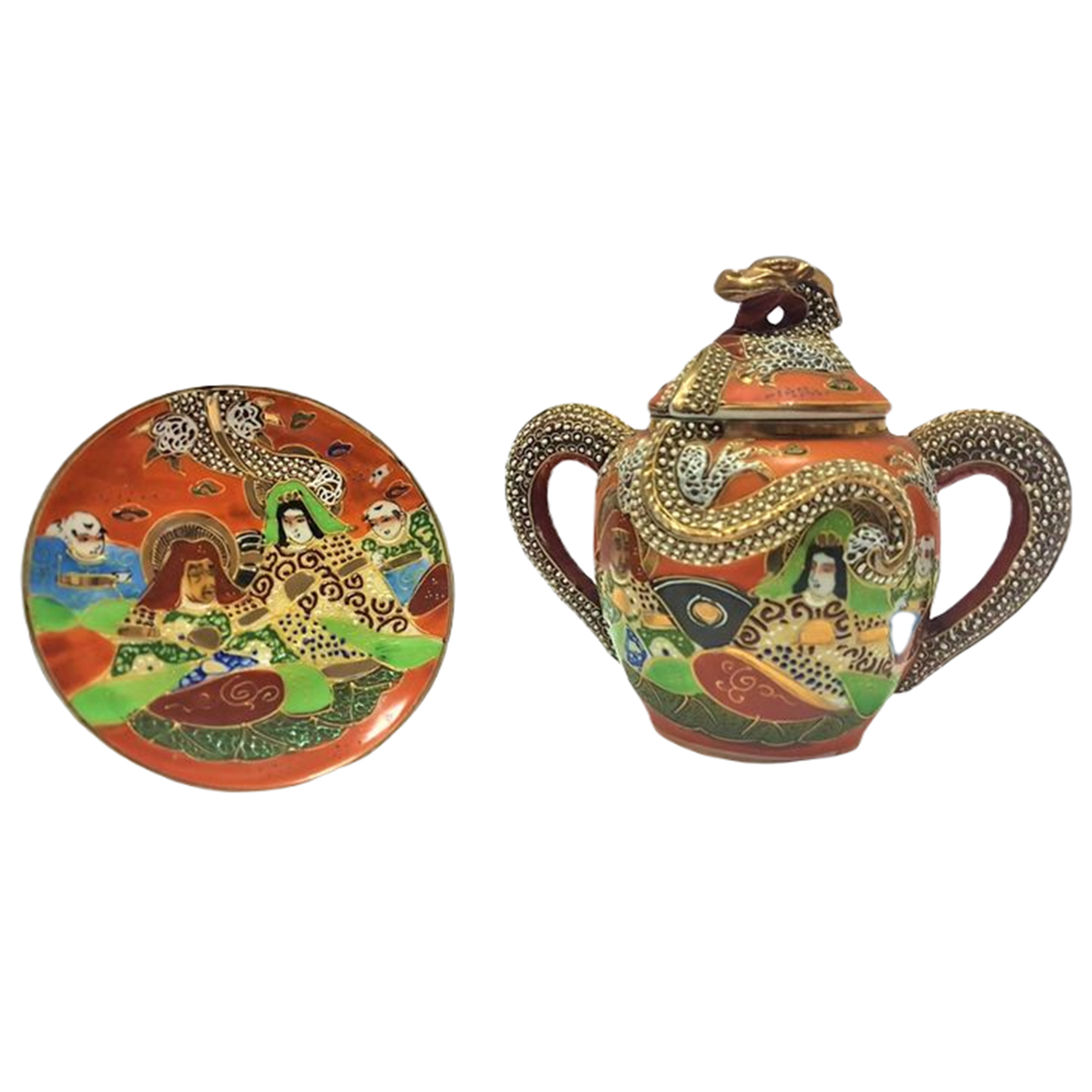
Country: Japan
Manufactory: Dragon China
Date of establishment: first half of the 20th century
Size (cm): 13*15
Porcelain Story
In our museum collection there are many items from a rare tea set, literally piece by piece collected by me at the "flea" markets in Vienna, London, Kyiv and Naples. This is Japanese so-called bone porcelain. The art of adding crushed (literally into powder!) buffalo bones to a porcelain mass was born in ancient China. Bone porcelain products are light and translucent. Hand-painted using bright, durable colors, often with the addition of gold, they are amazingly beautiful through the light. The white unpainted faces of the characters on such dishes seem incredibly clean and natural.
You begin to understand the Venetian nobles, who bought bone porcelain items brought from China by the famous merchant and traveler Marco Polo for gold. And the elector of Saxony August the Strong paid for such items of luxury. That were not seen then in Europe. Even with living dragoons ...
Later, the production of bone porcelain was established in St. Petersburg, and in Soviet times such a trick was popular on excursions to the LFZ: in front of the astonished public, the guide, as if by chance, dropped a saucer made of thin translucent bone porcelain onto the stone floor, and it, having jumped loudly several times, did not break at all! Strength is another amazing property of this porcelain.
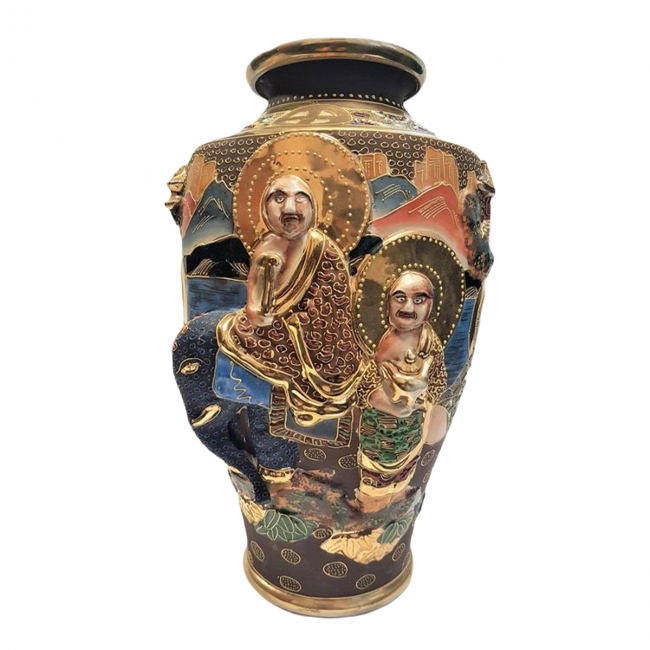
Elephant riding
Country: Japan Manufactory: Satsuma Date of establishment: first quarter of the 20th century Size (cm): 32*18
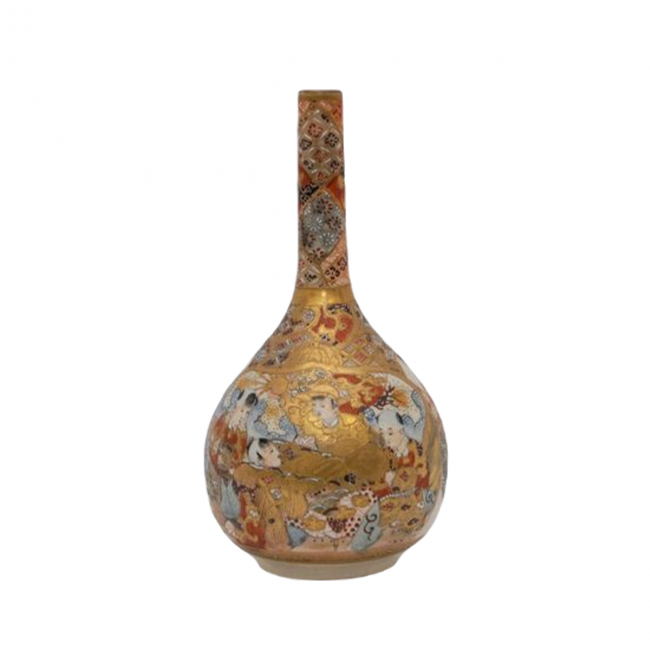
Vase
Country: Japan Manufactory: Satsuma Date of establishment: XVIII century Height (cm): 19
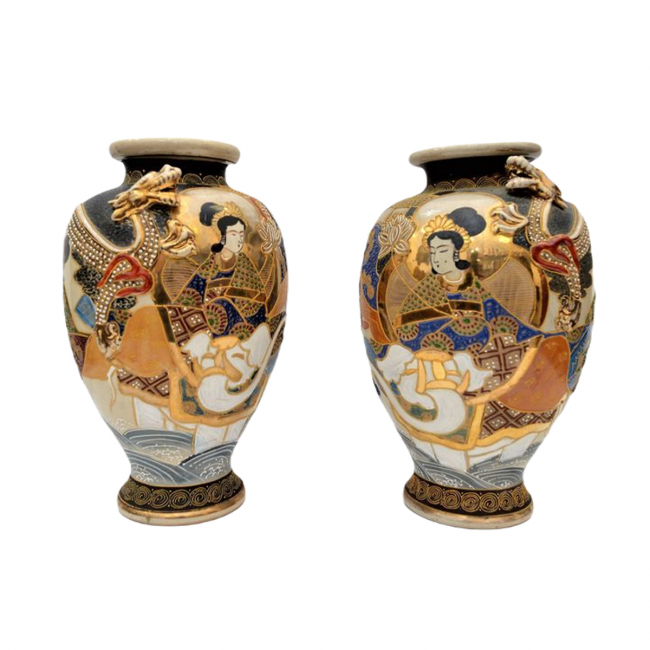
Vases
Country: Japan Manufactory: Satsuma Date of establishment: the beginning of the twentieth century Size (cm): 28х19
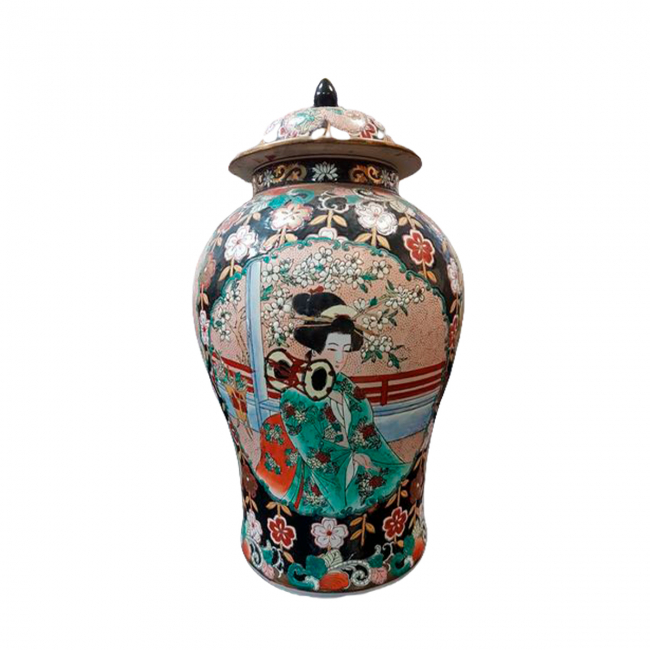
Vase
Country: Japan Manufactory: Satsuma Year of establishment: end of the 19th century Size (cm): 48*28