
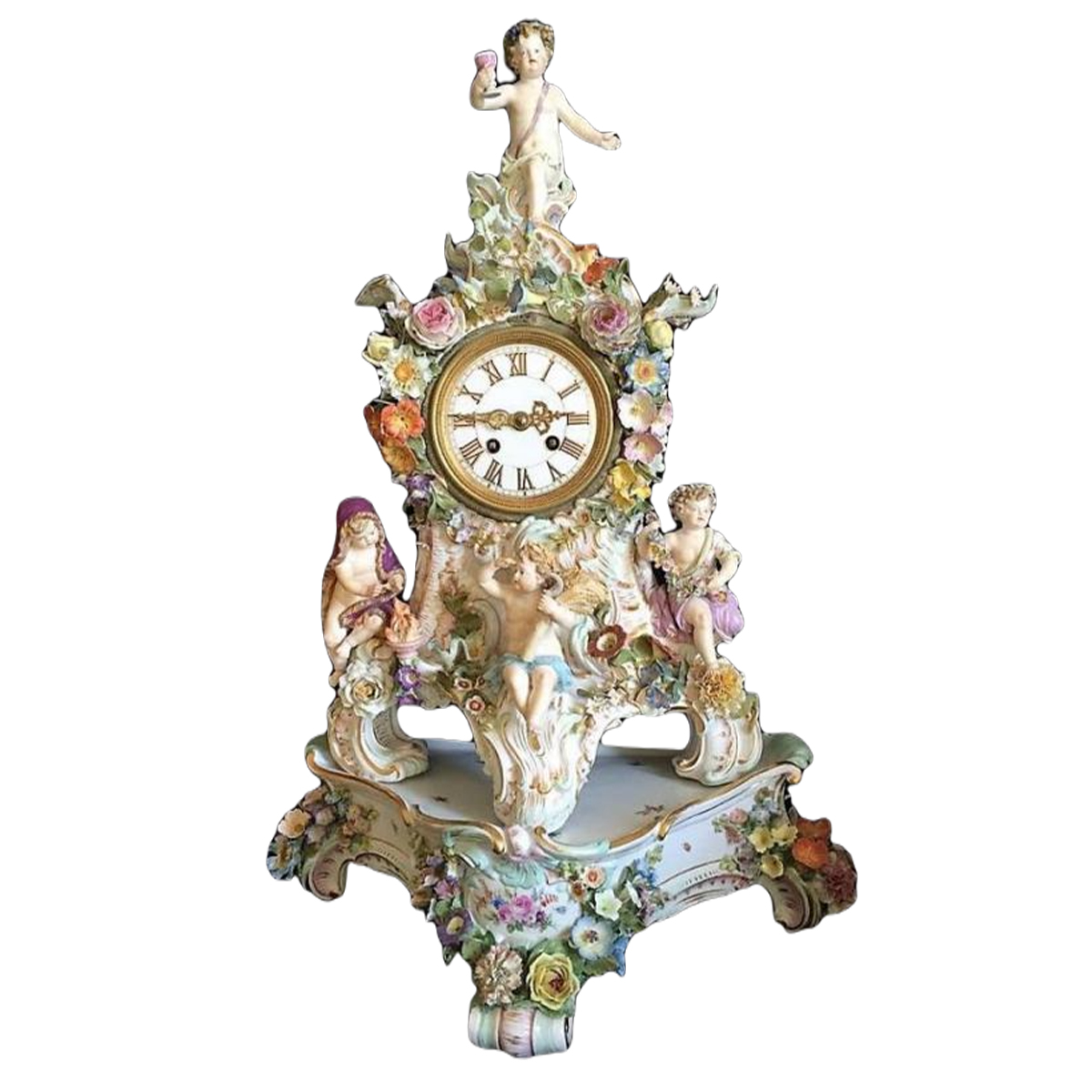
Country: Germany
Manufactory: Meissen
Date of establishment: 18th century
Size (cm): 60*40
Porcelain Story
Now I will introduce you to another pearl of our collection. More precisely, even with a part of the pearl. Why only part? Yes, because this mantel clock, created at the first manufactory in Europe for the production of so-called white porcelain, is only part of a large set that has the common name "Seasons". In total, this set includes four items - this mantel clock, two candlesticks and an incredibly beautiful chandelier. Each of the four subjects in its thematic content is devoted to the corresponding period of the year. This means that figurines, flowers and other decorations of the product to one degree or another illustrate spring, summer, autumn and winter, respectively.
I will not dedicate you to the details of the history associated with the acquisition of this masterpiece of world porcelain art. Let me just say that when we took it from the Kyiv apartment, in which several generations of its owners diligently used this unearthly beauty, we were shocked by the perfect condition of each item. They could not even imagine what is still possible today. I have already talked about the Meissen manufactory, recalling how we managed to get acquainted with its best works in the Zwinger Palace in Dresden and in Meissen itself. In 1710, the famous alchemist Johann Bettger, who was kept as a prisoner by the powerful Elector of Saxony, Augustus the Strong, could not find a recipe for the production of yellow gold, which the ruler so insistently sought from him. But he managed to discover the secrets of the production of white gold - porcelain, the possession of which the elector literally raved about. He was so delirious that once he even traded a dragoon regiment for 152 items of Chinese porcelain that were at the disposal of King Frederick I of Prussia.
There were so many orders that came to the Meissen manufactory from crowned persons from all over Europe that even special days were determined for the production of individual large orders at the manufactory. For example, up to 40 percent of all manufactured products sometimes went to Tsarist Russia. And for its production, the so-called ''Russian'' days were determined. And in Russia itself, large warehouses were created to store Meissen products, which for many years existed in St. Petersburg, Moscow, as well as in Kyiv and Poltava.
I invite you to enjoy the contemplation of this unique work of art (by the way, it consists of two parts - from a wide stand and the clock itself, the mechanism of which is in working order!).
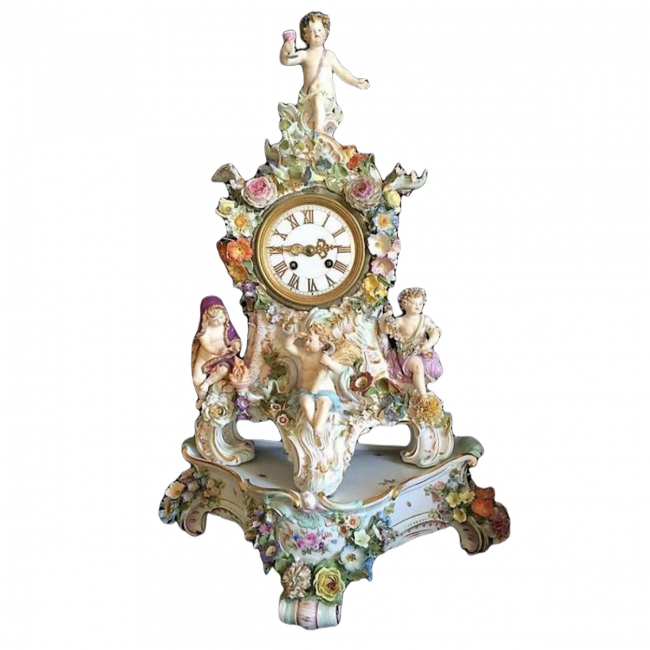
Mantel clock (from the Seasons set)
Country: Germany Manufactory: Meissen Date of establishment: 18th century Size (cm): 60*40
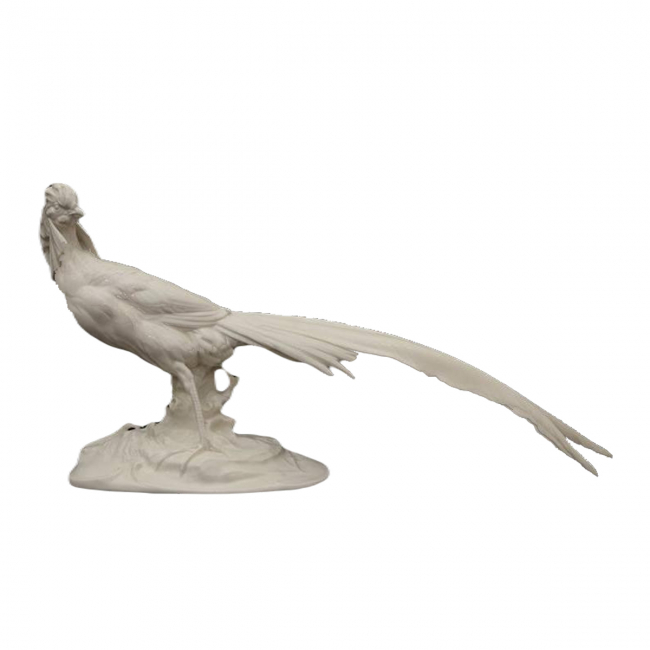
Game
Country: Germany Manufactory: Hutschenreuther Date of establishment: 1950s Size (cm): 32*64
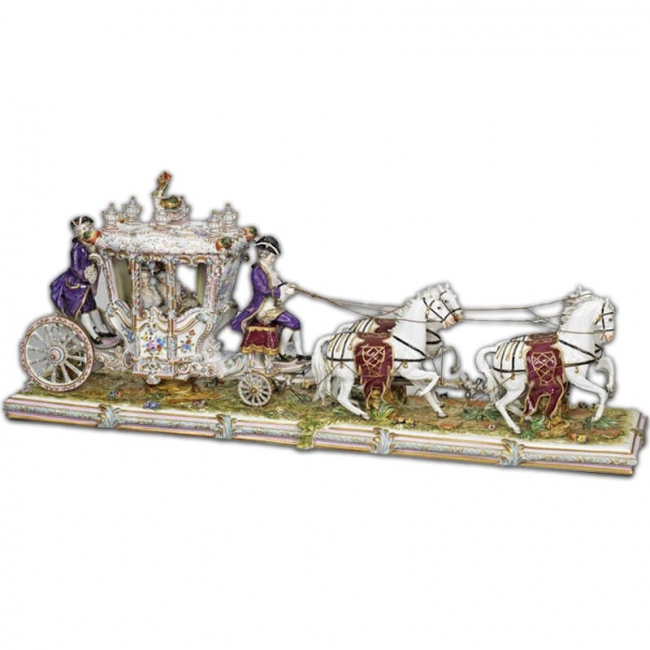
Carriage
Country: Germany Manufacture: Volkstedt Date of establishment: 1930s Size (cm): 42*106
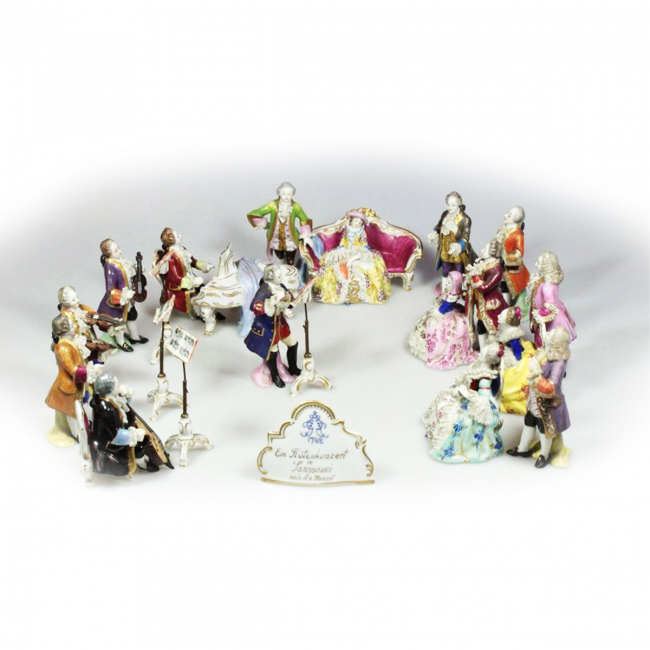
Flute Concerto in Sanssouci (14 figurines)
Country: Germany (Thuringia) Manufactory: Volkstedt Date of establishment: second quarter of the twentieth century Size (cm): 8,5