
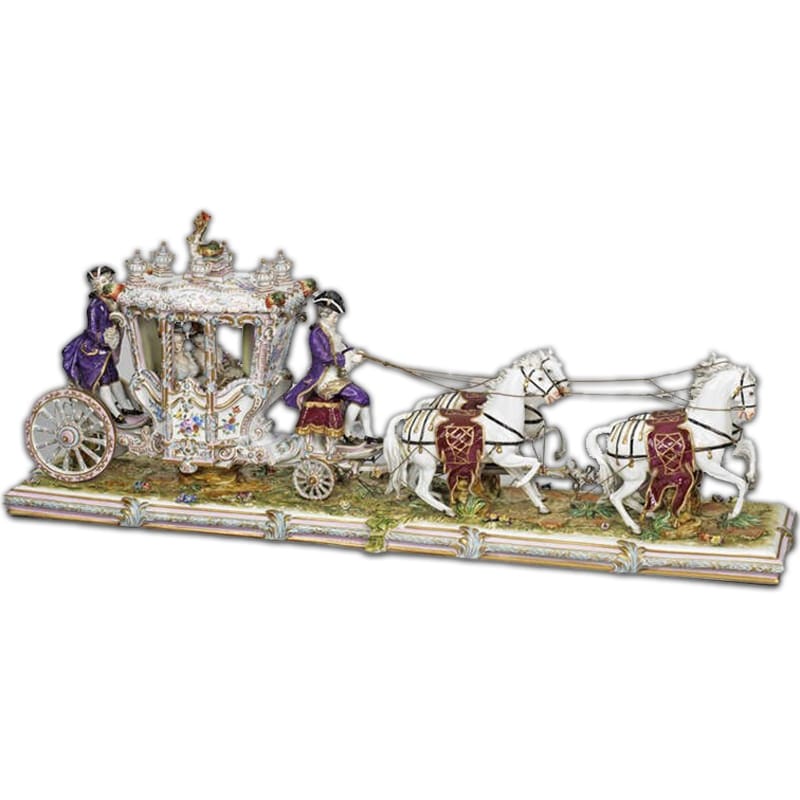
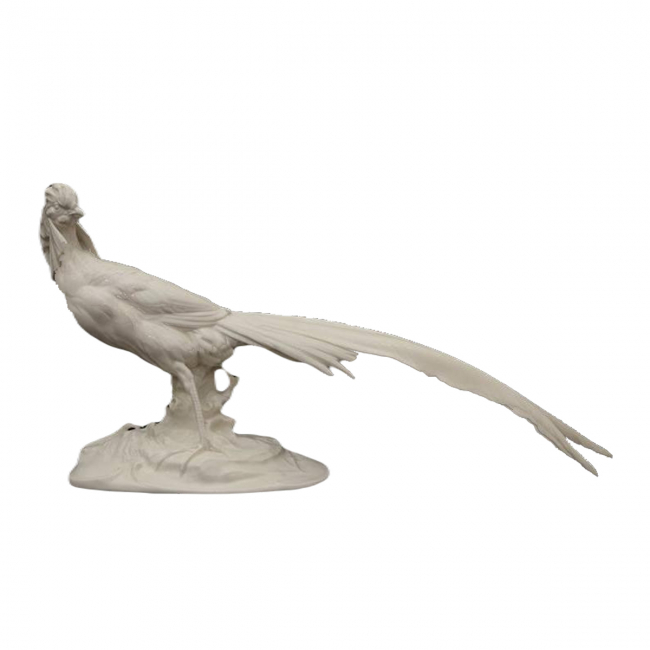
Country: Germany
Manufacture: Volkstedt
Date of establishment: 1930s
Size (cm): 42*106
PORCELAIN STORY
Another meter-long carriage moved into our porcelain museum the other day. Unusual. Peculiar. With a history of almost a hundred years and now ending with its arrival in the museum harbor. With its trials in the last few months of the war.
The donors, my old and good friends, who in their time (thanks in part to my efforts) were seriously interested in collecting porcelain works, have experienced all the "charms" of life in the front-line zone, which was recently only a few dozen kilometers from Kiev. When I arrived at their cozy house, located in an insanely beautiful forest grove along the Zhitomir highway, I took a long look at the tops of tall pine trees mowed down by shell splinters, the pierced roof of the wooden gazebo, through which the sky is now clearly visible, the entrance gate, broken windows and a mine that miraculously did not explode after hitting the chimney of the neighboring house. Fifteen meters from my friends' kitchen. I looked at it and was horrified to imagine what all this beauty, created by their hands for a peaceful and happy life and now attacked by savage and vicious barbarians, who not so long ago called themselves our brothers, could have turned into.
It didn't take much imagination. A few kilometers from their house was the front line. From the tanks sheltering under the bridge, the area was shot through like a palm frond. A huge megamarket building burned to the ground, destroyed apartment buildings, gas stations and a maternity hospital (!) shot at point-blank range -- all this remained a mute confirmation of the nightmare experienced by the local residents during the first days of the invasion of Ukraine by Russian troops. A column of Russian military equipment, destroyed by two Ukrainian guys who managed to turn it into a pile of charred scrap metal from its hiding place, quietly pleased us. And a kind of symbol of everything that was going on here was a green-colored expensive terry towel, thrown by a blast wave from the turret of an enemy tank that had been torn off. "Since when did Russian tankers get branded terry towels?" he thought, looking at it. The burnt boots of the looter, who dragged into the fighting vehicle everything he had managed to loot in the houses of Ukrainians, were the answer to the question that has long continued to torment us, why and for what they came to us. For death...
The carriage of an old German manufactory presented to the museum has already taken its place in the exposition of one of the halls. And in the next hall, next to the proud majolica "Pivnik", symbolizing the steadfastness of the Ukrainian spirit, will now lie the "war trophies" brought back from this trip - large shards of a Russian mine, capable of cutting off a human life, destroying a house, and turning fragile works of art into ashes.
At the entrance to the museum we put the names of all the donors who contributed to our museum collection. From now on, it includes such a line as well -- the Makarenko family, Tatiana and Anatoly. Goodness is not forgotten. Never. And the big rusty shards will remind us of everything else...
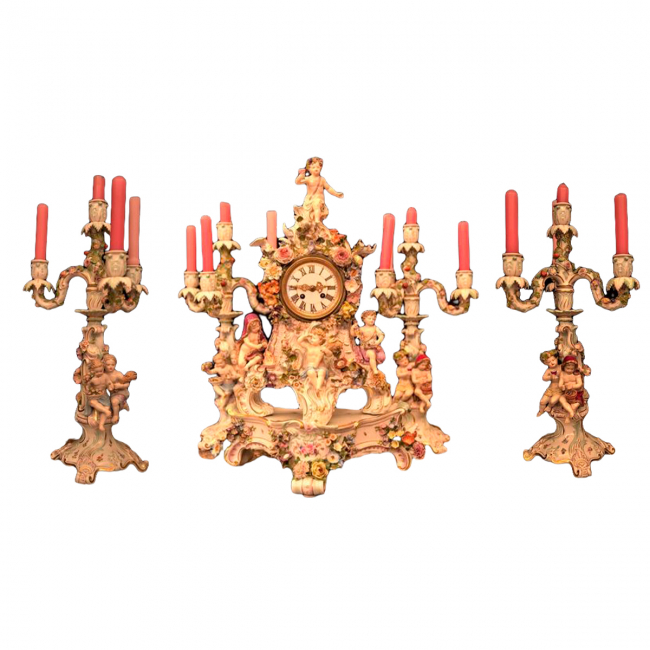
Candlesticks "Seasons"
Country: Germany Manufactory: Meissen Date of establishment: XVIII century Size (cm): 48*18
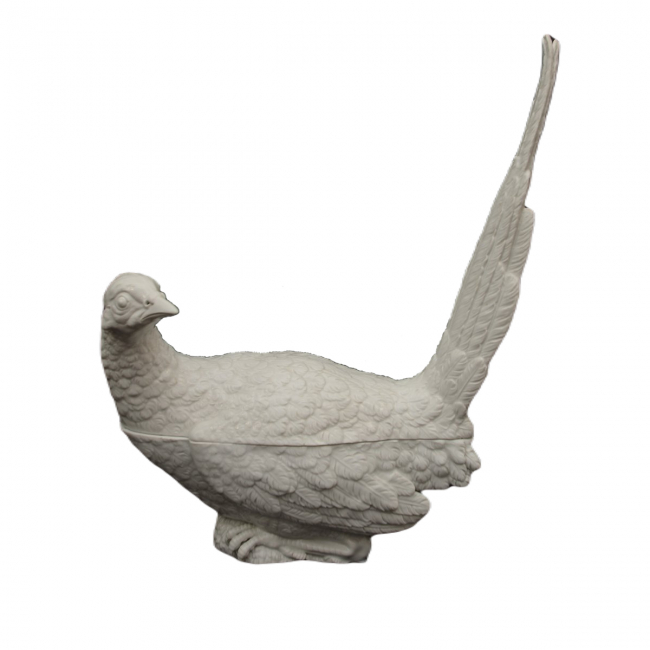
Pheasant
Country: Germany Manufactory: Meissen Date of establishment: end of the 19th century Size (cm): 46*32
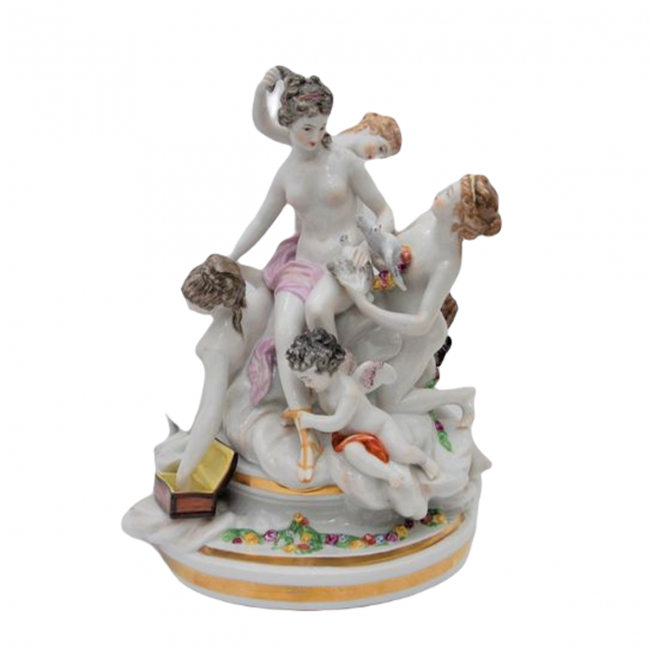
Toilet of Venus
Country: Germany Manufactory: Nymphenburg (copy of Sevres) Date of establishment: the beginning of the twentieth century Size (cm): 28*22
Game
Country: Germany Manufactory: Hutschenreuther Date of establishment: 1950s Size (cm): 32*64