
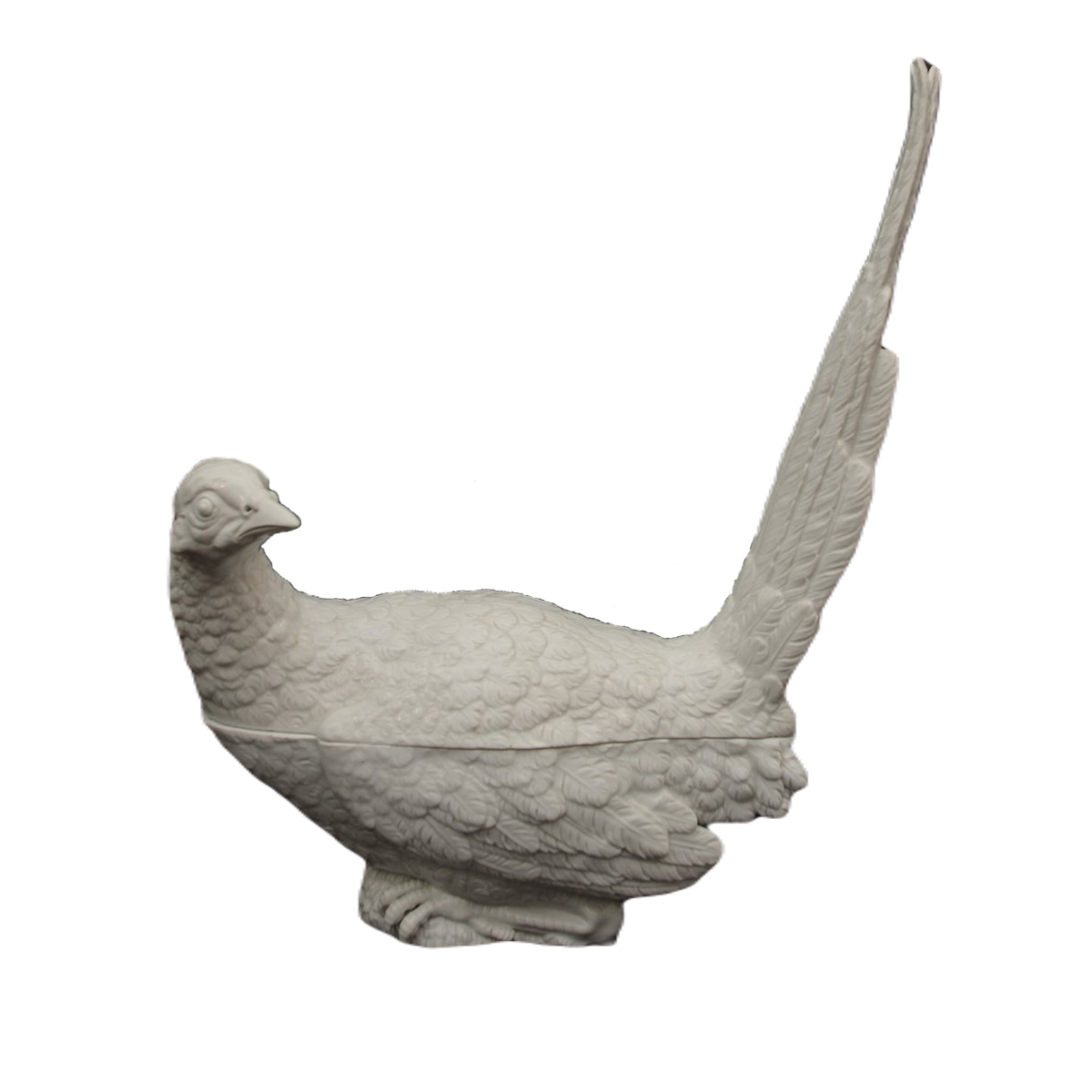
Country: Germany
Manufactory: Meissen
Date of establishment: end of the 19th century
Size (cm): 46*32
Porcelain Story
On May 12, 1670, a man was born in Dresden, to whom Europe owes much to the fact that on our continent appeared not imported, as before, but its own, home-grown, recognizable and unique European porcelain. I repeatedly heard the name of this man when visiting porcelain museums in Dresden, Meissen, Vienna and other cities where original European porcelain was born. But even during the most interesting excursions to get acquainted with the production technology of the most unique works of art, nowhere and never had one heard that Elector of Saxony Augustus the Strong (and we are talking about him) had at least some relation to Ukraine. And it turns out he had. And even the most immediate!
The full title of Augustus the Strong sounded like this: By the grace of God, King of Poland, Grand Duke of Lithuania, Russian, Prussian, Mazovian, Samogitian, Kyiv, Volyn, Podolsk, Podlasha, Inflyant, Smolensk, Seversk, Chernigov, as well as the Crown Duke and Elector of Saxony. The ruler Augustus was rather inconsistent. He either fought with the King of Sweden Charles XII and the Russian Tsar Peter I, or concluded peace treaties with them. He either fought for the Polish crown, or suddenly lost all interest in it.
And Augustus the Strong was famous for his eternal search for money. For the sake of which he attracted various kinds of adventurers and alchemists to Dresden from all over Europe and kept them for a long time behind blank fortress walls in anticipation of the promised gold, which they tried to get from mercury. They never got the gold. But exactly 300 years ago, in the spring of 1709, they received a recipe for the production of real white hard porcelain. The same as the porcelain previously brought to Europe from China, which was valued at that time in the courts of European rulers worth its weight in gold. In the full sense of the word. Using the talent and knowledge of the German alchemist Johann B?tger, August the Strong opened porcelain factories in Dresden and Meissen. The so-called ''Schnor earth'', previously mined near Dresden as a means for powdering wigs, turned out to be no worse material for the production of excellent porcelain, now known throughout the world as Saxon (or Meissen). True, soon one cunning master of the Meissen manufactory, taking with him the recipe for porcelain, fled to Austria. And this marked the beginning of the creation in Vienna of its own production of thin and unusually beautiful porcelain.
In previous publications of the ''Figure of the Day'' column, I have repeatedly talked about the unique porcelain compositions that I brought for our collection from Dresden, and from Vienna, and from Meissen. I will talk about them in the future. In the meantime, let me present to your attention today an unusual large figure of a Meissen bird, consisting of two parts. This has been practiced before. Obviously, the product served not only as a decoration for the festive table of the court nobleman, but also had a practical use, because it allowed you to store some kind of sweets or something like that.
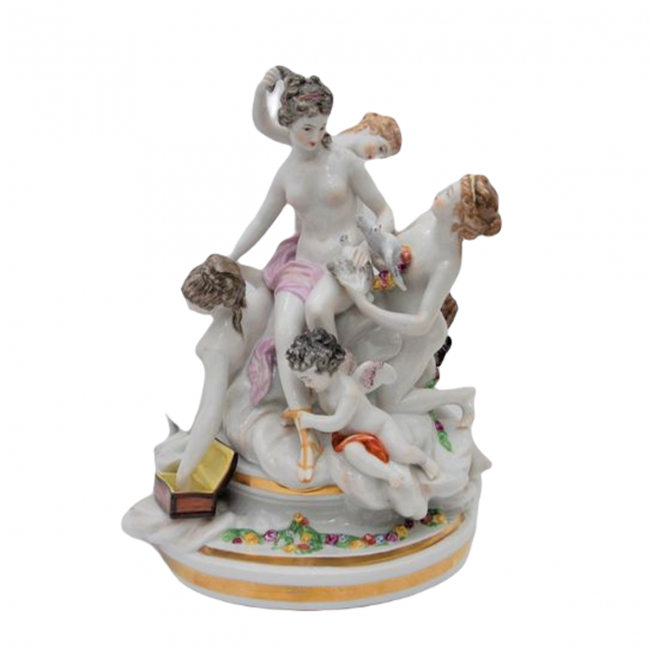
Toilet of Venus
Country: Germany Manufactory: Nymphenburg (copy of Sevres) Date of establishment: the beginning of the twentieth century Size (cm): 28*22
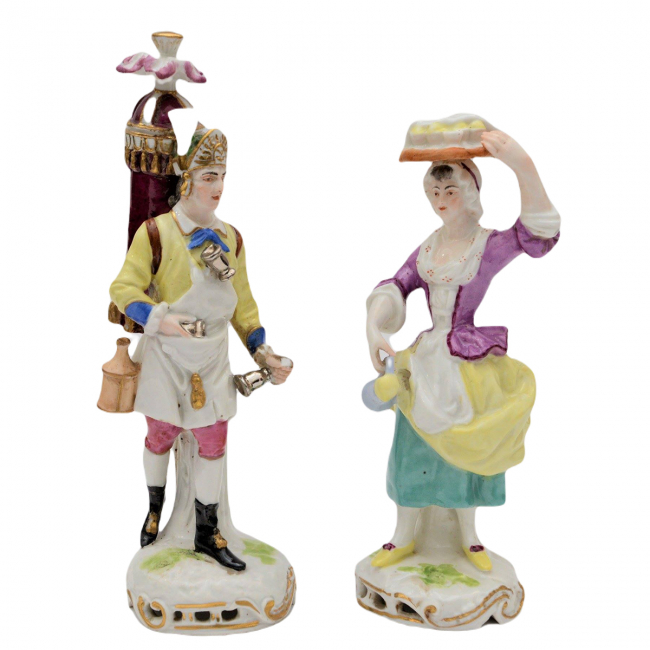
Street traders
Country: Germany Manufactory: Meissen Date of establishment: late 19th century Height (cm): 19
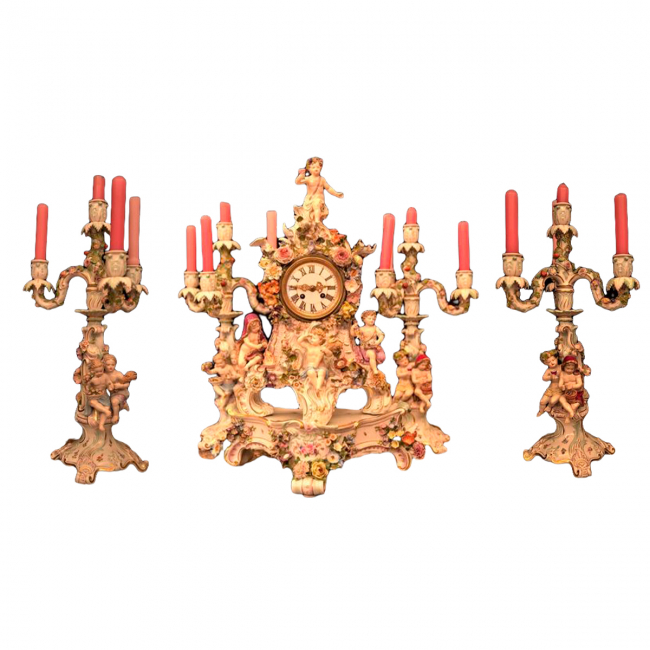
Candlesticks "Seasons"
Country: Germany Manufactory: Meissen Date of establishment: XVIII century Size (cm): 48*18
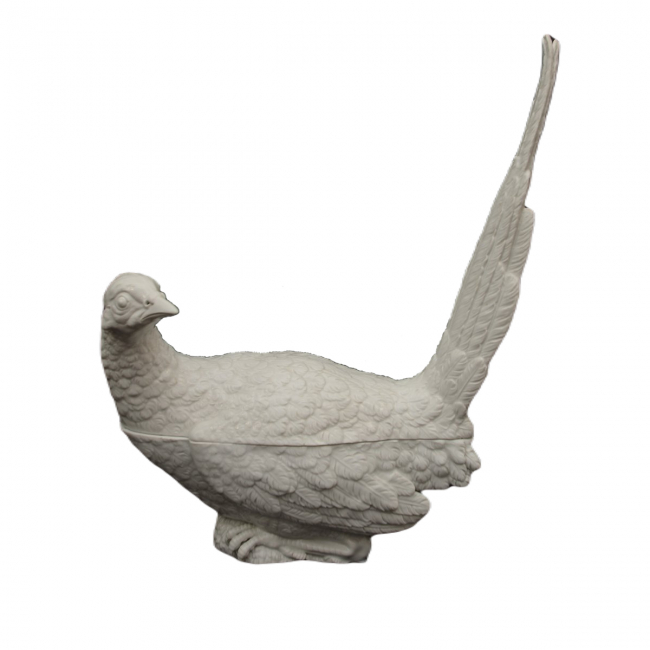
Pheasant
Country: Germany Manufactory: Meissen Date of establishment: end of the 19th century Size (cm): 46*32