
The Vase
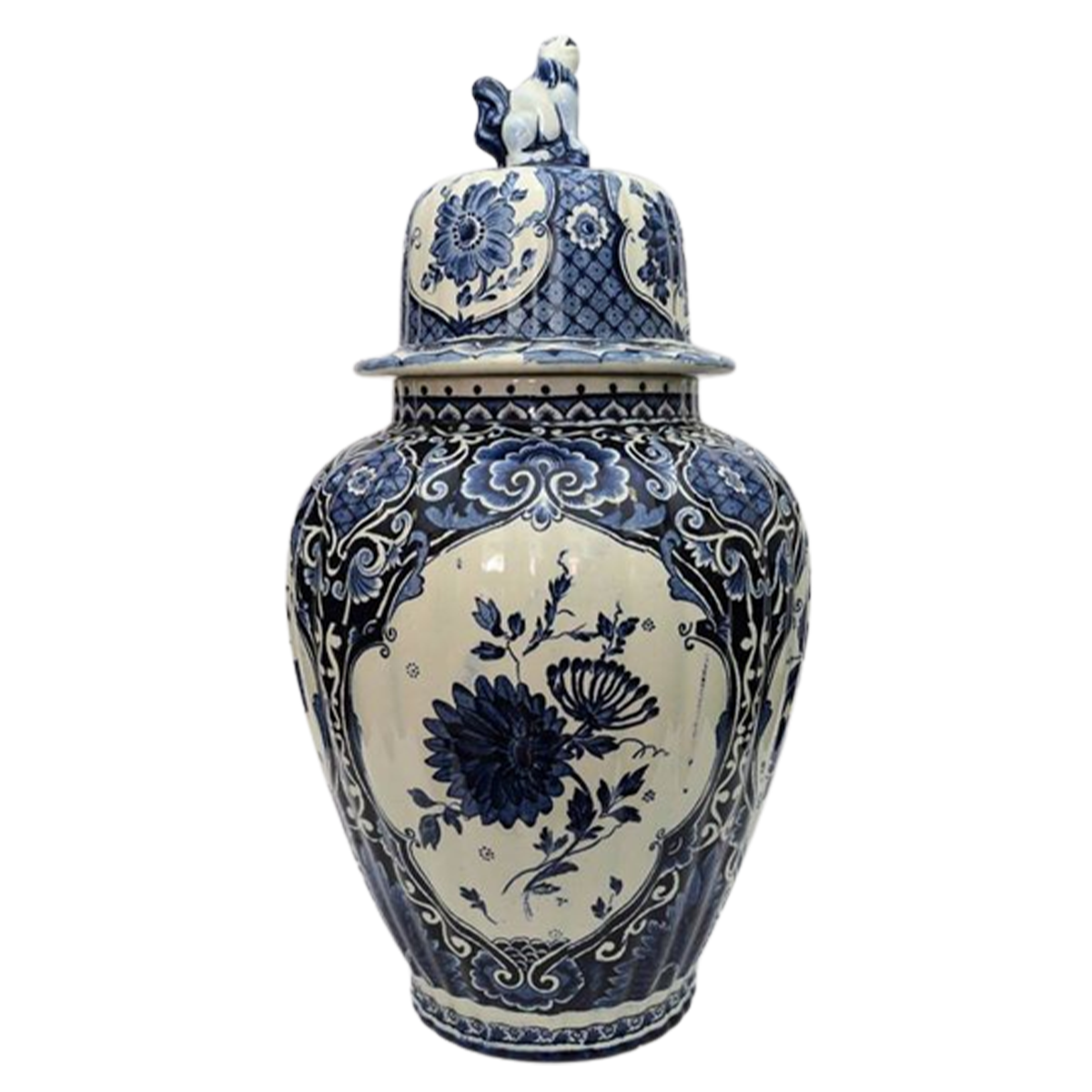
Country: Holland (Netherlands)
Date of establishment: first third of the twentieth century
Height (см): 46
Porcelain Story
I know, I know, I know. I know very well that regular readers of my "porcelain" column don't like to get acquainted with vases. I understand it, because at first I too could not understand what the beauty of all these products is, as opposed to narrative compositions with lots of figurines and delicate details capable of attracting attention, perhaps, only by the grace of painting or a recognizable image under the glaze. And yet, I should note that on closer examination the vases can be no less interesting than the subject works. All the more so if they are also associated with an unusual history of appearance in our collection.
For example, the vase I am showing you today was brought by me from Holland about 20 years ago. And I remember this piece with a brilliant story of a local guide about one of the most famous natives of the Dutch land - Erasmus of Rotterdam. By the way, the famous scholar and theologian, nicknamed in the epoch of Northern Renaissance as "Prince of humanists", often called himself not only Dutchman (born in Rotterdam exactly 550 years ago, on October 28, 1469), but also German and French, because he led nomadic life. A brilliant philosopher and writer, he moved constantly from one country to another -- from England to Italy, from France to Germany. The most powerful rulers of Europe at that time -- Henry VIII of England, Francis I of France, Charles of Spain (the future Holy Roman Emperor), popes, cardinals, as well as the most eminent scholars, all considered it an honor to correspond with him. The biggest universities - Oxford, Cambridge, Turin, Brussels - invited him to professorships. Often he accepted these invitations and stayed for a few years in one or the other university to give lectures on Greek or theology, which delighted not only the students but also the famous professors.
But the greatest fame Erasmus of Rotterdam (whose famous portrait of Holbein surely drew the attention of anyone who visited the Louvre) brought a small work, composed, by his own admission, from nothing to do during a long trip from Italy to England in 1509. It was called "A Praise of Folly" and was an attempt to look at the surrounding reality, as well as the life of all humanity, the whole world from the point of view of ... folly. The attempt, it must be admitted, was a success. The point of view based on such universal, inherent in all times and peoples, as foolishness, allowed the author to draw a unique portrait of all mankind. And it was precisely this universal character of the work that made it timeless, even after many centuries. Moreover, some thoughts from "A Praise of Folly" seem unusually relevant even now. And perhaps even more so now. Regardless of what time or what nation the person reading these thoughts belongs to. Judge for yourself:
"What distinguishes the wise man from the fool is that he is guided by reason and not by feeling."
"The lowest crap always brings the crowd into admiration, for the great majority of people are infected with stupidity."
"War, so glorified by all, is often waged by freeloaders, procurers, thieves, murderers, unpaid debtors, but by no means by enlightened philosophers."
"To indulge the weaknesses of one's friends, to turn a blind eye to their faults, to admire their vices as if they were virtues -- what could be closer to folly?"
"Truly two great obstacles stand in the way of right understanding of things: shame, which fills the soul like a fog, and fear, which in the face of danger deters bold decisions. But foolishness drives away both shame and fear with surprising ease..."
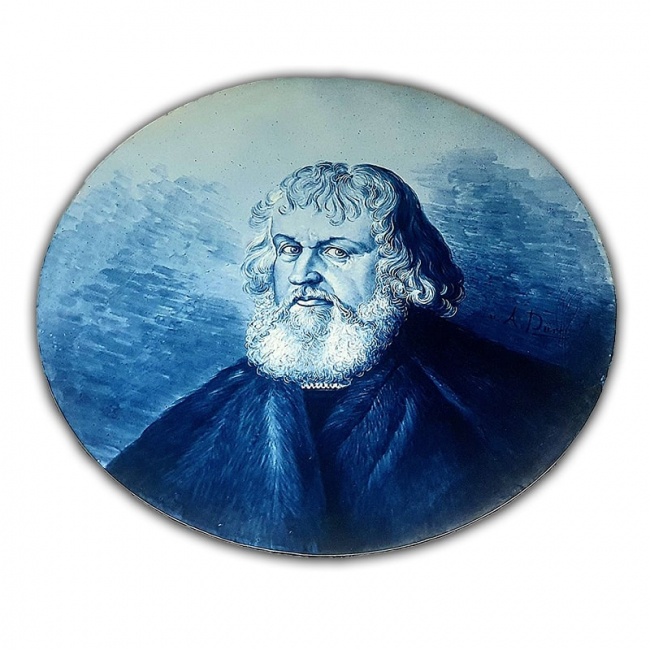
Portrait of Hieronymus Holtschuer by Albrecht Dürer
Country: Netherlands Manufacture: Delfts Date of establishment: first half of the twentieth century Diameter (cm): 55
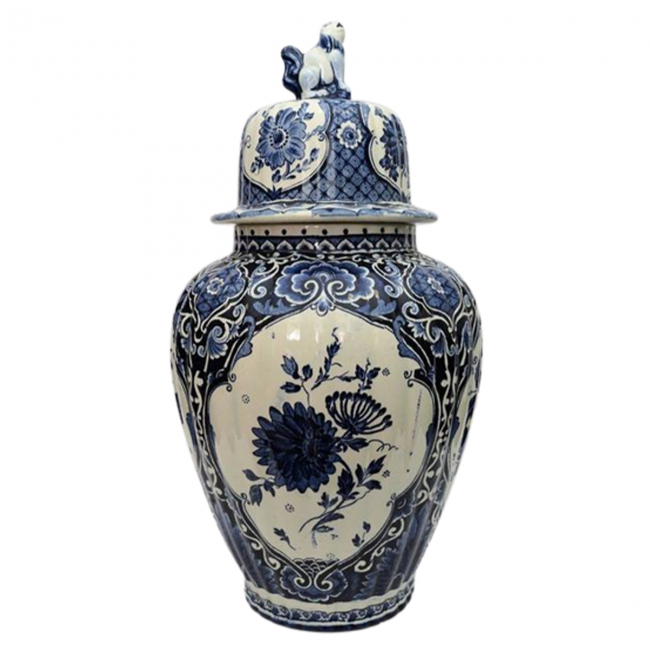
The Vase
Country: Holland (Netherlands) Date of establishment: first third of the twentieth century Height (см): 46