
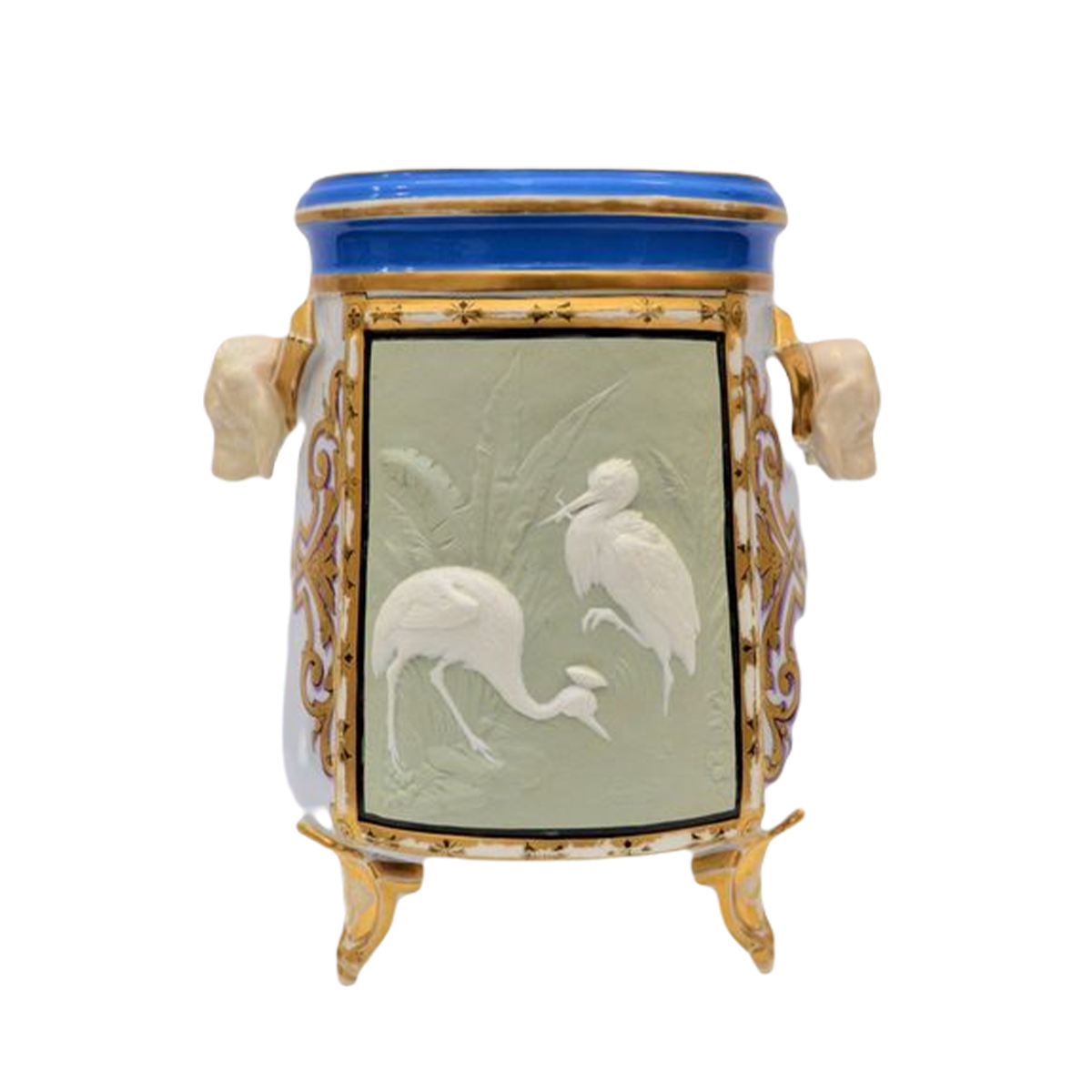
Country: France
Date of establishment: XIX century
Size (cm): 28*25
Porcelain Story
The history of the appearance of this vase in our collection is very unusual. A few months ago, I had a chance to visit, together with fellow journalists, the ancient French city of Rennes, where Dynamo Kiev met in an away match of the Europa League with the local team of the same name. During an excursion through the narrow medieval streets with wooden houses built several centuries ago miraculously preserved after numerous fires, we came across a city market, plastered on all sides with “flea” layouts. That's where I found some old Japanese Satsuma vases and this amazing old French vase.
If you believe the story of the sellers and the “numbered” stamp squeezed out in the “test” of the lower part, this vase was created in the era of the Second Empire of Napoleon III. The middle of the 19th century in France was characterized by devastating upheavals in the sphere of politics and the economy, and at the same time the flourishing of a number of arts. It was at that time that the famous World Exhibitions of 1855 and 1867 were held in Paris. It was at that time that such legendary names of writers, poets and artists as Balzac and Zola, Baudelaire and Courbet, Millet and Delacroix, Doré and Manet appeared on hearing. At the same time, Europe began to recognize and appreciate fine French porcelain.
By the way, this vase, which I found in Rennes, is unusual in many ways. Pay attention to the large heads of dogs, which apparently served as handles. And the central panel, subtly depicting marsh birds, is generally made in the recognizable technique of the famous English manufactory WEDGWOOD. And it is so unexpected, as well as, it should be admitted, beautiful.
Do you know why today I decided to introduce you to this French vase? Because it was on this day, exactly 505 years ago, on January 9, 1514, that one of the most prominent women of France, Anna of Brittany, the ruling Duchess of Brittany, Countess of Nantes and Richmond, Viscountess of Limoges, Queen of France and Queen of Naples, completed her earthly journey. She was the wife of two successive French kings, Charles VIII and Louis XII. She was the most popular ruler of Brittany and the richest woman in Europe at that time. She was a famous patroness of art and literature. And she became famous for being the first princess in Europe to wear a white dress at her wedding, which had always been considered the color of mourning. Well, and, among other things, this historical person is also interesting for me because she spent a significant part of her life in the glorious city of Rennes, where she celebrated her first wedding and lost battles after a severe siege by enemy troops, and to all her already excisting titles, she also added the title of Queen of the Romans.
By the way, after Anna's departure from life, which happened on January 9, 1514 in the castle of Blois, her body was buried in the royal tomb of the Saint-Denis Basilica, but her heart - according to her will - in gold, decorated with enamel, was sent to her native Nantes and buried in the Cathedral of St. Peter. The inscription on the plate reads: “In this small vessel of pure gold rests the greatest heart, which no lady in the world has ever had. Her name was Anna, twice queen in France, duchess of the Bretons, regal and autocratic... "
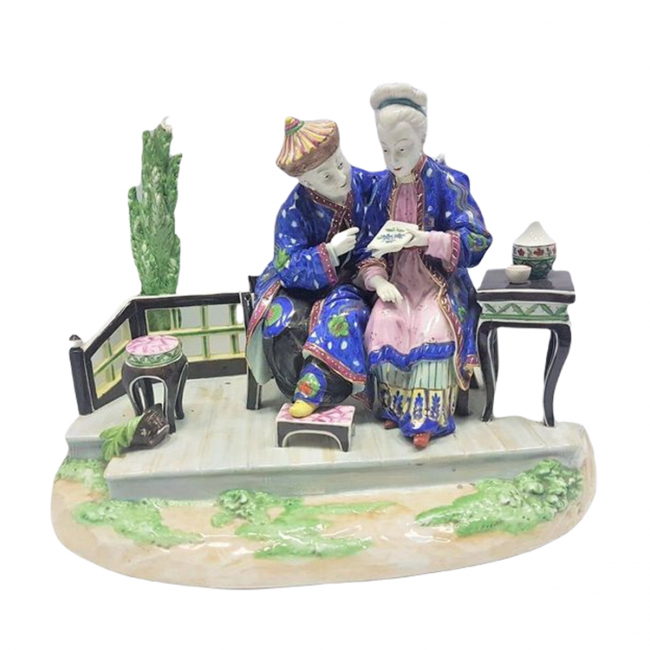
Chinese couple
Country: France Manufactory: Samson Date of establishment: beginning of the 20th century Size (cm): 24*36
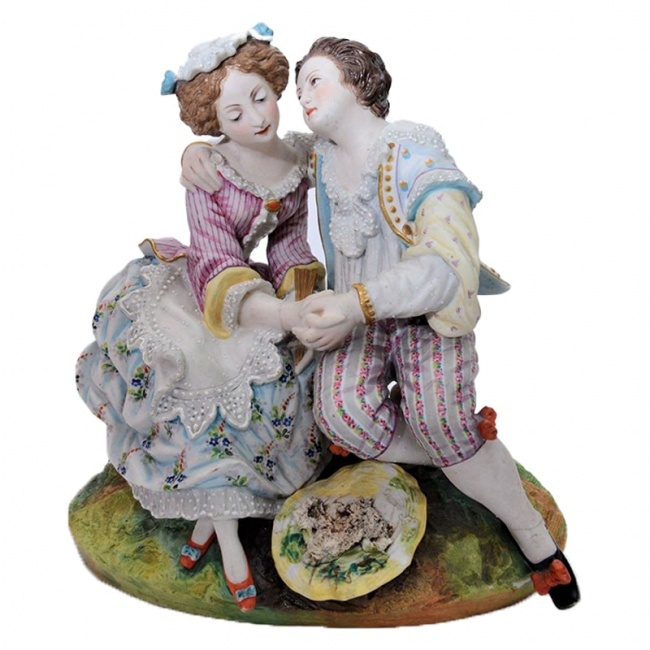
Lovers
Country: France Manufacture: Paris Date of creation: early 20th century Size (cm): 19x20
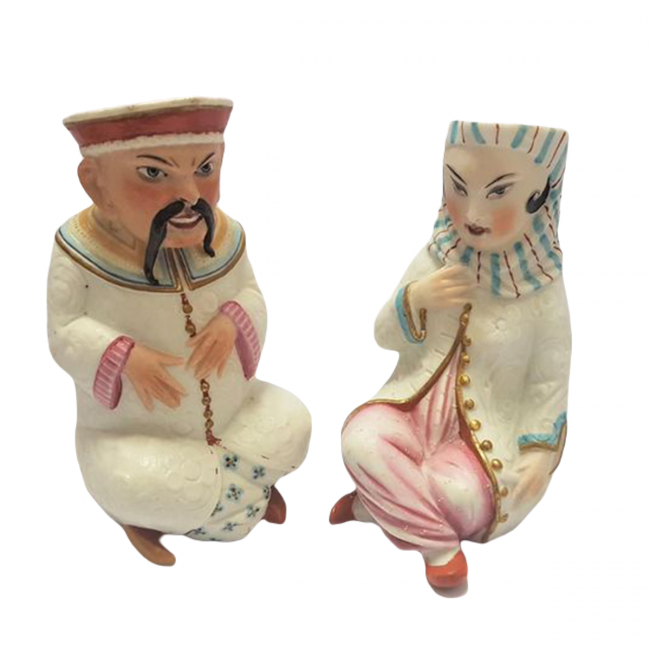
Pair of cups
Country: France Date of establishment: 1850 Sculptor: Jean Gille Size (cm): 12
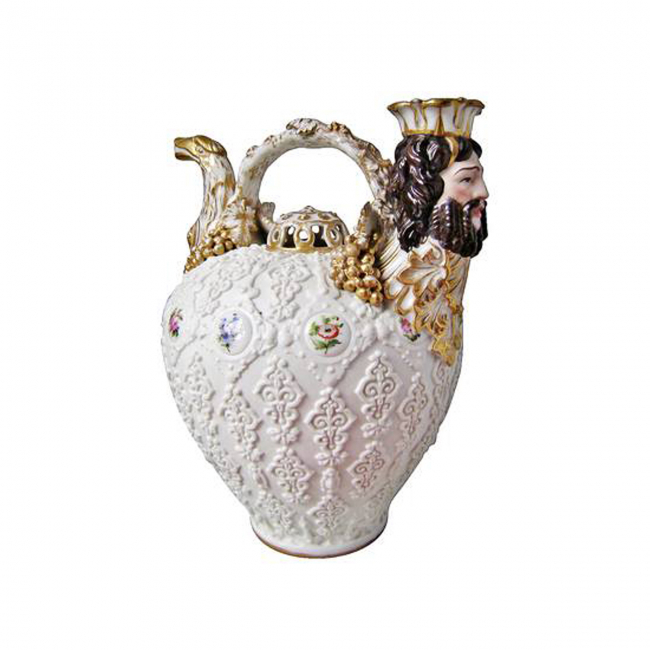
Antique Teapot
Country: France Date of establishment: 1840 Sculptor: Jacob Petit Height (cm): 23,5