
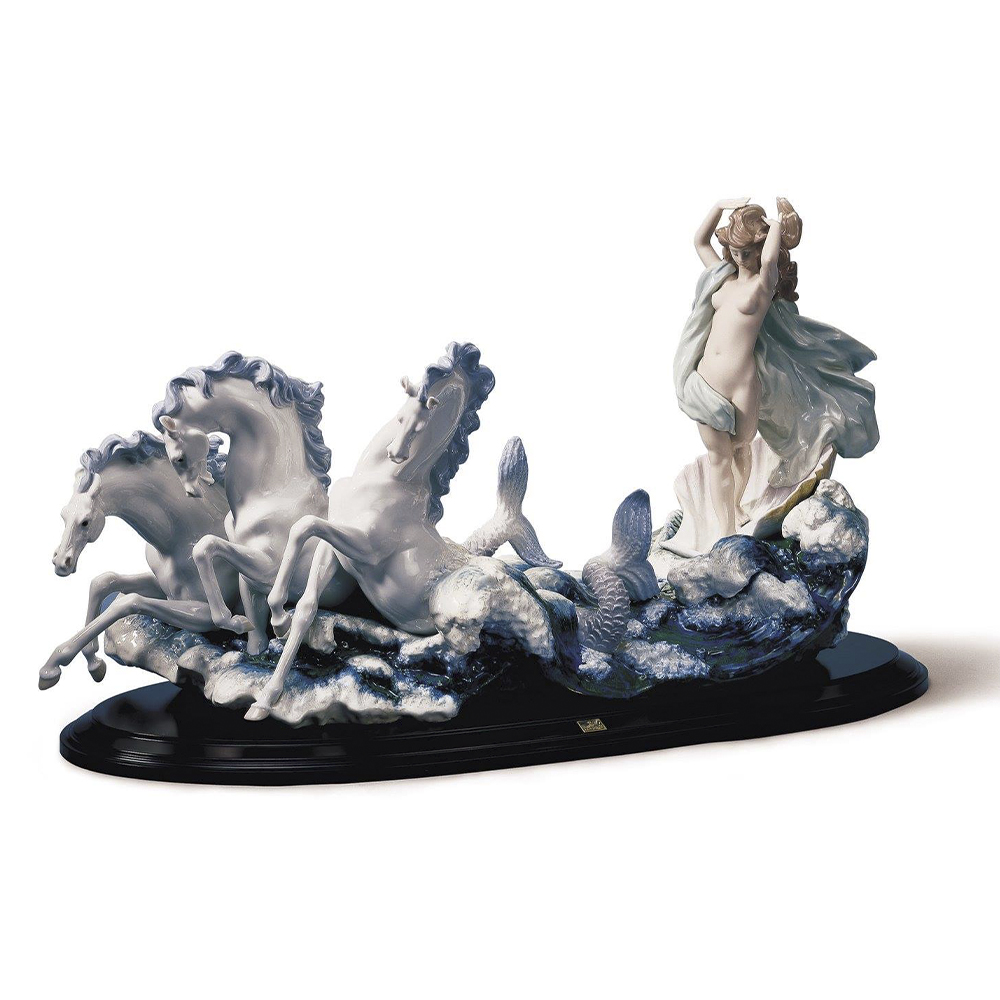
Country: Spain
Manufactory: Lladro
Date of establishment: 2001
Sculptor: Antonio Ramos
Size (cm): 45*82
Limited Series
Porcelain Story
It's hard to believe now, but that's exactly what happened. For almost three centuries, the name of the great Italian Renaissance painter Sandro Botticelli, whose paintings are now presented in the largest museums in the world, has been buried in undeserved oblivion. And only thanks to the efforts of the famous English art critic John Ruskin, the work of Botticelli at the end of the 19th century was again open to everyone.
Alessandro di Mariano di Vani Filipeli (that was his full name) was born exactly 575 years ago, on March 1, 1445, in Florence in a family of leather craftsmen. His father and mother had four sons. And, since the father's business did not bring large incomes, the parents wanted to quickly train their sons in any profession that could provide for the family. With the older brothers Sandro, that's how it all happened. And soon they, having become well-known entrepreneurs in Florence, began to own houses, and vineyards, and land, and trading shops.
With Sandro, however, things were somewhat different. Having taken an early interest in painting, he no longer imagined his future without it. Moreover, he succeeded! Noticing this, Giovanni supported his younger brother, for whom, because of his fullness, the nickname ''barrel'' (''botticelli'') was firmly entrenched. It was this name that then passed to Sandro.
The successes of the young artist became more and more noticeable. Members of the influential Florentine Medici family drew attention to his painting in the church of Santa Maria Novella, in which he depicted himself for the first time in the scene of the adoration of the Magi. And soon Sandro had no end to their orders. And in 1481, Pope Sixtus IV invited the Florentine painters Sandro Botticelli, Domenico Ghirlandaio, Pietro Perugino and Cosimo Rosselli to Rome to decorate the walls of the papal chapel called the Sistine Chapel with frescoes.
In just 11 months, they managed to do the unbelievable. The works of artists caused an unprecedented delight in the Vatican. Especially everyone noted three large compositions created by Botticelli - ''Healing of a leper and the Temptation of Christ'', ''Youth of Moses'' and ''Punishment of Korea, Dathan and Aviron''. How much time has passed since then, and the delight of those who were lucky enough to see these works with their own eyes does not pass and cannot pass. They are truly divine.
How divine are Botticelli's illustrations for Dante's Divine Comedy. How divine are the paintings ''The Birth of Venus'', ''Spring'', ''Madonna with a Pomegranate'' and many others, which are now exhibited in the Uffizi Gallery (Florence) and in the Munich Alte Pinakothek, painted by him on his return from Rome to Florence, in London's National Gallery and the Metropolitan Museum of Art in New York.
It so happened that at the end of his life, Sandro Botticelli, who at one time was considered the best painter of Florence, retired, became interested in religion and was soon forgotten as quickly as he was quickly glorified before...
By the way, the Venus de Milo, now exhibited in the Louvre in Paris, in some way on April 8, 1820, seemed to be reborn from the ashes. And, in the truest sense of the word. It happened on the island of Milos (Melos) - one of the Cyclades of the Aegean Sea. Greece at that time was under the rule of Turkey, and on the island, in addition to the Greeks, there were many Turkish officials. Since even then everyone was en masse fascinated by the search for various kinds of antiquities, the French sailor Olivier Voutier, together with the local peasant Yorgos Kentrotatos, dug out a statue of the Greek goddess on the ruins of the old amphitheater. The captain of the ship refused to comply with the request of Voutier and sail to Istanbul for official permission to export the statue. And then the naval officer Jules Dumont-Durville decided to do it for them. And just like that, he managed to get such permission.
True, according to the legend, when loading the statue for its further shipment to France, a fight arose between French sailors and Turkish officials, during which the statue, having fallen to the ground, lost both arms. Since then, no one has seen them again. Much to the dismay of the researchers. For just the presence of certain objects in the hands could more likely determine who exactly is depicted in this sculpture - Venus (the deity of Roman mythology, which is an exact analogue of the Greek Aphrodite; which is why, by the way, she is also called Aphrodite of Milos), or Amphitrite - the daughter of the mythological sea god Nereus, who later became the wife of the ruler of the sea kingdom of Poseidon, or the goddess of victory Nike.
Initially, the statue arrived in Paris as a gift from the French ambassador, the Marquis de Riviere, to King Louis XVIII, who later transferred it to the Louvre. There she, in fact, has been all these 200 years, delighting the eyes of admiring visitors and being one of the indisputable examples of ideal female beauty.
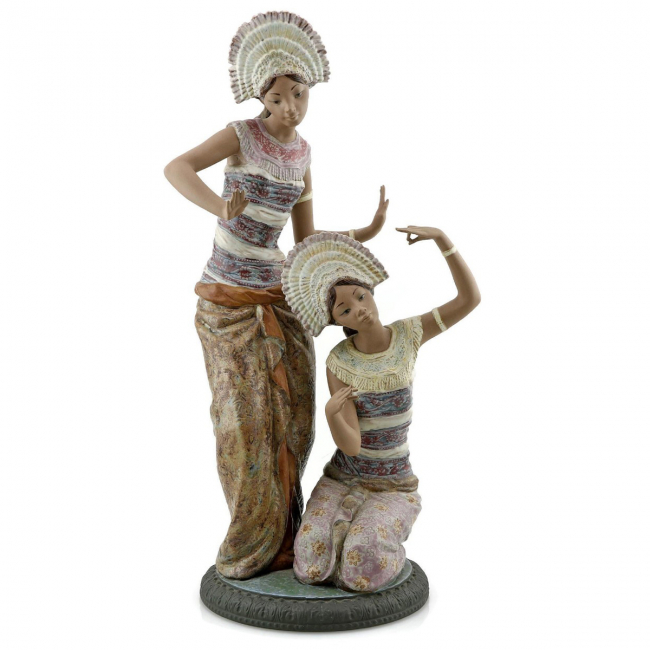
Bali dancers
Country: Spain Manufactory: Lladro Date of establishment: 1977 Sculptor: Vicente Martinez Height (cm): 56
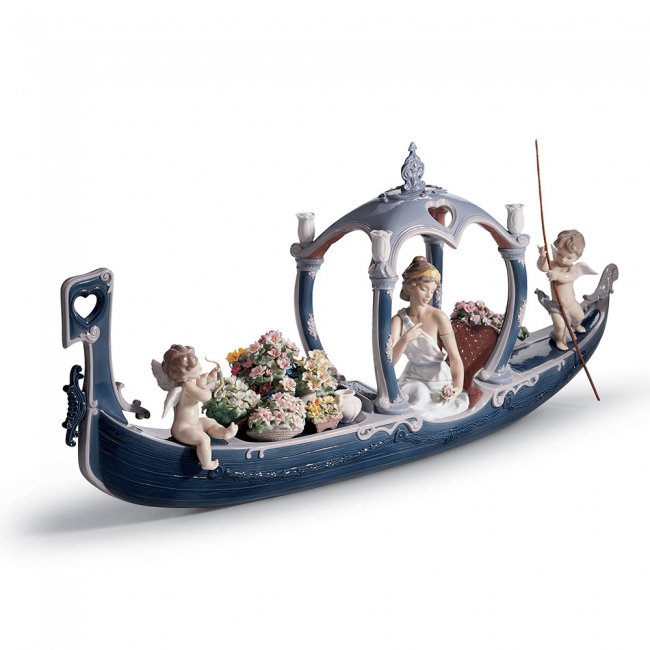
Gondola of love
Country: Spain Manufactory: Lladro Date of establishment: 2002 Sculptor: Juan Ignacio Aliena Size (cm): 34*74 Limited Series
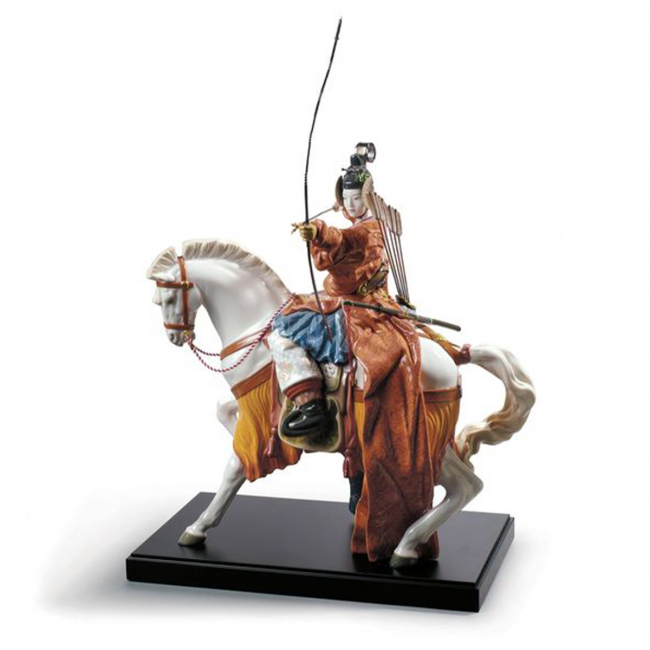
Archer
Country: Spain Manufactory: Lladro Date of establishment: 2014 Sculptor: Juan Ignacio Aliena Size (cm): 62*42 Limited Series
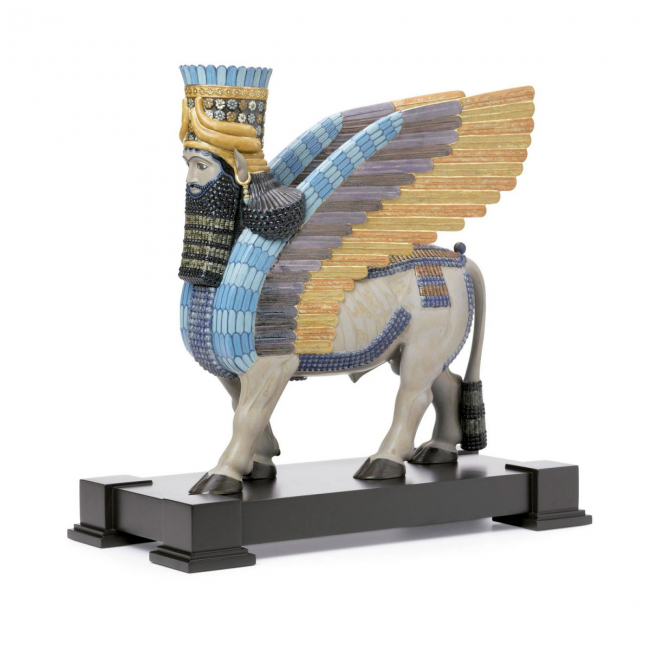
Lamassu
Country: Spain Manufactory: Lladro Date of establishment: 2009 Sculptor: Marco Antonio Nogueron Size (cm): 51*53 Limited Series