
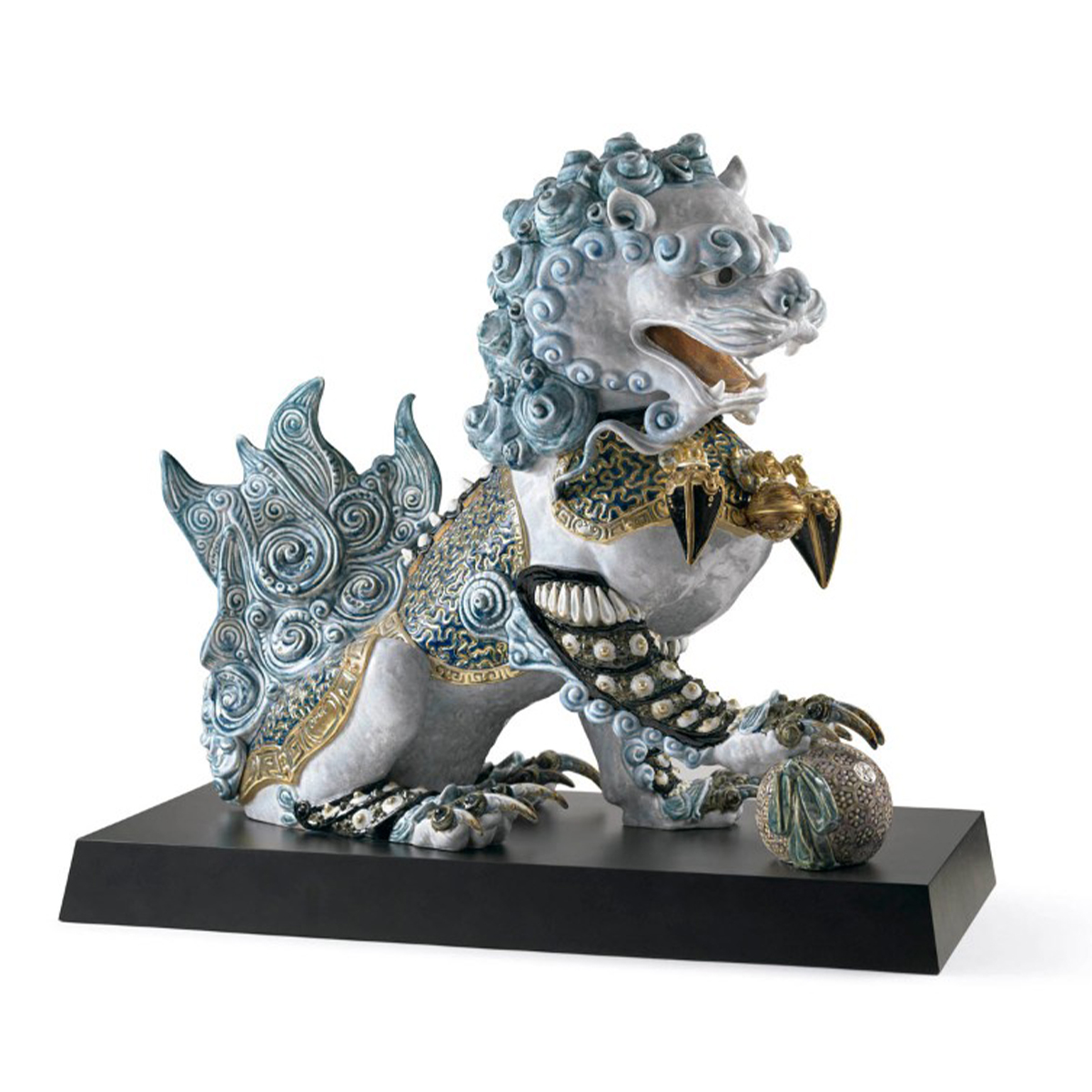
Country: Spain
Manufactory: Lladro
Date of establishment: 2011
Sculptor: Francisco Polope
Size (cm): 69*77
Limited Series
Porcelain Story
Choosing a composition for the New Year (according to the Chinese calendar) post, I began to remember where and under what circumstances I met such lions, so to speak, in their natural environment. And what, in fact, is considered to be their natural environment? Over the years, while visiting China, South Korea, Japan, Indonesia, Thailand and a number of other eastern countries, I invariably paid attention to the presence of paired lions (absolutely the same as these, since these exactly correspond to the ancient oriental tradition) at the entrance to the imperial palaces , at the entrance to the houses of nobles and ancient oriental castles. Such a place is considered to be their natural habitat, since each lion from a pair of guardians plays its own role, intended for it by ancient tradition. For example, the lion, located to the right of the entrance, symbolizes the protection of the home. And the globe, covered by his huge paw, is the evidence of this. And the lion (more often - a lioness), located on the left and gently pressing the cub with its paw, symbolizes the protection of the inhabitants of the house, at the entrance to which a pair of formidable guardians was put up.
In fact, I note that in different countries the statues of lions were perceived differently. Yes, and sometimes they looked different too. For example, the lions installed on the bridges of Paris, Rome, St. Petersburg or in the squares of London and Barcelona are absolutely not like the lions of the east. It is understandable - different cultures, different symbols in the use of one, it would seem, and the same kings of nature. According to Eastern tradition (namely, it is usually remembered on the first day of the New Year of the Earth Dog), lions have always been symbols of success, happiness and power. That is why the inhabitants of Eastern countries so often resort to their symbolic use in their traditions.
I would like to note that in our collection, two pairs of these rare and amazingly beautiful items (and very large ones, by the way!) came together in an absolutely amazing way. In addition to a pair of lions in blue, we also have a pair of the same lions in red-brown. If you see them together and at once, you can be speechless for a short time from admiration for the skill of their creators. By the way, the image of these amazing animals in a classic old form was recreated by the famous Spanish sculptor (and, as I said, our good friend) Francisco Polope. I never get tired of being amazed at his rare skill and the rarest ability to observe the smallest details of historical correspondence to national traditions in such works.
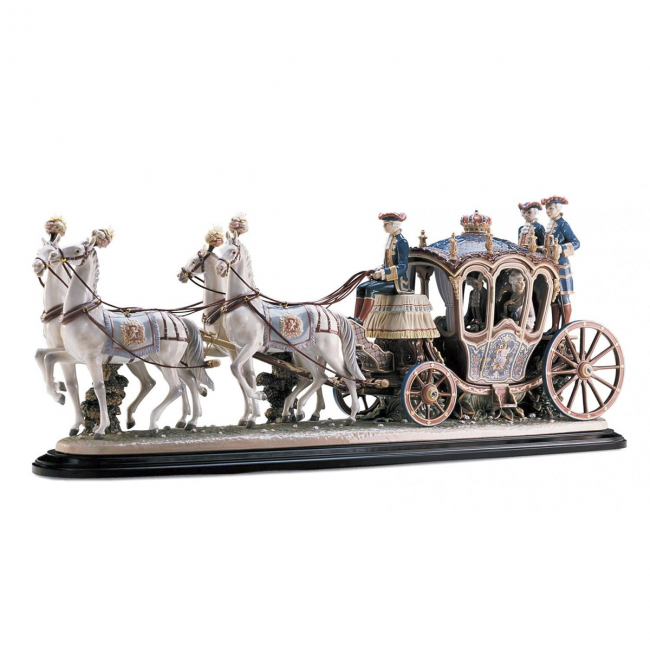
18th century carriage
Country: Spain Manufactory: Lladro Date of establishment: 1985 Sculptor: Francisco Catala Size (cm): 45*113 Limited Series
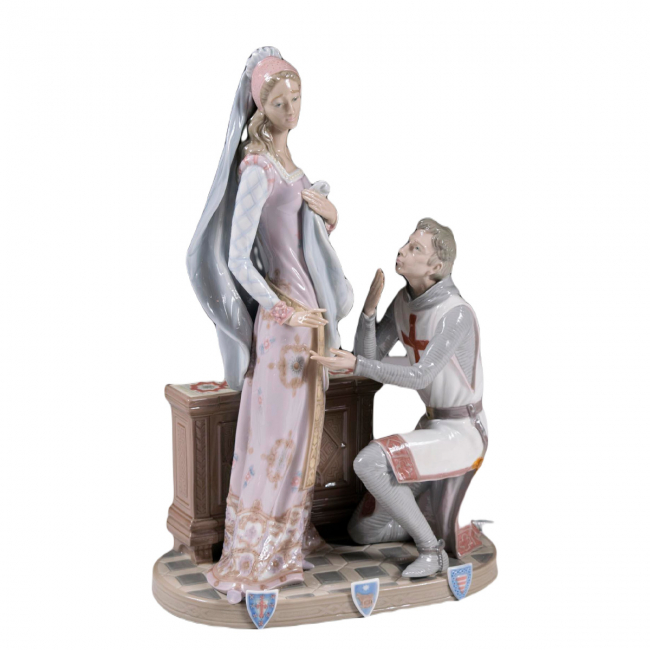
Knight
Country: Spain Manufactory: Lladro Date of creation: 1985 Sculptor: Salvador Furio Size (cm): 38x25 Limited Edition
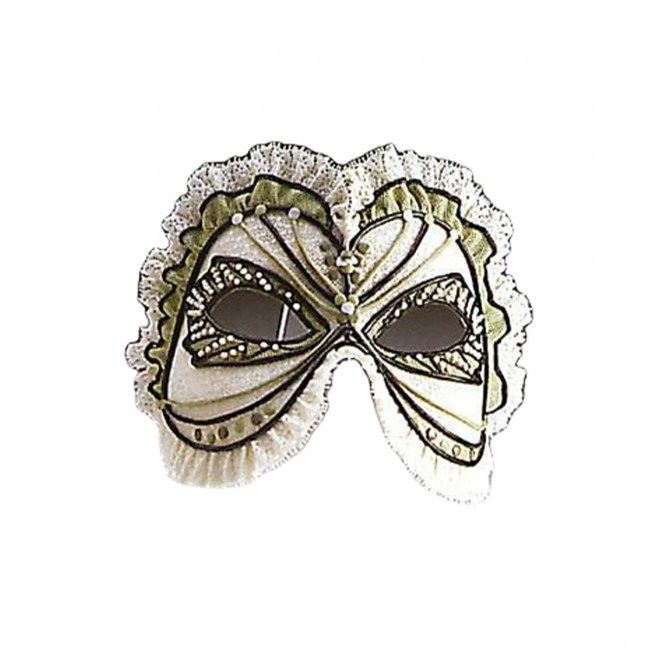
Mask
Country: Spain Manufactory: Lladro Date of establishment: 1989 Sculptor: Dept. Diseno y Decoracion Height (cm): 11
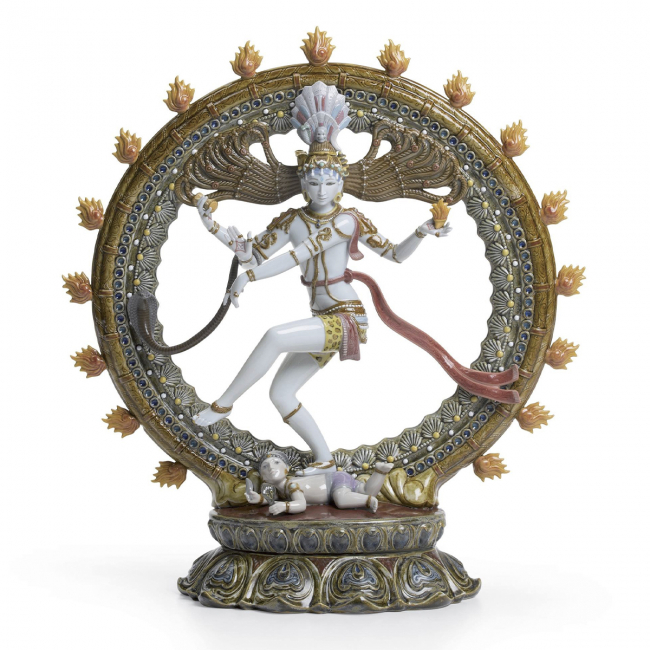
Shiva Nataraja
Country: Spain Manufactory: Lladro Date of establishment: 2009 Sculptor: Joan Coderch Size (cm): 47*44 Limited Series