
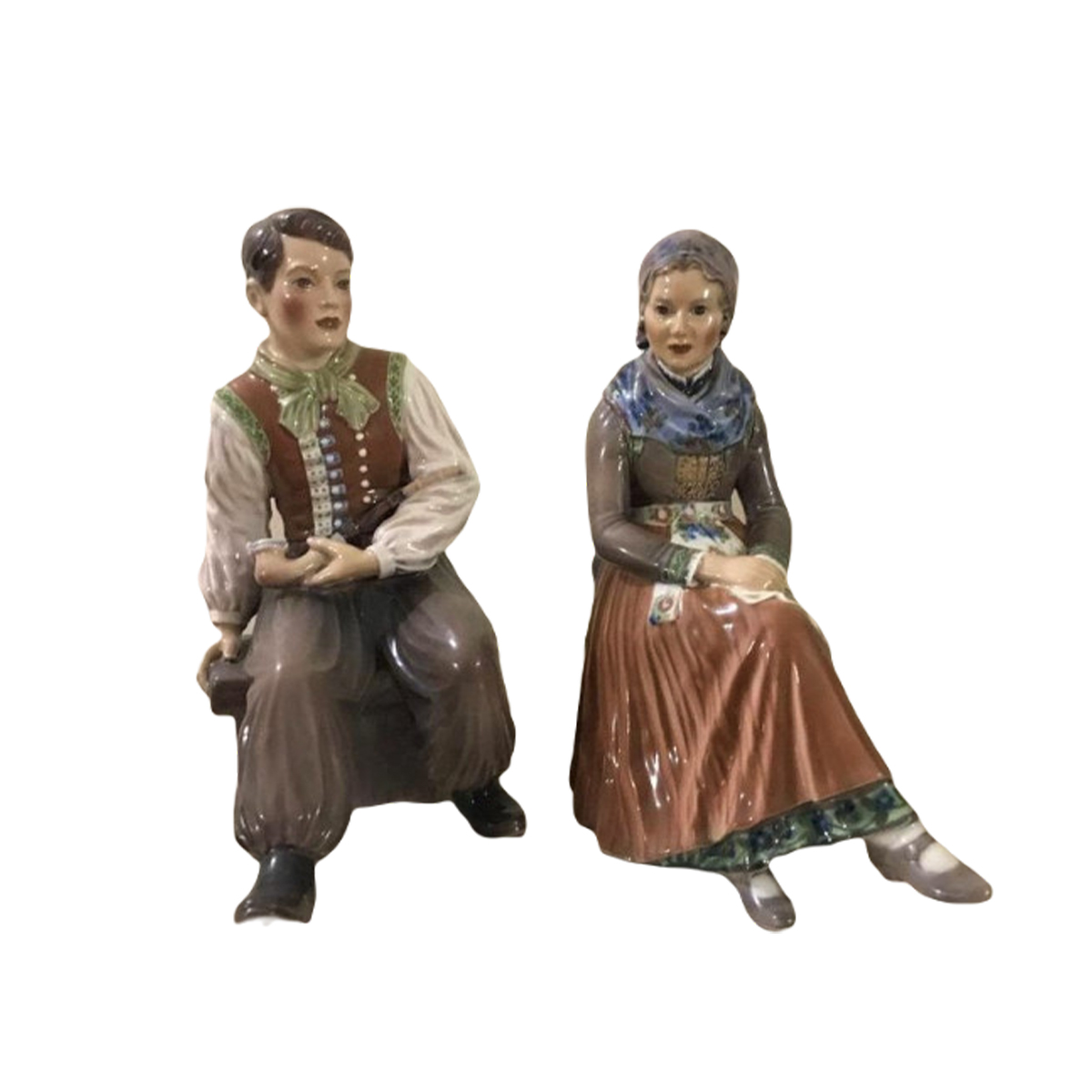
Country: Denmark
Manufactory: Royal Copenhagen
Date of establishment: 1960s
Size (cm): 25*14
Limited Series
Porcelain Story
You know, this time the trip to Swedish Malmö and Danish Copenhagen didn't work out right away. Then, it was impossible to find a currency exchange point in the whole city (how could one not remember his native Kyiv, where such points are found literally at every step). Even in the hotel we were denied this. They said: if you want to change, go to the railway station! Went. Changed.
And then they realized that they had made a strategic mistake. We could not drink coffee in a confectionery, or buy rare Japanese tea in an old tea shop, or just have a bite to eat at a ''shawarma-house'', of which there are a great many in Scandinavian Malmö, we could not. It turned out that in most outlets cash is simply not accepted! We asked again and again: do you really not want to accept your own Swedish crowns in your Sweden? We don't want to, the Swedes answered politely, driving us into a dead end. Since we could not even imagine such a thing, and therefore we did not take credit cards with us on a short business trip.
Having learned that a trip to neighboring Copenhagen by taxi (there and back, with a separate fare on the 8-kilometer bridge connecting the two countries) will cost no less than 450-500 euros, I decided to abandon this idea as well. And there was simply no time to jump with transfers from a tram to a train, and then also to a bus. I had to mentally plunge into the memories of past visits to the glorious city of Copenhagen, famous, by the way, not only for the famous figure of the Little Mermaid, perched at the edge of the sea surface, but also in our case for the legendary Copenhagen porcelain.
The Danish Royal Porcelain Manufactory Royal Copenhagen was created according to the plan of the famous pharmacist Franz Henrik Müller in 1775 under the patronage of Queen Juliana Maria. And it is considered the sixth oldest porcelain manufactory in Europe - Meissen (1710), Vienna (1719), Sevres (1738), St. Petersburg (1744), Berlin (1751). For more than two hundred years, the three wavy lines in her coat of arms have remained a kind of sign of the highest quality of porcelain produced in Copenhagen. By the way, three wavy lines symbolize the three main Danish straits - Øresund, Storebelt and Lillebelt.
I have already talked about Danish porcelain more than once and I think I will talk about it more than once in the future. Now I just want to note that the main type of products manufactured here is dishes - sets, vases, wall plates. Figurines, on the collection of which I emphasized in my collection, are quite difficult to find in Denmark. That is why I had the opportunity to collect almost all the amazing Danish-made porcelain compositions in different years, bit by bit, almost all over the world. I don't regret it at all. Moreover, now I can even boast that such a number of beautiful Copenhagen figurines can not be found in every Danish museum...
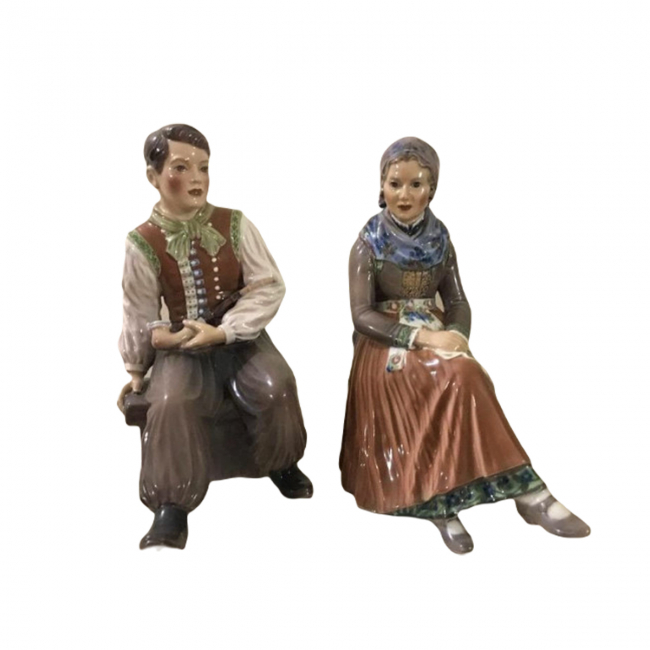
Before the holiday
Country: Denmark Manufactory: Royal Copenhagen Date of establishment: 1960s Size (cm): 25*14 Limited Series
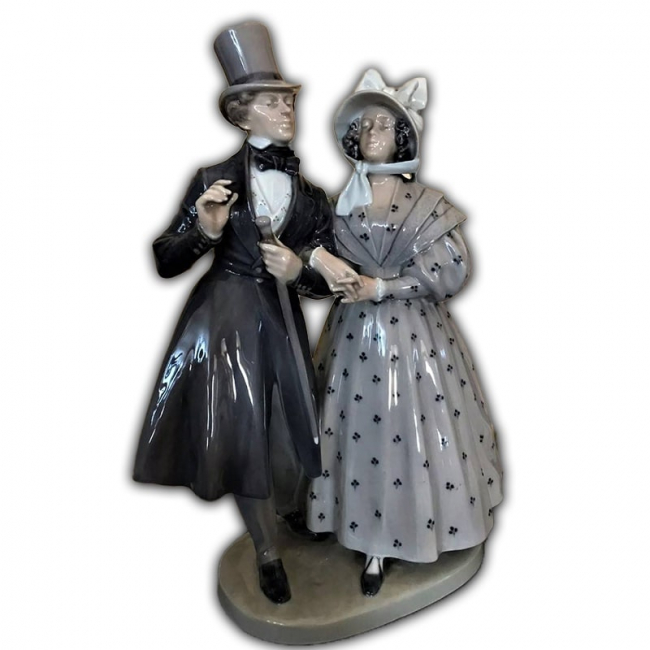
Travelers
Country: Denmark Manufacture: Royal Copenhagen Date of establishment: 1950s Size (cm): 43*16
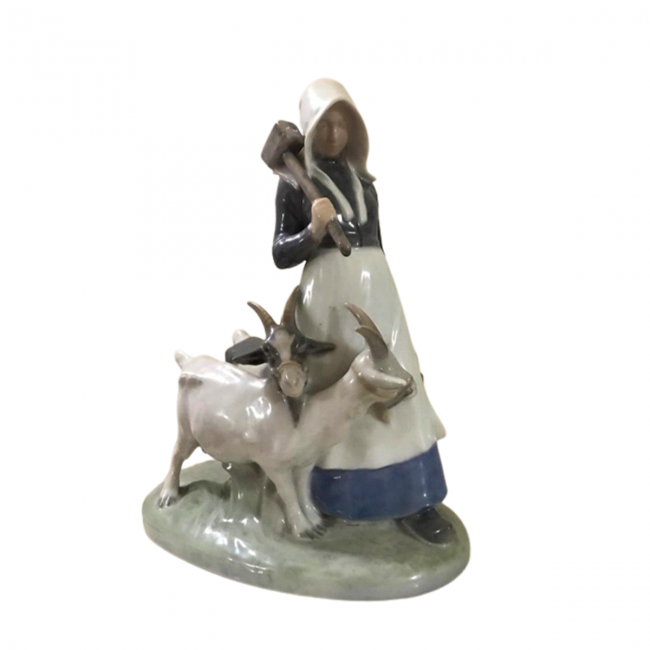
Al one on the Farm
Country: Denmark Manufactory: Royal Copenhagen Date of establishment: 1950s Size (cm): 22x12 Limited Series
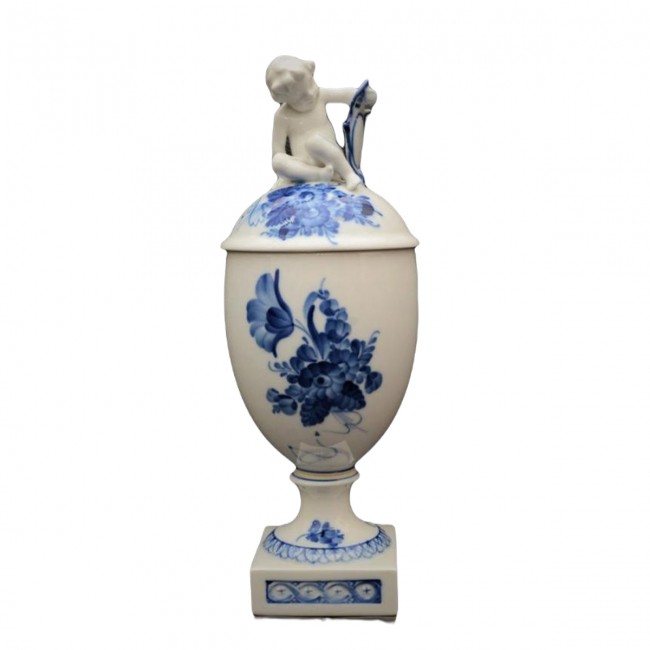
Cup
Country: Denmark Manufactory: Royal Copenhagen Date of establishment: mid-twentieth century Size (cm): 29*11