
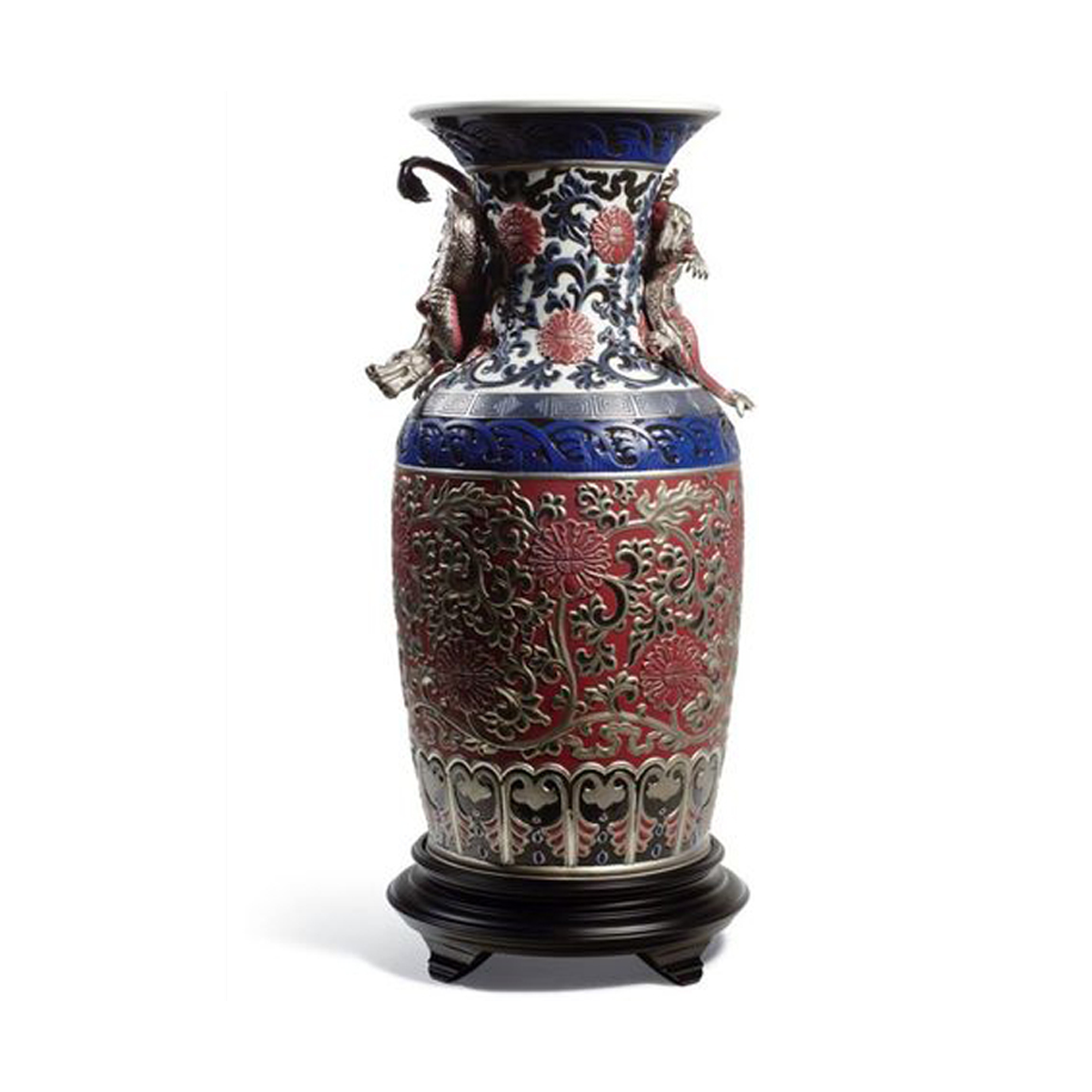
Country: Spain
Manufacturer: Lladro
Date of establishment: 2012
Sculptor: Dpto. Ornamentacion
Size (cm): 54*26
Limited edition
Porcelain Story
On September 15, 1254 a child was born to the Venetian merchant Niccol? Polo. His name was Marco. He was to become known to the world many years later as a merchant and traveller, who wrote his famous "Book of the Diversity of the World" about the story of his incredibly exciting journey to Asia and his long life in China.
According to various accounts, it is known that Marco Polo's father was at this time with his brother Matteo in Crimea (or more precisely, in Sudak) where their third brother, who was also called Marco, had his trading house. They took the difficult route from there, reaching Bukhara and staying there for three years because there was warfare and it was dangerous to travel. They then proceeded to Khanbalik (modern-day Beijing), where they were presented to the Mongol khan Kubilai. It was this Khan who by this time had almost completed the defeat of the Song dynasty of China and soon became the sole ruler of the Mongol Empire and China.
After his return to Venice, Niccol? Polo took his 17-year-old son Marco on a new journey. And after a visit to Jerusalem, they set off again for distant and mysterious China. They got there in 1275. Once again they were introduced to Kublai Khan who was so charmed by the young and well-educated Marco Polo that, according to the recollections of the Italian traveler, he did not allow him to return to Venice for a long time and even appointed him governor of Yangzhou city for three years. The customs and habits described in the famous book were so interesting and useful to Europeans that many navigators, cartographers, and writers referred to these descriptions repeatedly during their voyages. Christopher Columbus famously took this book with him on his voyage of discovery in India.
For us, however, Marco Polo's life and actions are interesting mainly because he was the first known European to bring to Europe Chinese porcelain, hitherto unknown here. By the way, the word "porcelain" itself originates (according to one version) from the word "fagfur" - "Son of Heaven". This was the name of the Chinese emperor at the time in the Middle East. The word was then used along with the Italian word porcellana, which was used by Marco Polo in his book to describe the Chinese plates he brought back to Europe. The brilliance and whiteness of the unknown material caused such a rush among wealthy Europeans that for a long time porcelain pieces were worth their weight in gold. It was only after the first porcelain factories appeared in Meissen, Germany, and S?vres, France, that the prices started to fall.
This vase, made by Spanish craftsmen in the Chinese style, is unique in my opinion. There are two such vases in our collection. They differ in colour and pattern. But their uniqueness lies first and foremost in the incredible technique of execution, in which at the beginning of the 21st century the famous Spanish manufactory managed to surpass its Chinese predecessors, reaching, it seems to me, absolute perfection. However, you can see for yourself.
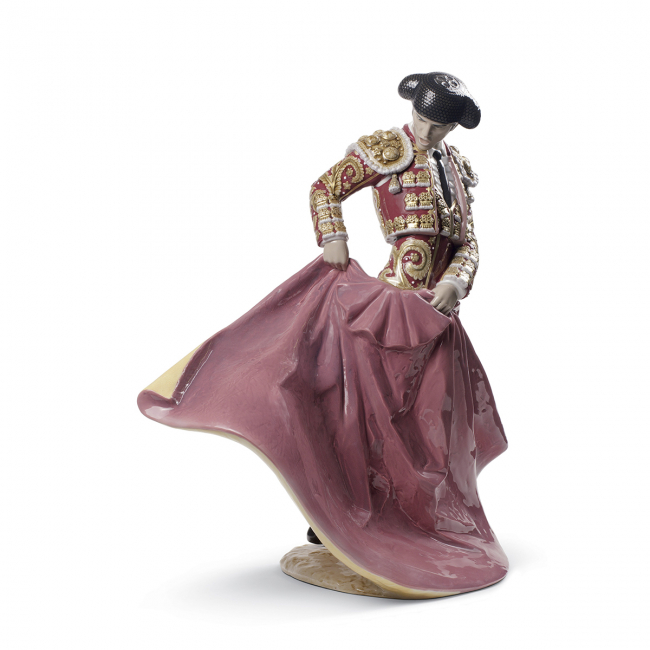
Matador
Country: Spain Manufactory: Lladro Date of establishment: 2013 Sculptor: Jose Javier Malavia Size (cm): 46*43 Limited Series
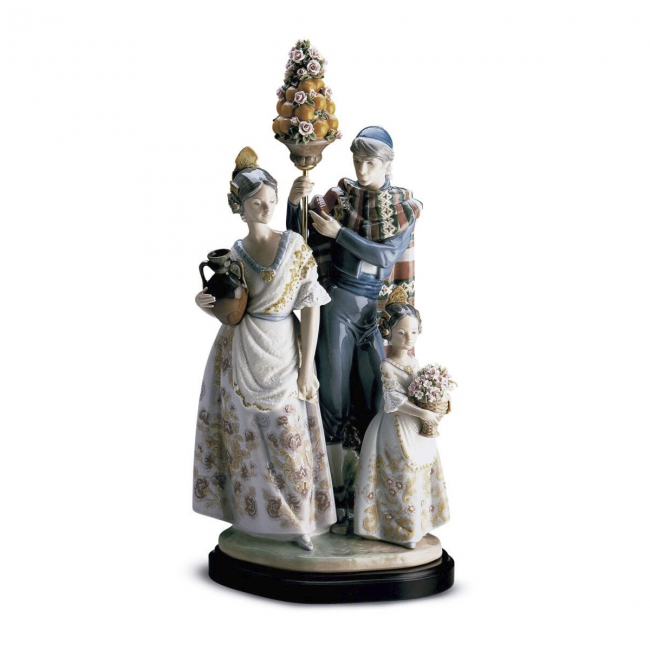
Valencia festival
Country: Spain Manufactory: Lladro Date of establishment: 1985 Sculptor: Juan Huerta Size (cm): 39 Limited Series
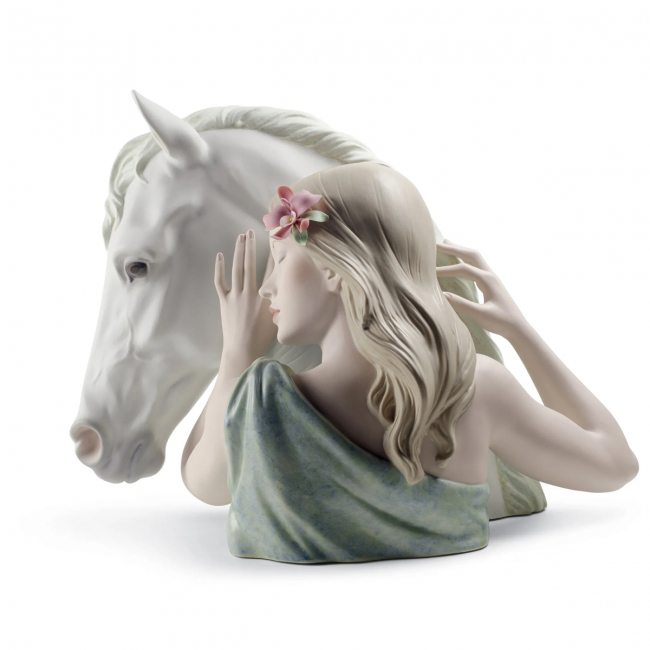
The Faithful Friend
Country: Spain Manufactory: Lladro Date of establishment: 2013 Sculptor: Alfredo Llorens Size (cm): 37*49 Limited Series
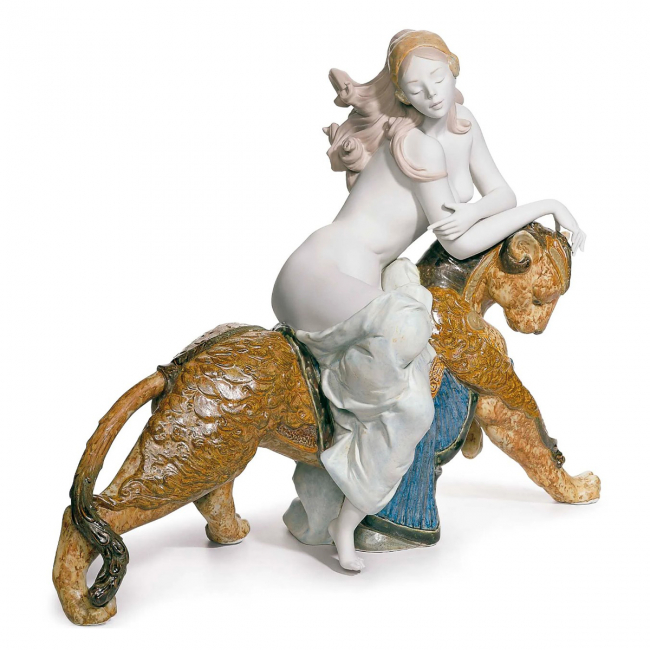
Bacchante
Country: Spain Manufactory: Lladro Date of establishment: 2004 Sculptor: Francisco Polope Size (cm): 48*59 Limited Series