
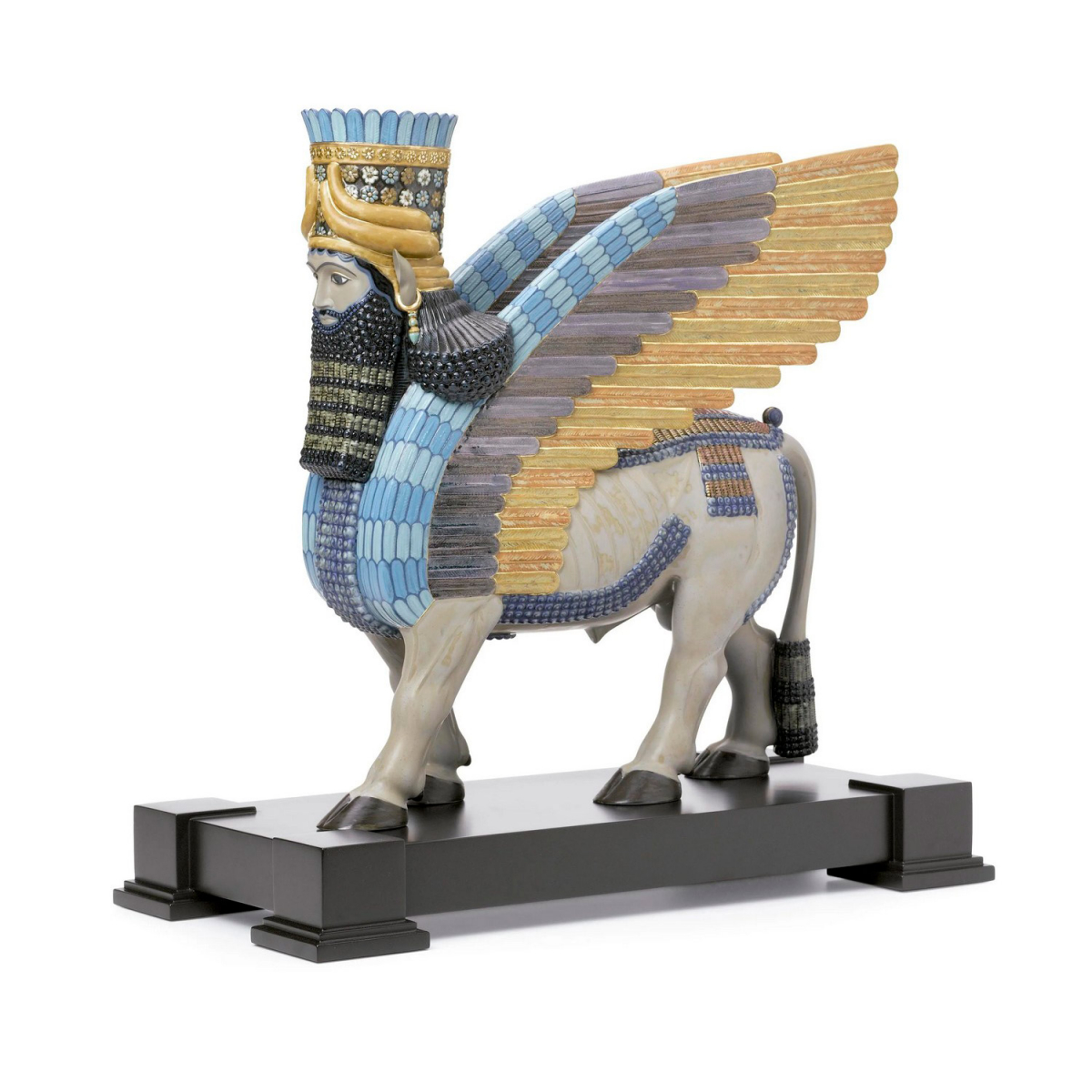
Country: Spain
Manufactory: Lladro
Date of establishment: 2009
Sculptor: Marco Antonio Nogueron
Size (cm): 51*53
Limited Series
Porcelain Story
The Pergamon Museum (or, as it is also called, Pergamon) in Berlin is visited by at least one million (!) tourists every year. It impresses not only with its scale, but also with a unique collection of exhibits, most of which belong to the pre-Christian era. So among these exhibits, my attention was attracted by the huge statues of Mesopotamian demons, the guardian spirits of man and his dwelling, most often depicted as a figure of a bull with a male face and wings. The fact is that the same porcelain miracle is presented in the exposition of our museum in Kyiv.
By the way, the Pergamon Museum owes its birth to the German engineer Karl Human, who led the laying of a new road in one of the provinces of Asia Minor. In 1878, during construction work, he was lucky enough to stumble upon the ruins of an ancient frieze, decorated with bas-relief sculptures of ancient heroes and Olympic gods. It was the legendary Pergamon Altar of Zeus, which today is considered the main asset of the Pergamon museum collection.
However, when the amazing find was transported to Berlin, it turned out that there was practically nowhere to exhibit it. It was then that a decision was made to build a separate building capable of accommodating not only this artifact, but also numerous exhibits of ancient Asian and ancient sculpture. This is how the first Pergamon Museum appeared, which lasted no more than 5 years and was demolished after huge cracks appeared in the foundation.
The construction of the second building began almost immediately, but work on it was continually delayed. At first, they were prevented by the death of the chief architect, who was looking for a replacement for a long time, and then by the First World War and the financial crisis that followed, which noticeably crippled the economic situation in the country. As a result, the new museum complex was opened only in 1930 - 23 years after the laying of the first stone.
However, the troubles in the fate of Pergamon did not end there. During the Second World War, it was badly damaged by air shelling, and then it lost the main part of its exhibits - they were taken to the territory of the USSR. A few decades later, part of the collection returned to Berlin, but some of the rarest exhibits are still in museums in St. Petersburg and Moscow.
The first thing a visitor to the Pergamon Museum sees is the majestic gate of the goddess Ishtar, dating back to the 6th century BC. They were found during excavations of Ancient Babylon. Historians claim that they were part of the Processional Road, which was used during the celebration of the main holiday of the country - the New Year. On the blue mosaic that adorns this gate, you can see the bas-reliefs of various animals, images of mythological creatures resembling prehistoric lizards, and a cuneiform inscription made by Nebuchadnezzar himself.
Even with a very impressive size, this design is not the largest exhibit in the museum. It was possible to place only the outer part of Ishtar in the building of Pergamon - the inner gate, which is even higher, simply did not enter it. The Procession Road itself is present here, leading from Ishtar to the sanctuary of Esagila. The remains of a ceramic panel, located on the walls on both sides of the sacred road, made it possible to restore with absolute accuracy one of the main wonders of Ancient Babylon.
The architecture and art of the Assyrian civilization was striking in its scope. Archaeologists have found the entrance to the palace of Ashurnasirapal II (883-859 BC), which was located in the city of Nimrud. It was decorated with six-meter winged bulls with human heads, carved from brown alabaster. It was these bulls, which are now in one of the halls of the Pergamon Museum, that inspired modern Spanish masters to create a unique porcelain work presented to your attention.
By the way, following the cruel policy of the slave-owning empire, from the second half of the 8th century BC. e. Assyria managed to capture Mesopotamia, Palestine, Cyprus, the modern territories of Turkey and Syria, as well as Egypt. When an uprising began in the captured cities, the Assyrians mercilessly punished the rebels. This happened to Babylon in 689 BC., when, after the uprising, the ruler Sinneherib razed the city to the ground...
9
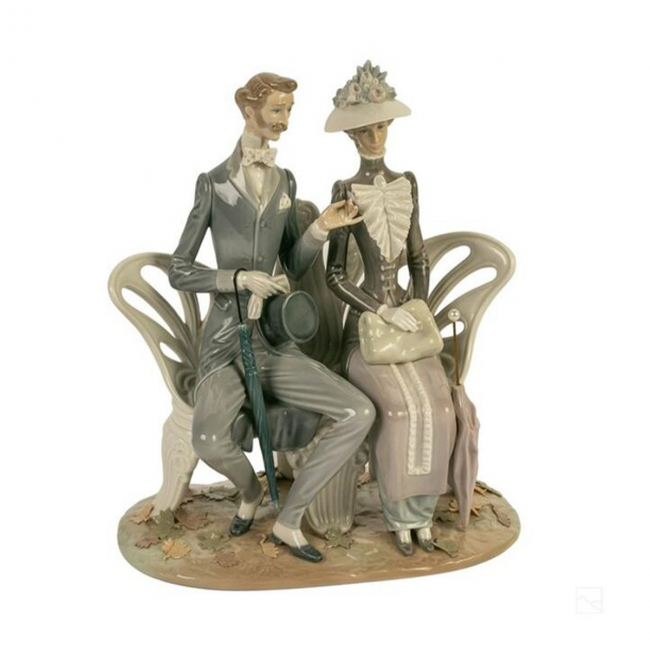
Lovers in the park
Country: Spain Manufactory: Lladro Date of establishment: 1974 Sculptor: Antonio Ballester Height (cm): 30
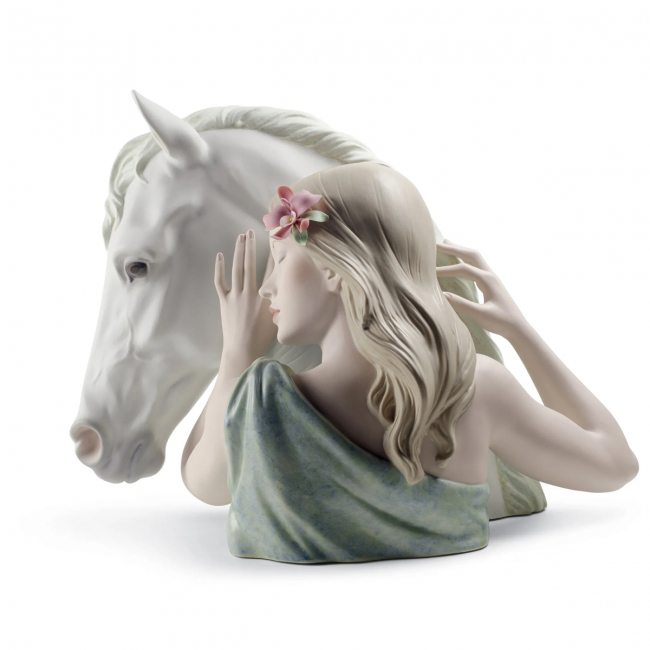
The Faithful Friend
Country: Spain Manufactory: Lladro Date of establishment: 2013 Sculptor: Alfredo Llorens Size (cm): 37*49 Limited Series
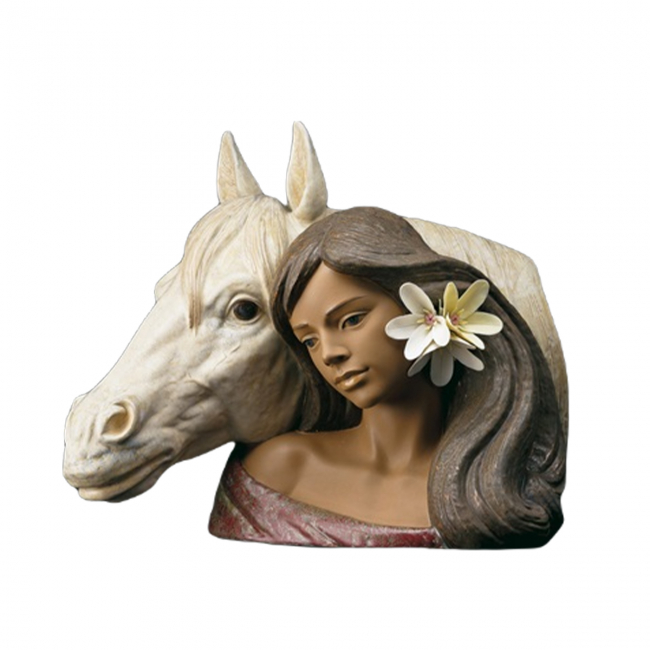
Girl with a horse
Country: Spain Manufactory: Lladro Date of establishment: 1994 Sculptor: Jose Puche Size (cm): 45*50 Limited Series
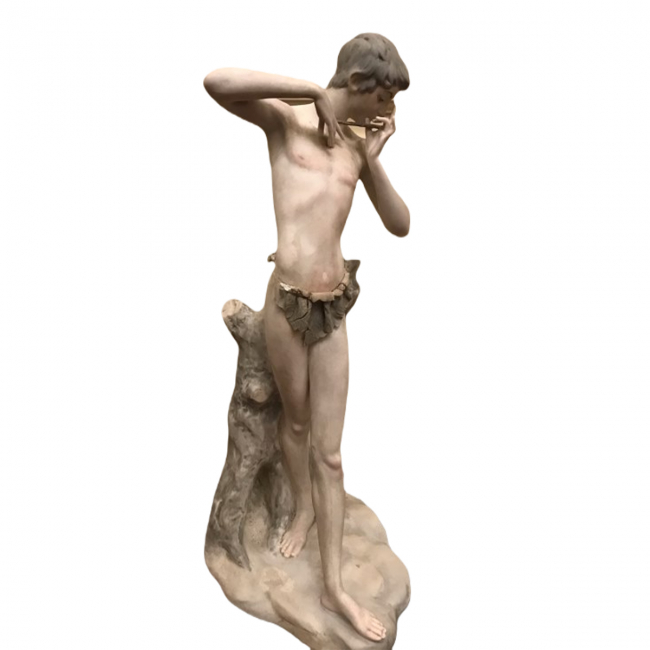
Minstrel
Country: Spain Manufactory: Lladro Date of establishment: early 1950s Size (cm): 42*16